

What is an interactive projection restaurant?
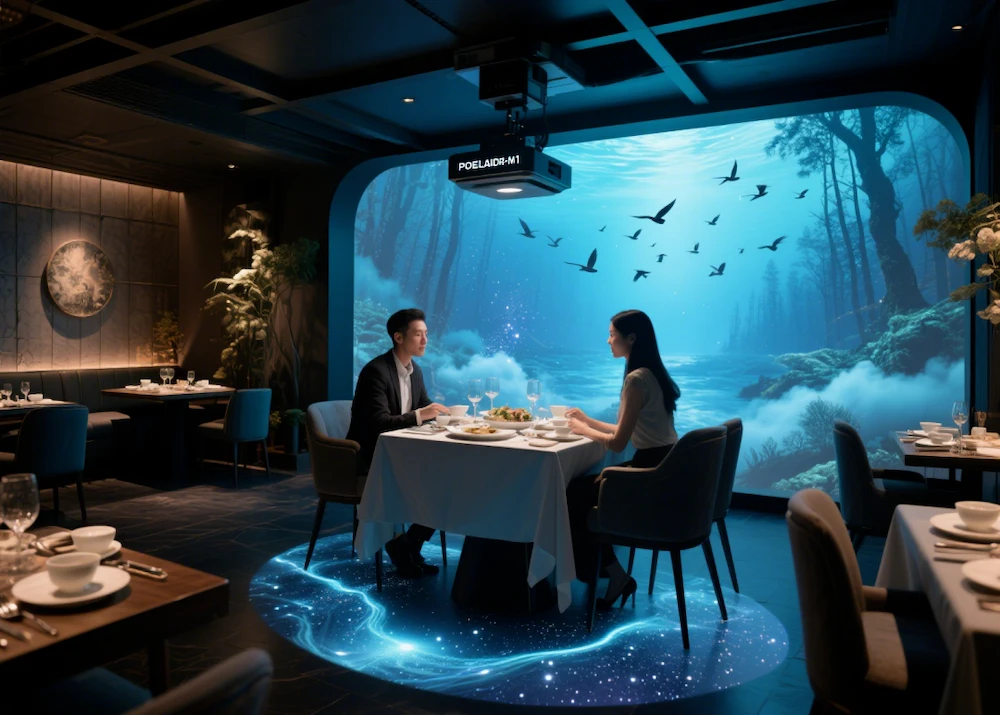
An interactive projection restaurant combines advanced projection mapping, LiDAR sensing and real-time interactivity to create an all-encompassing immersive dining experience. Diners are no longer simply “eating” — they become part of a digital performance, surrounded by dynamic visuals, responsive lighting and soundscapes that react to gestures and movement. These venues are often marketed as “holographic projection restaurants,” “5D immersive restaurants” or “3D projection restaurants.” Whether it’s a holographic hotpot venue, a light-and-sound KTV restaurant, or a wedding banquet hall, the underlying technologies are the same: dynamic projection paired with intelligent sensing systems.
Core Sensing Engine: POE LiDAR Technology
As the core sensing solution for many modern interactive restaurants, POE LiDAR systems offer unmatched advantages over traditional infrared or camera-based sensing technologies in terms of accuracy, flexibility and reliability.
- Multi-point touch radar interaction — Supports simultaneous interactive input from multiple diners across large areas, making it ideal for group dining, themed events and entertainment zones.
- POE (Power over Ethernet) — A single Ethernet cable provides both power and data transmission. This greatly simplifies installation, eliminating the need for additional power adapters or complicated wiring.
- Automatic calibration — The system automatically detects spatial environments and adjusts positioning parameters. This significantly reduces installation time and avoids calibration errors common in traditional systems.
- Wide sensing coverage (270° / 360°) — Seamlessly covers walls or floors, even in irregularly shaped spaces. Multiple sensors can be cascaded to support large venues or multi-zone interactive environments.
- High stability and strong anti-interference capability — Operates reliably under strong or mixed lighting conditions and is not affected by dust, reflections or signal overlap, making it ideal for busy restaurant environments.
- Free interactive software and SDK — Includes more than 100 built-in interactive scenarios and visual games. It also supports secondary development and customized content creation to match a restaurant’s theme.
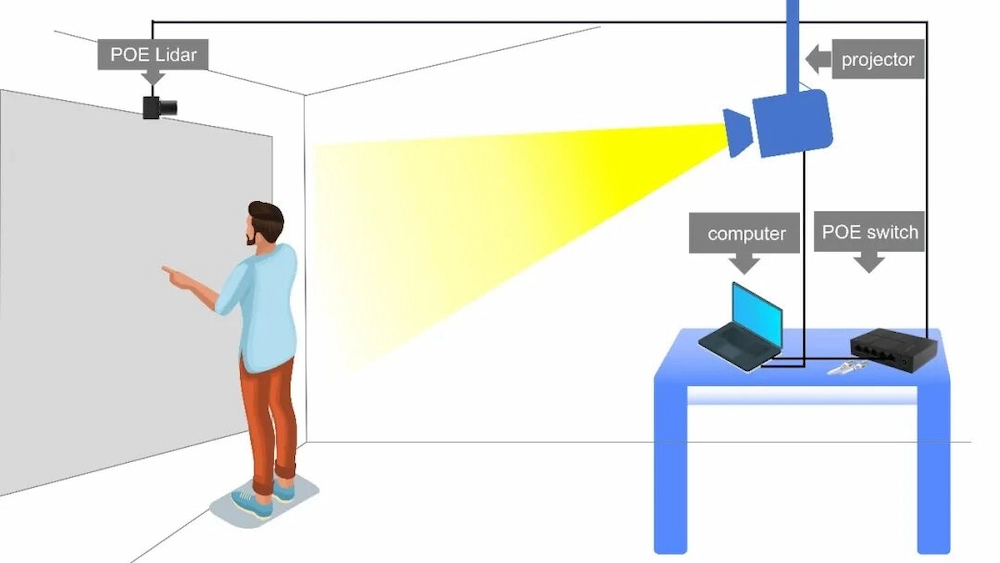
With the POE LiDAR technology developed by LUMILINK, every table, wall and floor can become a digital canvas for immersive storytelling and interactive dining experiences.
Key Advantages of Interactive Projection Restaurants
Immersive Environment
Realistic 3D visual effects combined with responsive sound systems surround diners and create a deeply immersive atmosphere.
Design Flexibility
Any surface—including walls, floors, ceilings or tabletops—can be transformed into an interactive projection interface.
Multi-Sensory Experience
Visual, auditory, tactile and even scent-based elements can be integrated to deliver a seamless dining journey.
Simplified Interior Decoration
In many cases, only a white wall and creative content are required, eliminating the need for expensive interior decorations.
Trend-Leading Attraction
By combining art, technology and gastronomy, restaurants can create a futuristic brand identity that attracts customers and increases social media exposure.
Common Types of Interactive Projection Installations
Depending on the size and concept of the venue, different projection systems can be used individually or combined:
- Holographic welcome entrance — Dynamic greeting visuals and animated brand presentations.
- Interactive wall projection — Immersive atmosphere scenes or engaging visual interactions.
- Interactive floor projection — Motion-responsive floors that react to footsteps and movement.
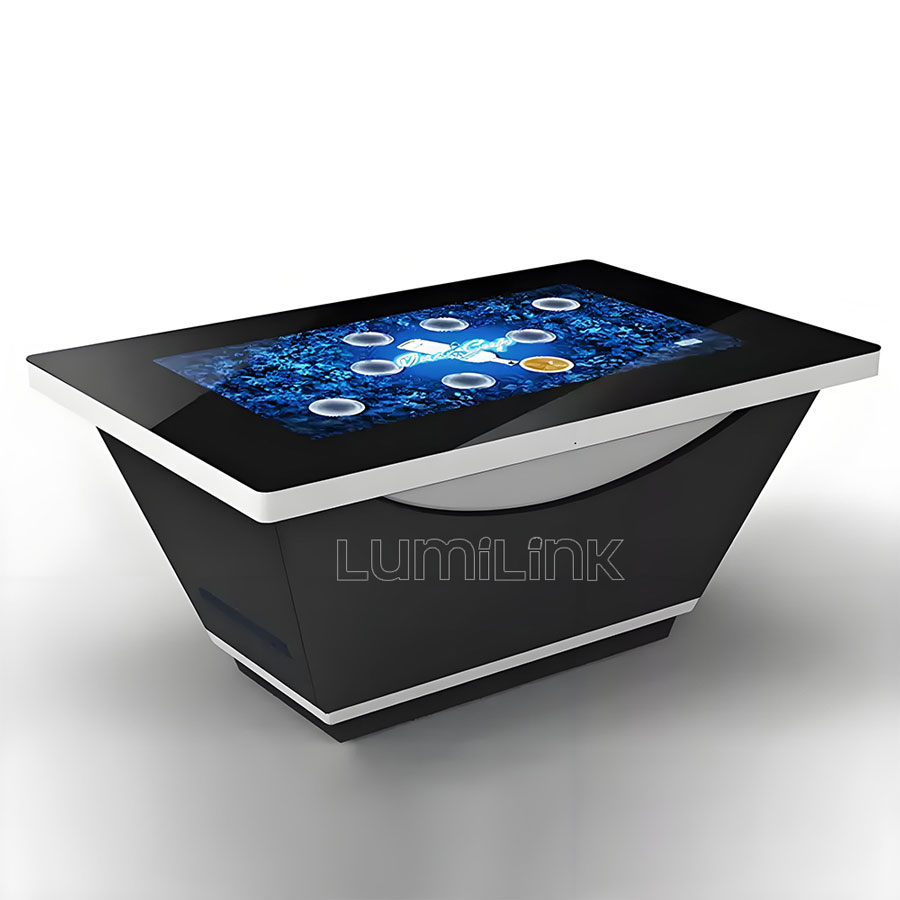
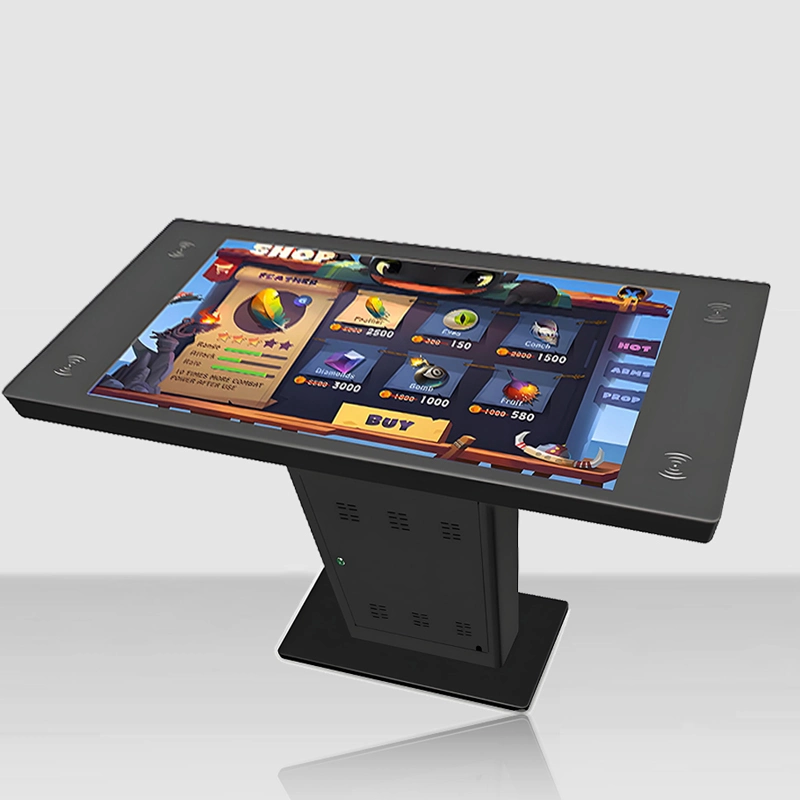
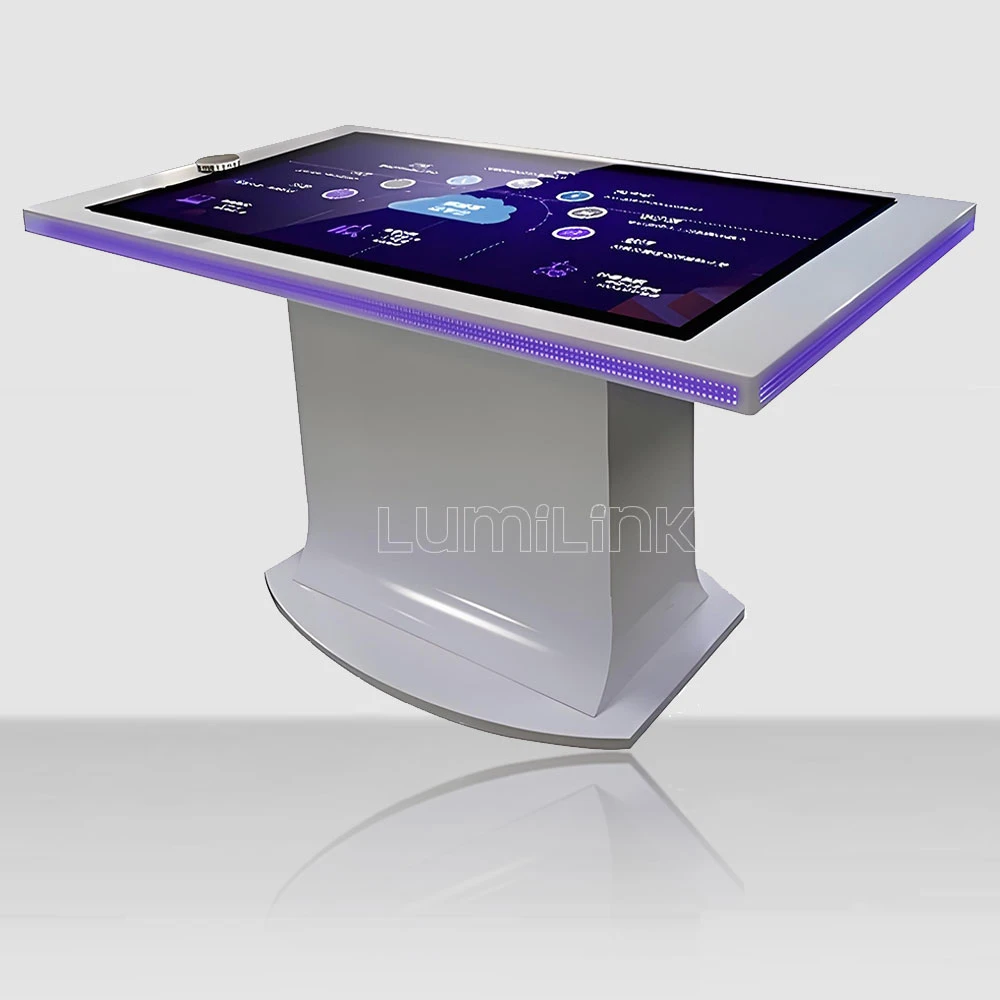
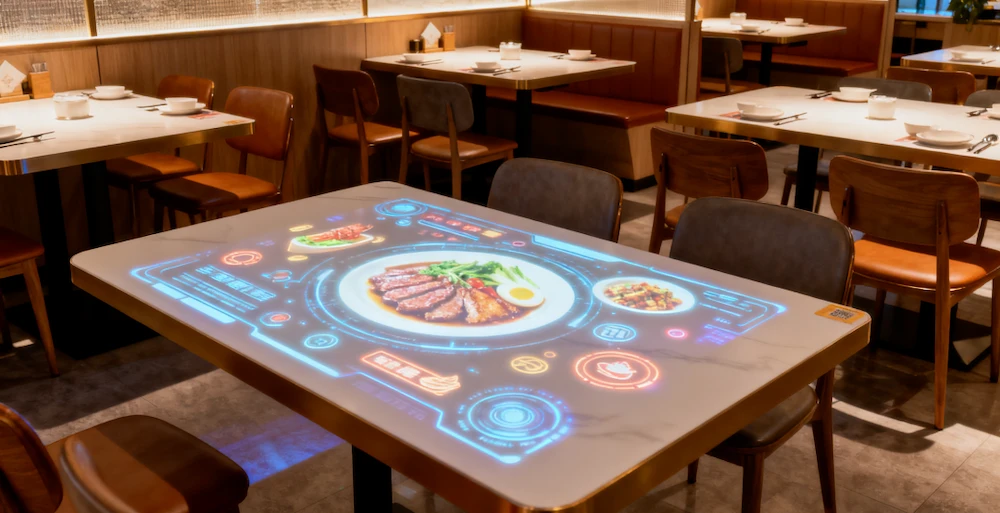
- Interactive table projection — Diners can play games, browse menus or interact with digital content while dining.
- Stage or banquet projection mapping — Cinematic storytelling visuals for weddings, performances and special events.
Each projection type can be customized based on the restaurant concept, available space and target audience.
Cost of an Interactive Projection Restaurant
There is no fixed price for building an interactive projection restaurant. The final investment depends on several factors:
- Projection size and scale — Larger venues require more projectors and sensors.
- Indoor or outdoor installation — Outdoor setups require weatherproof protection.
- Ambient brightness — Brighter environments require higher-lumen projectors.
- Equipment specifications — Sensor coverage, projection resolution and processing capabilities.
Design complexity and custom content — More creative themes and customized visual content increase development costs.
Frequently Asked Questions (FAQ)
Q1: Why is LiDAR more advantageous than infrared or camera-based sensing for restaurant projection systems?
A: LiDAR uses laser-based Time-of-Flight (ToF) technology, which is not affected by ambient lighting or shadows. This makes it highly reliable in restaurant environments where lighting conditions constantly change.
Q2: Can a single LiDAR sensor cover an entire restaurant?
A: In most cases, multiple sensors are used together. Multi-device cascading allows seamless coverage of large spaces or complex layouts.
Q3: How long does installation usually take?
A: Thanks to POE power supply and automatic calibration, installation is relatively fast. Most projects can be completed within 1–2 days depending on the venue size.
Conclusion
Interactive projection restaurants represent the fusion of art, technology and dining. They create unforgettable dining experiences, attract customers, enhance brand identity and set a new benchmark for the modern hospitality industry.