
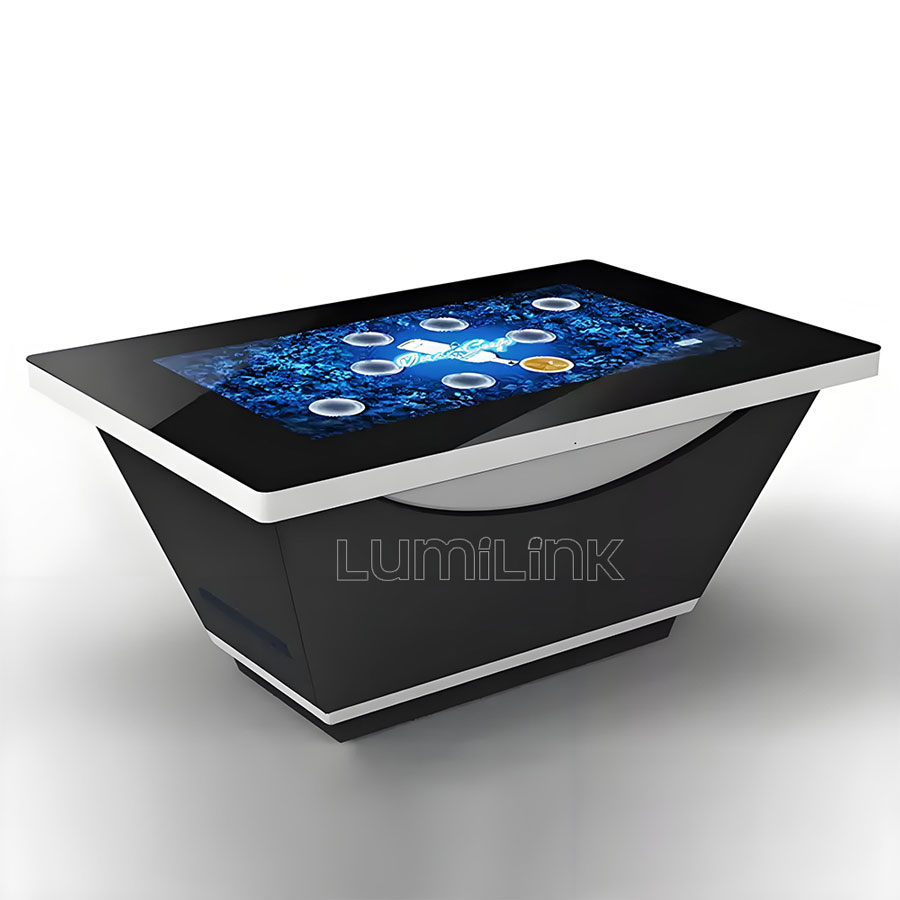
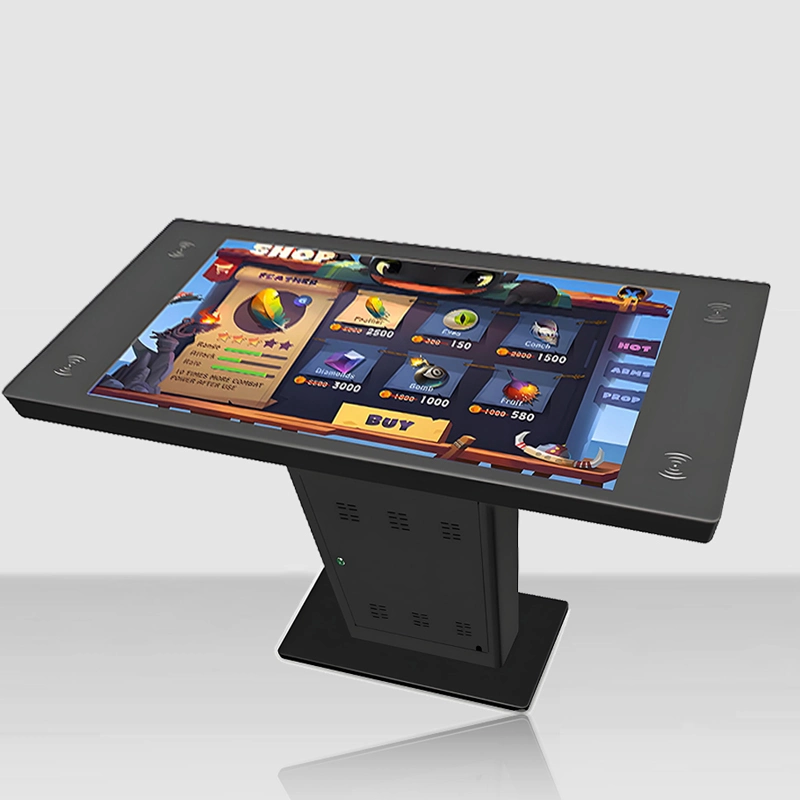
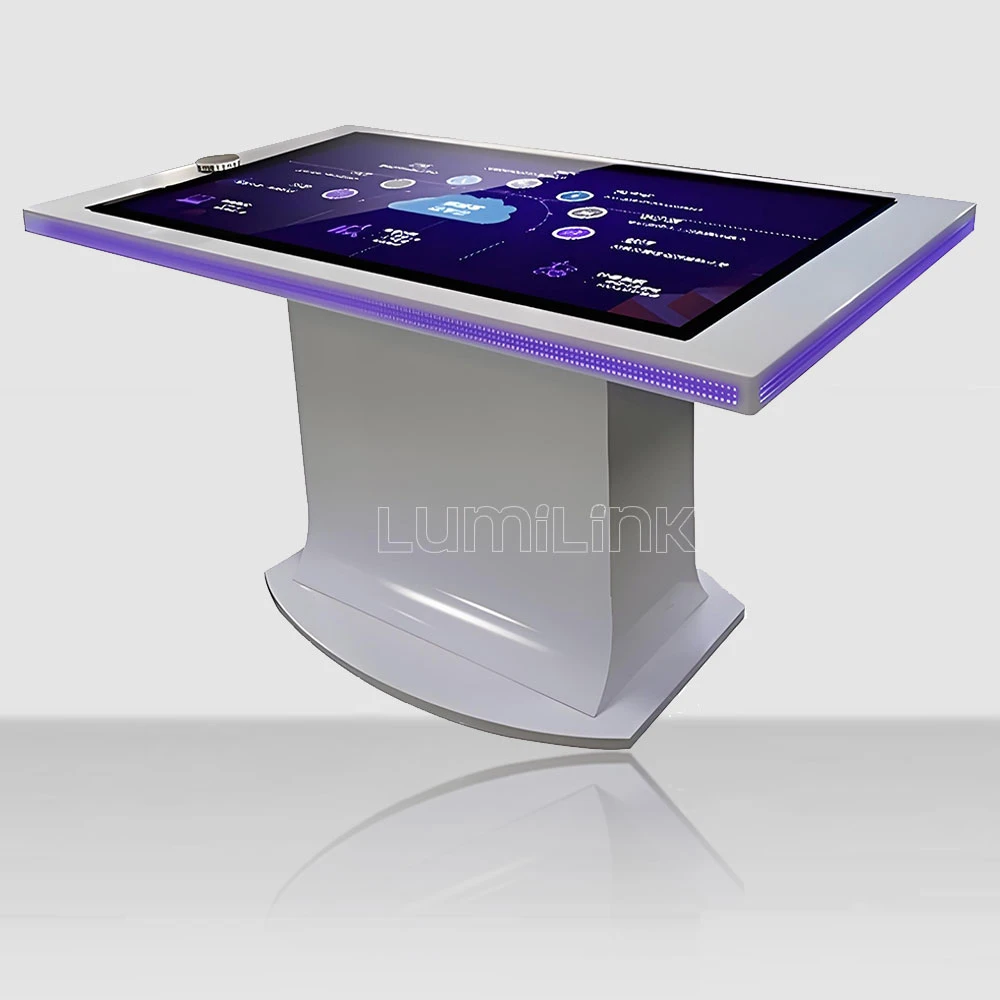

Every interactive touch table looks impressive in a product photo — glowing screen, sleek glass surface, clean design. But what separates a table that lasts seven years in a museum from one that fails after six months in a shopping mall? The answer is not in the spec sheet. It is in the manufacturing process: the materials chosen, the quality control steps, the testing protocols, and the engineering decisions that happen long before the product reaches your facility.
As an interactive touchscreen table manufacturer with over a decade of production experience, Lumilink has learned that building a reliable commercial touch table requires a fundamentally different approach from assembling consumer electronics. This guide pulls back the curtain on what goes into manufacturing a commercial-grade interactive touch table, and what B2B buyers should ask when evaluating suppliers.
The Core Components: What Goes Inside a Commercial Touch Table
A commercial touch table is not a single product — it is an integrated system of five critical components, each of which must be specified and tested to commercial standards:
1. Display Panel. The LCD panel is the heart of the table. Commercial-grade panels differ from consumer displays in three key ways: brightness (350 to 700 nits versus 250 nits consumer), lifespan (50,000+ hours rated versus 20,000 hours), and thermal stability (designed for continuous operation without backlight degradation). Lumilink sources panels from tier-one manufacturers like BOE and LG Display, and every panel is individually tested for dead pixels, brightness uniformity, and colour accuracy before assembly.
2. Touch Sensor. The touch layer sits on top of the LCD panel and determines how many simultaneous touch points the table supports and how quickly it responds. Lumilink uses projected capacitive (PCAP) touch sensors with up to 40 touch points and sub-10ms latency. The sensor glass is tempered to IK08 or IK10 impact ratings, depending on the deployment environment. Each sensor is calibrated after assembly to ensure uniform sensitivity across the entire surface — no dead zones, no drift, no ghost touches.
3. Computing Hardware. The built-in PC determines what software the table can run. Lumilink offers configurable options ranging from Intel Core i5 with 8GB RAM for standard applications to Core i7 with 16GB and discrete NVIDIA GPUs for demanding 3D visualisation or gaming workloads. All computing hardware uses industrial-grade components rated for 24/7 operation, with SSD storage for reliability and forced-air cooling for thermal management.
4. Chassis and Enclosure. The chassis is the structural backbone. Lumilink uses aircraft-grade aluminium for the frame and steel for internal mounting points, creating a rigid structure that absorbs impacts and dissipates heat. The enclosure design includes cable management channels, lockable access panels for maintenance, and sealed joints that prevent dust and liquid ingress. Every chassis is powder-coated for scratch and corrosion resistance.
5. Software Stack. Hardware without software is furniture. Every Lumilink table ships with a device management platform for remote monitoring, content scheduling, and automatic updates. The software stack supports standard web technologies, meaning your development team can build custom applications without proprietary SDKs or licensing fees.
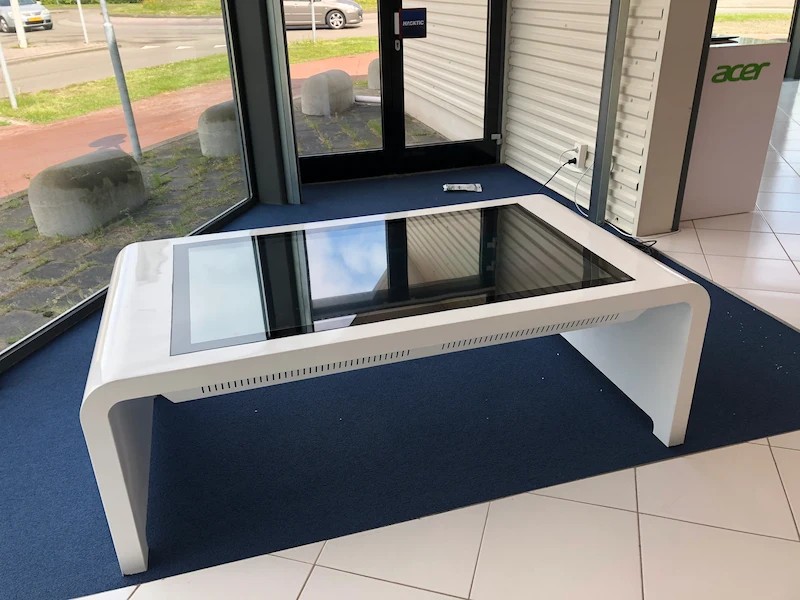
The Manufacturing Process: From Raw Materials to Finished Product
Understanding the manufacturing process helps buyers evaluate supplier quality. Here is how a Lumilink touch table moves through production:
Stage 1: Component Sourcing and Incoming Inspection. All components — LCD panels, touch sensors, PC modules, aluminium extrusions, tempered glass — arrive at our facility and undergo incoming quality control (IQC). Each batch is sampled for visual defects, dimensional accuracy, and electrical performance. Components that fail IQC are returned to the supplier; no substandard material enters the production line.
Stage 2: Chassis Fabrication. Aluminium extrusions are cut to precise lengths using CNC machining, then welded or bolted into the frame structure. Mounting points for the display panel, touch controller, and PC module are drilled and tapped. The chassis is then powder-coated and cured, creating a durable finish that resists scratches and corrosion. Dimensional accuracy is checked at every stage using calibrated measurement tools.
Stage 3: Display and Touch Integration. The LCD panel is mounted into the chassis using vibration-damping brackets. The PCAP touch sensor is bonded to the glass surface using optically clear adhesive (OCA), a process that requires a clean-room environment to prevent dust bubbles. The touch controller board is connected and the entire assembly is tested for touch accuracy, response time, and multi-touch functionality.
Stage 4: Computing Hardware Installation. The industrial PC, RAM, SSD, and cooling system are installed and connected. Cable routing is secured with strain relief and electromagnetic interference (EMI) shielding. The system is powered on and the operating system is installed, configured, and updated. All drivers are verified, and the touch table undergoes a 24-hour burn-in test to identify any early-life failures.
Stage 5: Final Assembly and Quality Assurance. The enclosure panels are attached, access locks are installed, and the table is cleaned and inspected. A final QA test covers touch functionality across all zones, display quality (brightness, colour, uniformity), audio output, network connectivity, and thermal performance under load. Only tables that pass every test are packaged for shipment.
Throughout the entire process, every step is documented. Serial numbers track each table through assembly, testing, and shipping, creating a complete manufacturing record that can be referenced years later if a warranty claim arises. This traceability is something that no trading company or contract assembler can provide, and it is one of the key advantages of working with a dedicated manufacturer.
Testing Protocols: What Commercial-Grade Really Means
Consumer electronics manufacturers test to ensure products work out of the box. Commercial manufacturers test to ensure products work for years under abuse. The difference is visible in the testing protocols:
| Test Category | What It Covers | Pass Criteria |
|---|---|---|
| Burn-in test | 24-hour continuous operation at full load | No crashes, no thermal warnings, no performance degradation |
| Impact test | IK08/IK10 rated steel ball drop on glass surface | No cracking, no shattering, touch still functional |
| Spill test | 500ml water poured across surface and edges | No liquid ingress, all electronics protected |
| Temperature cycling | 0°C to 50°C cycling for 8 hours | Stable operation across temperature range |
| Touch accuracy | Grid test across entire surface with 1mm tolerance | 100% accuracy in all zones, no dead spots |
| Vibration test | Simulated shipping vibration for 2 hours | No loose components, all connections intact |
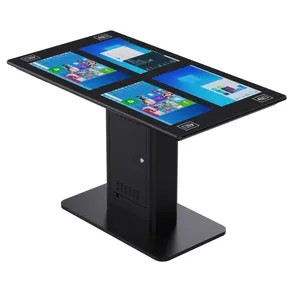
OEM and ODM Capabilities: Beyond Standard Products
Many B2B buyers and brand owners need more than a catalogue product. They need custom branding, specific dimensions, unique enclosure designs, or integration with proprietary software. As an established interactive touchscreen table manufacturer, Lumilink offers full OEM (Original Equipment Manufacturer) and ODM (Original Design Manufacturer) services:
OEM services allow you to purchase Lumilink tables with your brand logo, custom packaging, and tailored firmware. The hardware remains our standard design, but the product arrives at your customers looking like your own. This is ideal for distributors and resellers who want to build a branded product line without investing in manufacturing infrastructure.
ODM services go further, allowing you to specify custom enclosure designs, non-standard screen sizes, specialised I/O configurations, or unique mechanical features. Our engineering team works with your designers to develop the product from concept through production. This is suited for brand owners and integrators who need a differentiated product that does not exist in any standard catalogue.
In both cases, Lumilink handles all manufacturing, testing, and quality assurance. You receive a finished product that meets your specifications and our quality standards, with your branding and packaging. Minimum order quantities for OEM projects typically start at 10 units; ODM projects may require higher volumes depending on the level of customisation.
What to Ask When Evaluating a Touch Table Manufacturer
If you are sourcing interactive touch tables for a B2B project — whether for resale, integration, or institutional deployment — here are the questions that separate reliable manufacturers from trading companies masquerading as factories:
1. Do you manufacture in-house or outsource assembly? Many "manufacturers" are actually trading companies that buy components from various suppliers and assemble them in a contract facility. This creates quality control gaps and makes warranty support difficult. Lumilink owns its production facility, with dedicated assembly lines, testing labs, and QA personnel on site.
2. What is your annual production capacity? A manufacturer producing 500 tables per year may not have the scale to support a large project or maintain inventory for replacement parts. Lumilink produces thousands of units annually across multiple product lines, with flexible capacity for large OEM/ODM orders.
3. Can you provide test reports and certifications? Ask for CE, FCC, RoHS, and relevant safety certifications. Request sample test reports for impact resistance, electrical safety, and EMC compliance. Any reputable manufacturer will provide these documents readily.
4. What is your warranty and post-sale support structure? Understand what the warranty covers (all components or just the display), how long it lasts (one year, three years, five years), and what the response time is for warranty claims. Ask about replacement part availability — a manufacturer that cannot supply spare touch controllers three years after purchase is not a viable long-term partner.
5. Can I visit the factory or see a production line tour? The most reliable way to verify manufacturing capability is to see it in person. Lumilink welcomes factory audits and video tours for B2B clients. If a supplier refuses or makes excuses, that is a significant red flag.
6. What is your lead time for standard versus custom orders? Standard configurations should ship within 2 to 3 weeks. Custom orders typically take 6 to 12 weeks depending on the level of customisation. A supplier who quotes the same lead time for both standard and custom products is either not doing genuine custom work or is cutting corners. Understanding lead times helps you plan your project schedule and avoid costly rush fees.
7. How do you handle product end-of-life? Technology evolves, and eventually components become unavailable. A responsible manufacturer has an end-of-life policy that notifies customers before components are discontinued, provides a final purchase window for spares, and offers backward-compatible replacement options. Ask about the manufacturer's track record of supporting products after they leave active production — this is where many suppliers quietly abandon their customers.
Partnering with the Right Manufacturer
Choosing an interactive touchscreen table manufacturer is a long-term decision. The tables you purchase today will be in service for five to seven years, and you need a partner who will support them throughout that lifecycle. Lumilink has built its reputation on manufacturing reliability, engineering flexibility, and post-sale support that goes beyond shipping a box and disappearing.
Whether you are a B2B buyer sourcing tables for a corporate deployment, a distributor building a branded product line, or an integrator specifying custom hardware for a client project, Request a Custom Quote to start the conversation. Our team will review your requirements, recommend the optimal configuration, and provide a detailed proposal including pricing, lead times, and support terms.
For distributors and agencies interested in partnership opportunities, Lumilink offers volume pricing, co-marketing support, and dedicated account management. We understand that your reputation depends on the products you deliver to your clients, and we back that up with the manufacturing depth, engineering expertise, and support infrastructure that a serious B2B relationship requires.