
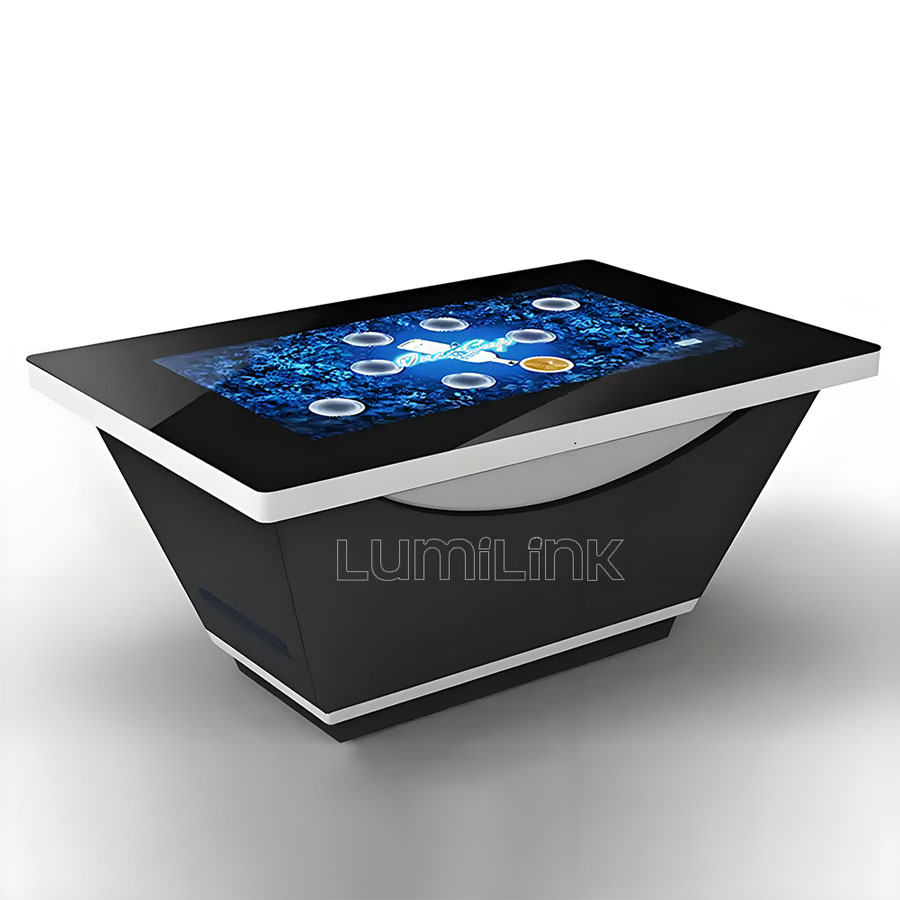
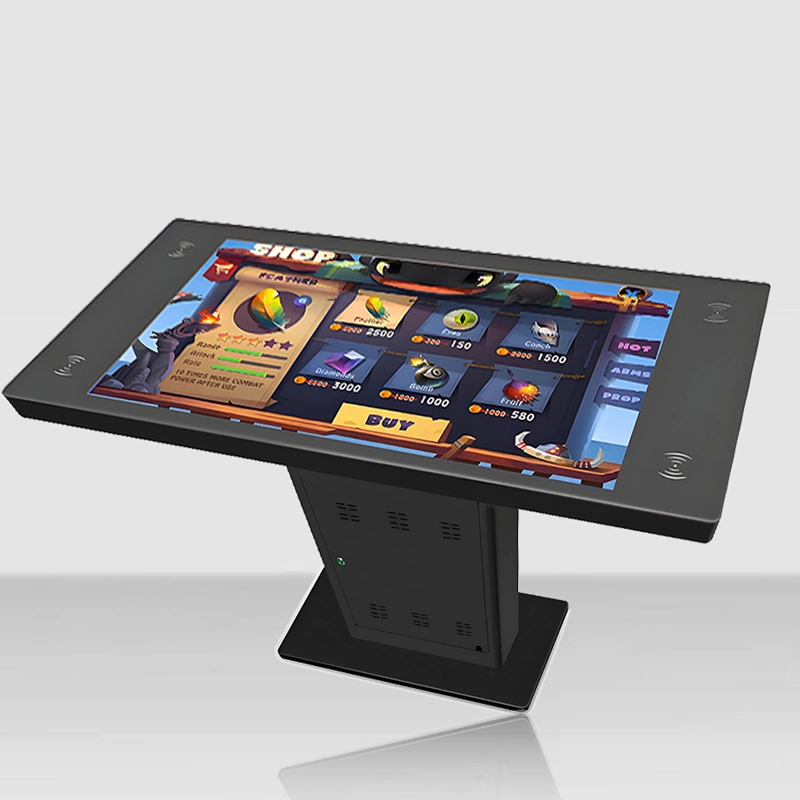
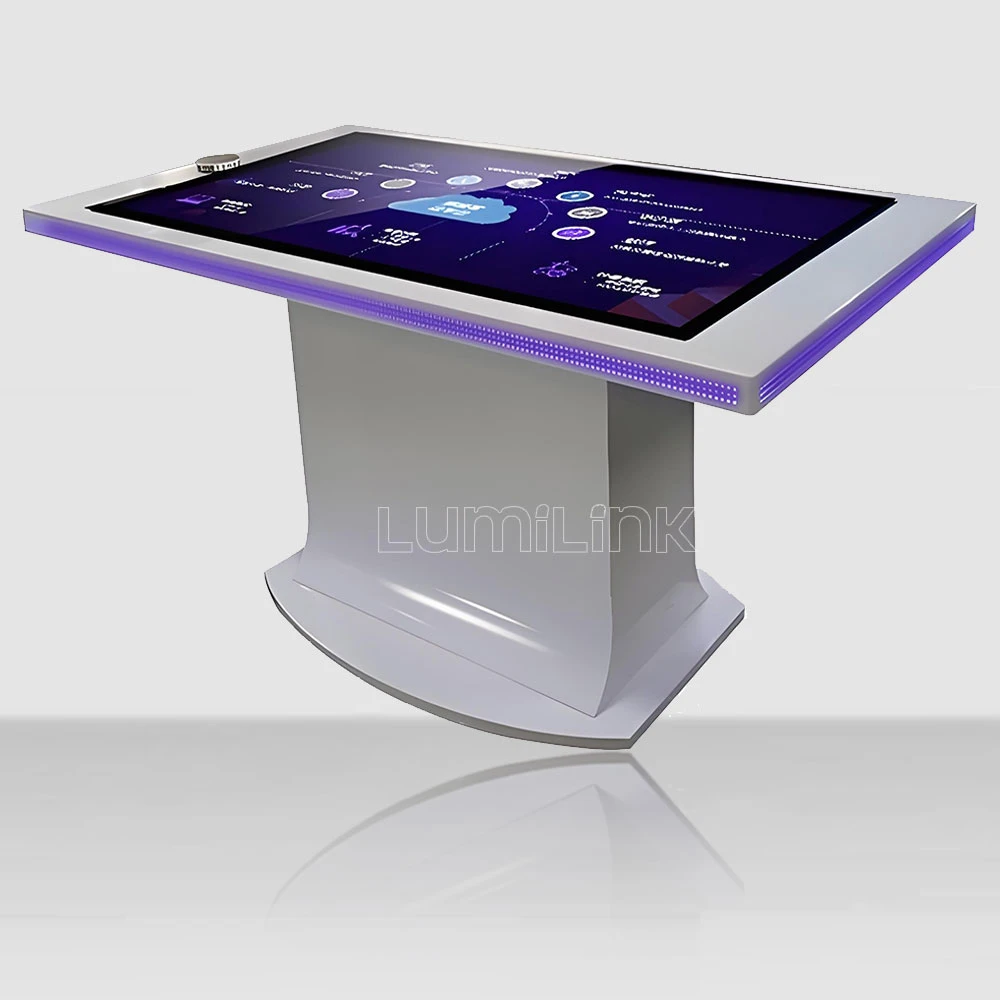

In 2026, businesses across every sector are rethinking how they engage audiences in physical spaces. Few corners of the interactive table market have grown as fast as the DND touch screen table — a horizontal touchscreen built for digital tabletop role-playing, where a Dungeons & Dragons party spreads its battle map, dice and character sheets across one shared surface instead of a cardboard grid. Search volume for the phrase is up 50 percent year over year, and the demand is not coming only from home hobbyists: board game cafes, bar-restaurant hybrids and themed venues are buying these tables as revenue equipment.
The appeal is easy to explain after one session on one. A physical D&D night needs a battle map drawn by hand, miniatures carried in a case, a rules arbiter and someone willing to host. A digital surface replaces the setup labor with software — fog of war that reveals rooms as the party explores them, dice that roll on the glass with animated results, tokens that snap to a grid — and it turns the table itself into a reason to book a seat.
This guide covers the format from both sides: what a serious digital tabletop needs in hardware, which software platforms actually run well on a large horizontal touchscreen, and what a venue owner should check before ordering a fleet of them.
Why Game Cafes and Venues Are Buying DND Touch Screen Tables
The commercial story starts with seat economics. A board game cafe rents table-hours; a party of five that plays a four-hour session occupies seats that must pay rent the entire time. Venues report that groups playing on an interactive surface book longer sessions and return more often, because the technology itself removes the two biggest friction points of a campaign night: setup time and no-show drop-off. When the map, the rules reference and the dice all live on the table, a group that finishes work at seven can start playing by half past.
There is also a scheduling effect. Physical tabletop space in most venues sits idle on weeknights; a digital table does not. The same surface that runs a Thursday night campaign can run trivia, a digital board game library, or menu ordering on a Monday. That utilization gap — not the novelty — is what justifies the hardware line in a business plan.
And the marketing effect is real. A glowing table running a dungeon crawl is the most photographed object in any venue that owns one; groups post the session, tag the venue, and effectively advertise it. Several game bars in the US and Europe now treat one or two such tables as their signature booking category, taking reservations weeks ahead for weekend slots.
For a home buyer the calculus is different — one table, no rent, pure enjoyment — and the hardware checklist is nearly identical, which is why the market for these surfaces has broadened beyond the arcade era of touch foosball into something much more mainstream. Restaurants with a gaming corner increasingly order the same hardware they would use for digital menus, which is why interactive restaurant tables and gaming tables have quietly converged into one product category.
Key Specifications That Matter for Digital Tabletop Play
Surface size and player count. A D&D party is four to six players plus a game master, so the honest minimum is a 43-inch surface for four people; 55 inches is the working standard because it lets everyone reach the center of the battle map, and 65 inches removes the last of the reach arguments. Anything smaller forces players to pass tokens hand to hand, which kills the pace of combat.
Touch-point count. Six players rolling dice, dragging tokens and panning a map at once generate far more simultaneous contacts than a menu-ordering table ever sees. A controller that reliably reports 20 to 40 points is the practical target; a 10-point panel will visibly drop or merge touches during crowded combat scenes. Windows and Android natively cap at 10 points regardless of hardware, so if the software stack is a PC running a VTT, ask the manufacturer how the controller behaves with its driver on the actual operating system.
Response and report rate. Dice rolls and token drags feel different on a surface with a slow report rate. Look for a tested per-point report rate in the hundreds of hertz and a controller known by model number, not just an "up to 40 points" line in a brochure.
Brightness and glass. Game venues are dim by design — which sounds like a low-brightness argument and is the opposite. A 450-nit surface in a dark room can be run at reduced brightness, extending panel life and reducing reflections in exactly the moody lighting these venues want. Tempered glass of at least 4 mm with a matte or anti-glare finish reads better under spotlights than gloss, which mirrors every pendant lamp onto the battle map.
Compute and storage. Virtual tabletop software is the heaviest workload these tables see. A Windows build with a current-generation processor, 16 GB of memory and a fast SSD runs the major VTT platforms comfortably; an Android build handles lighter board-game apps and digital menus but is not the right engine for a full campaign night. Decide the software stack first, then buy the table around it — the most common mismatch in this category is buying a menu-grade Android table and discovering the VTT will not run on it.
Durability around food and drink. Dice, sodas and sticky fingers land on this surface nightly. A sealed PCAP build wipes clean in seconds and shrugs off spills; an exposed infrared emitter strip collects them. For venues serving food, this single difference determines whether the table is an asset or a maintenance schedule.
| Criteria | Projected Capacitive (PCAP) | Infrared (IR) Frame |
|---|---|---|
| Touch response through glass | Direct, no air gap if optically bonded | Floats above the glass surface |
| Light interference | Unaffected by sunlight or venue lighting | Strong direct light can cause false points |
| Edge-to-edge glass | Yes, flush glass surface | Visible bezel housing emitters |
| Spill and cleaning tolerance | Sealed, wipe-clean, no exposed sensors | Emitter strip needs periodic cleaning |
| Best fit | Restaurants, game cafes, bars, high-traffic halls | Budget projects, temporary installations |
Software: What Actually Runs on the Glass
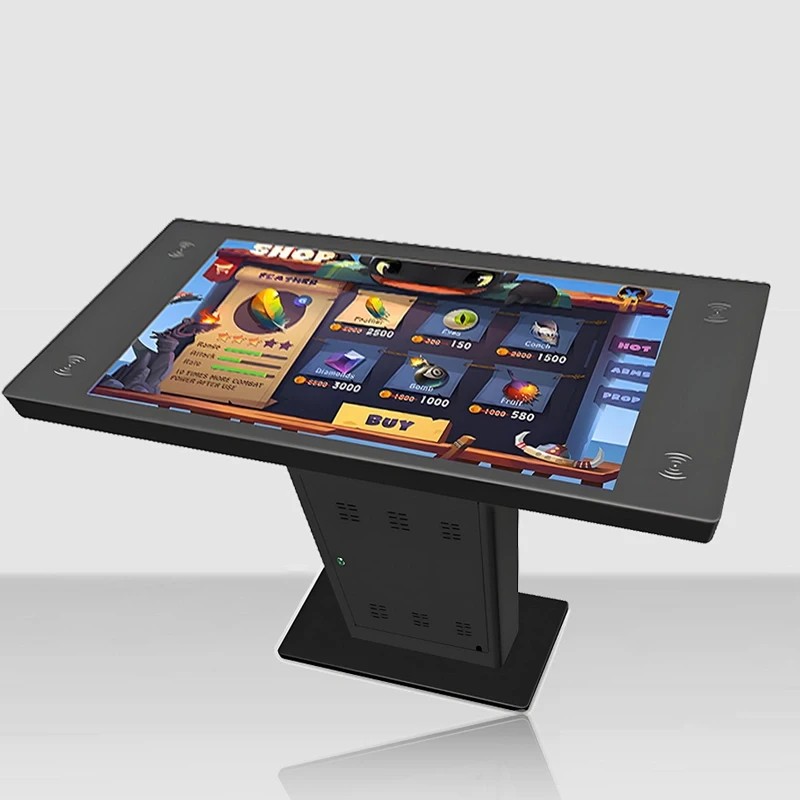
The hardware is half the purchase; the software plan is the other half, and it deserves the same scrutiny. Virtual tabletop platforms — the kind that host fog of war, initiative trackers, character sheets and 3D or 2D battle maps — generally run as Windows desktop applications or browser apps, which makes a Windows-powered table the flexible choice for serious campaigns. Ask whether the platform licenses by host seat, how maps are imported, and whether the license survives hardware replacement.
A lighter tier exists too: digital board game adaptations, dice-roller apps and trivia packages that run happily on Android. Many venues deliberately split the difference — one or two Windows tables for booked campaign nights, smaller Android surfaces for casual play — and the hardware lines overlap enough that ordering both from one manufacturer simplifies service and spare parts.
Whichever tier, insist on a content update path that staff can operate. A table whose scenes require a developer visit stops being programmed after month two; one with a simple web dashboard gets new maps every week, and the freshness shows in the booking calendar.
Top Benefits Venues Report After Installing
Longer, more frequent bookings. Campaign sessions run three to five hours by nature, and groups that own the technology habit return weekly. Utilization of the same floor space rises accordingly.
Premium pricing per seat. A reserved seat at a digital table is a different product from a walk-in stool, and venues price it that way — package pricing per session, membership tiers, weekend premiums. The table converts square meters into a bookable, differentiated experience.
Reduced setup labor. Staff no longer clear miniatures, reset boards or untangle cables between parties. The reset is a screen tap, and the turnaround between sessions drops to minutes.
Social media gravity. An animated dice roll across a 55-inch glass surface is inherently shareable; venues report a steady stream of tagged posts from single installations, which is advertising that costs nothing after the purchase.
Format flexibility. The same hardware serves D&D on Friday, a board game library on Sunday, and menu browsing or live sports statistics midweek. One asset, three revenue modes — the arithmetic that makes the purchase defensible in a business plan.
Real-World Venue Use Cases
Board game cafes. The flagship deployment: a row of digital tables reserved for RPG nights, with the physical game library covering the rest of the floor. The digital section usually prices higher and books out first.
Gaming bars and breweries. A pair of tables in a quiet corner turns dead evening space into a destination; the venue sells drinks to a seated, loyal crowd for four hours at a stretch.
Restaurant gaming corners. Family restaurants use one surface for kids' games between courses on weeknights and RPG bookings on weekends, which is precisely the dual-role restaurant touch tables were designed for.
Home game rooms. The dedicated hobbyist buys one 55-inch unit, retires the fold-up cardboard grid, and hosts the campaign at home — often the same hardware specification a cafe would order, minus the commercial duty cycle.
Conventions and events. Rental fleets carry digital tables to conventions for demo sessions; publishers run product previews on them, and the organizer reuses the same units for registration or wayfinding the rest of the year.
How to Choose the Right DND Touch Screen Table
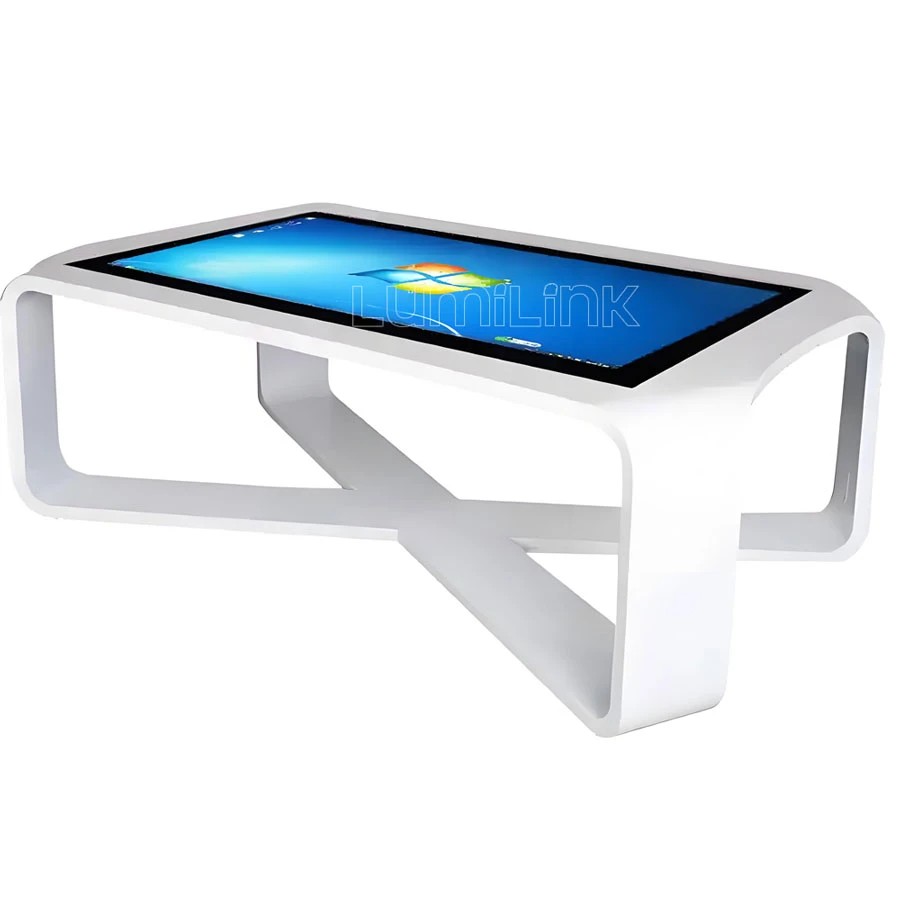
Work the checklist in order. First, decide the software stack — full virtual tabletop on Windows, or lighter apps on Android — because everything downstream follows from it. Second, size by party: count the players who will stand around it, and buy 55 inches for a standard party of five, 65 inches if the game master works from the same surface. Third, the touch system: PCAP with a named controller and tested point count, demonstrated with six hands on the glass if possible.
Fourth, build quality for a food environment: sealed touch layer, tempered glass, wipe-clean finish, and a service compartment that staff can reach without tools. Fifth, commercial terms: warranty length, spare controller availability, and a written lead time. A venue ordering several tables should also ask about a pilot unit — run one for a month of real sessions before committing the fleet budget, because booking behavior is easier to observe than to forecast.
On budget: commercial-grade horizontal touchscreens in this size band are precision hardware — bonded or well-sealed PCAP layers, commercial panels rated for 16-hour duty, tempered glass. Quotes far below the realistic component cost are telling you what was removed. Ask every supplier the same five questions and let the answers, not the brochure gloss, decide.
Why Lumilink Is the Right Partner
Lumilink manufactures interactive touch tables from 32 to 86 inches with PCAP touch, commercial-grade panels, tempered safety glass and factory-direct pricing, shipping to more than fifty countries. Gaming venues order the same platforms as restaurants and museums from us — size, brightness, finish and OS image are configuration items, and multi-table orders come with a production schedule in writing.
Board game cafes and gaming bars across our client base run these tables nightly, and we are comfortable being compared controller by controller — model number, tested points, report rate, warranty terms.
Conclusion: Take the Next Step
A DND touch screen table earns its place the way every good venue investment does: it fills seats that were previously empty, prices them higher, and markets itself every time a dice roll lands. Specify the software stack first, the party size second, and the touch hardware with the same rigor you would apply to any commercial display.
Planning a gaming corner or a full digital tabletop fleet? Request a Custom Quote today to receive a tailored proposal including hardware specifications, pricing, and implementation timeline. Or Download Product Spec Sheet to review detailed technical documentation for our full interactive touch table lineup.