
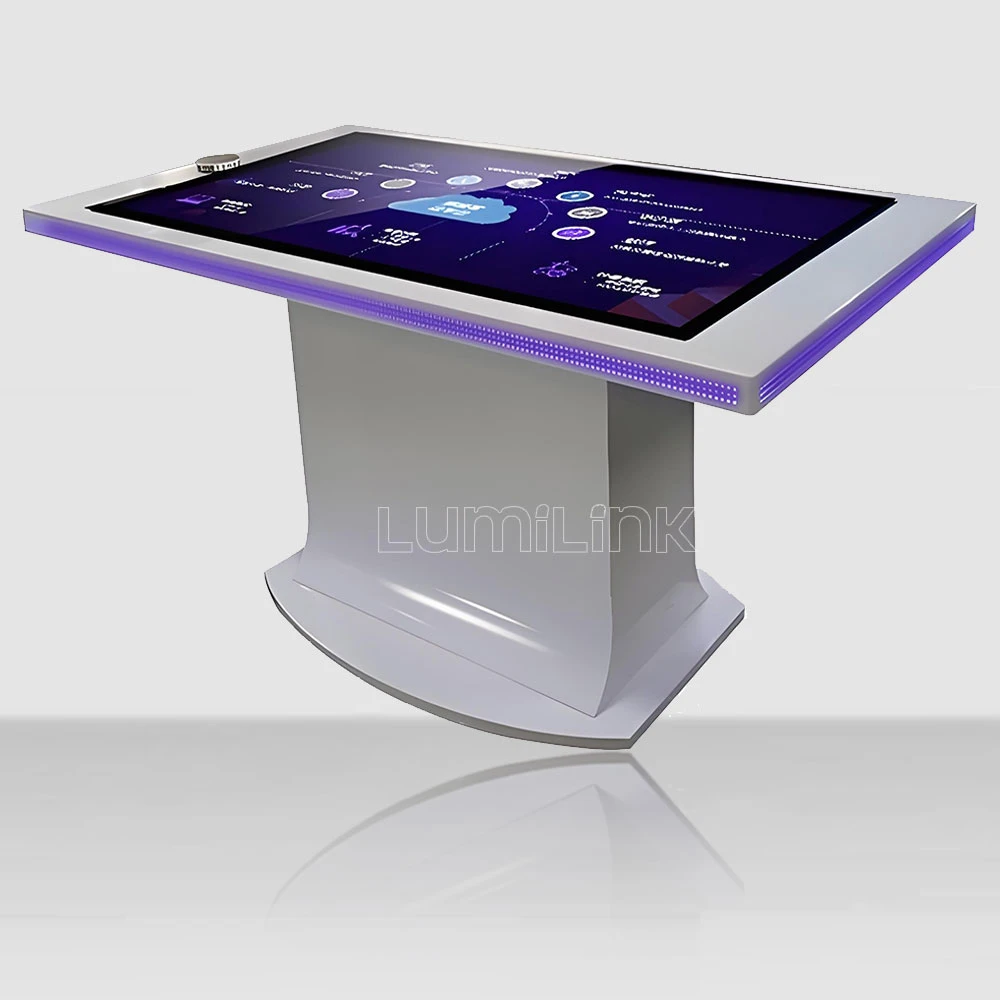

In 2026, businesses across every sector are rethinking how they engage audiences in physical spaces. Searching for an Ideum touch table alternative usually starts the same way: a procurement team shortlists the most famous name in the category, collects a quote, and then discovers the budget conversation that follows. Ideum builds excellent hardware — that is not in dispute. The question worth asking is whether the project in front of you needs everything bundled into that price, or whether a factory-direct manufacturer can deliver the same touch experience with a different cost and lead-time profile.
This guide does the comparison honestly. We look at the Ideum product line as it is documented publicly, at the price points that have entered the public record through listed pricing and government procurement data, and at what a factory-direct alternative changes — and what it does not change. No disparagement, no invented discounts: just the specifications, the numbers that are on the record, and a checklist you can run against any supplier, including us.
Lumilink manufactures interactive touch tables for museums, restaurants, showrooms and exhibition halls, and we are frequently asked to quote against premium US-brand tables. The sections below give you the framework to make that comparison on facts rather than brand familiarity.
Why Buyers Search for an Ideum Touch Table Alternative
The searches themselves tell the story. Keyword data shows "ideum touch table" growing 80 percent year over year, with advertisers bidding aggressively for the phrase — a signal that many buyers research the brand and then look for comparable options. The motivations cluster into four groups: lead time, budget, customization, and service geography.
Lead time is the most common trigger. Premium US-built tables are frequently quoted with multi-week production windows before freight even begins, and museum or exhibition projects rarely tolerate schedule slips. A project that lands in the middle of a fit-out calendar needs a supplier who can commit to dates in writing, not ranges.
Budget is the second trigger — but not in the way many assume. Nobody serious expects premium-grade hardware at consumer prices. What buyers discover is that the price of a famous-brand table includes US engineering labor, domestic assembly, patent royalties, and a distribution layer. Some of that spend buys genuine value; some of it buys geography. A factory-direct alternative keeps the first category and trims the second.
Customization is third. Ideum offers configuration options, but the product line is fixed by design — that is how quality stays consistent. Buyers who need a non-standard size, a branded enclosure, a specific coating, or software pre-installed to their workflow often need a manufacturer rather than a product catalog.
Service geography is fourth and quietly decisive. A table installed in Dubai, Singapore or Hamburg that needs a replacement touch controller benefits from a supplier with regional freight lanes and parts stocking, not trans-Pacific shipping on every spare part.
A fifth motivation appears once the first table succeeds: fleet economics. Venues rarely buy one interactive table — a museum plans three to eight across its galleries, a restaurant chain pilots two units then rolls out twenty, an exhibition organizer standardizes on one format for future shows. At fleet scale, the per-unit price difference compounds, and so does every operational difference: one spare controller in a local warehouse versus one crossing an ocean, one software image maintained by the factory versus a custom integration nobody owns after the installer moves on. Buyers who search for an alternative are often pricing the second and third purchase, not the first.
The Ideum Product Line, as Publicly Documented
Any credible comparison starts with respect for the benchmark. Ideum's current lineup, as published on their own product pages, covers most of the interactive table landscape:
| Model | Sizes | Documented Characteristics |
|---|---|---|
| Platform II | 43", 49", 55", 65" | Ruggedized multitouch table, the core line |
| Pro II | 49", 55", 65" | Workstation-class computer, expansion options, all-aluminum frame |
| Drafting II | 43", 49", 55", 65" | Angled drafting-style configuration, 4K UHD, patented design |
| Pico | 43", 49", 55" | Fully integrated multitouch coffee table format |
| Colossus II | 86" | Giant 4K table for up to eight simultaneous users, impervious to light interference |
| Pano Dual Display | ~90" ultra-wide | Two contiguous 49" 4K commercial displays in one surface |
Two engineering traits deserve genuine credit, because any alternative should match them rather than dodge them. First, projected capacitive touch across the line — the same technology family as premium smartphones — which is completely immune to the lighting conditions that plague infrared tables in sunlit atriums. Second, optically bonded displays in the +PLUS series, where the glass is laminated directly to the panel to eliminate internal reflections and seal out dust and moisture. If an alternative quotes you an air-gapped panel while charging near-premium prices, that is the first corner to question.
What Publicly Documented Pricing Actually Shows
Current pricing is quote-based, but a surprising amount has entered the public record, and it is worth lining up:
| Data Point | Documented Figure | Source Type |
|---|---|---|
| Platform 46 launch pricing (2013) | from $9,950 | Contemporary trade press |
| 55" Platform / Pro listed pricing | $25,000–$35,000 | Published retail listings (earlier generation) |
| 55" PCAP drafting-style table | $36,922 | US federal procurement award, 2015 |
| Presenter 65 PCAP display | $56,709 | US federal procurement award, 2017 |
| Pano table + multitouch wall bundle | $129,926 | US federal procurement award, 2016 |
Read these carefully rather than quoting them out of context. The launch figure is twelve years old; the retail listings predate the current generation; the federal awards include configuration, support and delivery line items that inflate beyond bare hardware. What the record does establish is the order of magnitude: mid-size tables sit firmly in the tens of thousands of dollars, and giant formats with integration regularly cross six figures. When a factory-direct quote arrives at a fraction of that band for comparable PCAP hardware, the comparison is not "cheap versus good" — it is a question of which overheads each price contains.
One more element of the premium package deserves a mention: software. The benchmark maker has spent a decade building middleware that connects physical objects to screen content, and that ecosystem is part of what the price funds. When you compare an alternative, ask the same question of both sides: what does the software layer cost, who maintains it, and what happens when the interactive needs a new scene two years from now? Hardware that arrives without any content plan is only half a product, whichever logo is on the frame.
Finally, a note on patents, because they surface in every alternative conversation. A patented enclosure design protects the way one company built its table; it does not prevent any other manufacturer from building a touch table. The category is defined by components and physics, not by any single chassis. What matters to your project is whether the alternative's own engineering — its glass, its touch layer, its thermals — stands on its merits, which is exactly what the specification sections below are for.
Key Specifications That Matter in Any Alternative
Strip away the brand names and a touch table is five engineering decisions. Get these right from any supplier and the origin of the aluminum frame matters much less.
Touch technology. Projected capacitive is the standard for public venues, and for good reason: it senses through tempered glass, ignores sunlight and stage lighting, and survives the wipe-clean disinfection routines of museums and restaurants. Infrared sensing costs less and works indoors, but its emitter strip is exposed, and strong direct light can generate false points.
Real touch-point count. Marketing materials love big numbers. The practical question is how many simultaneous contacts the controller reports without dropping or merging points when six visitors crowd one edge. Ask for the controller model and its tested per-point report rate, not just the panel's theoretical maximum.
Display grade and bonding. Commercial-grade panels are rated for the 16–18 hour daily duty cycles of public spaces; consumer panels are not, and putting one flat under warm glass shortens its life further. Optical bonding, where offered, improves both contrast and sealing.
Brightness. A horizontal surface collects every overhead luminaire in the room. Depending on venue lighting, plan for 450 to 700 nits, and treat anything below 350 nits as indoor-dim-only.
Build and safety. Tempered glass of at least 4 mm with polished rounded corners, a steel or aluminum chassis that tolerates 100 kg of distributed load, and cable routing that survives a cleaning crew. This is the unglamorous half of durability.
Compute and operating system. Decide what runs the content before comparing frames. A Windows build runs existing desktop software and enterprise management tools but draws 60 to 150 watts and needs licensing; an Android build boots to kiosk content in seconds at 15 to 35 watts but lives or dies by the APK supply chain. Either way, ask what is inside the table — processor generation, memory, storage — and whether the media player is accessible for service without lifting the glass.
Serviceability. Every touch table eventually needs a controller, a cable or a power supply. The difference between a good and a bad design shows on that day: a lockable service compartment reachable from the side, connectors that a technician can swap in minutes, and a supplier who can ship the part from stock. Ask where spare parts ship from and what the target dispatch time is — the answer is a better predictor of your ownership experience than any brochure.
| Criteria | Projected Capacitive (PCAP) | Infrared (IR) Frame |
|---|---|---|
| Touch response through glass | Direct, no air gap if optically bonded | Floats above the glass surface |
| Light interference | Unaffected by sunlight or venue lighting | Strong direct light can cause false points |
| Edge-to-edge glass | Yes, flush glass surface | Visible bezel housing emitters |
| Durability in public venues | Sealed, wipe-clean, no moving parts | Emitter strip needs periodic cleaning |
| Best fit | Museums, showrooms, dining, high-traffic halls | Budget projects, temporary installations |
How Factory-Direct Manufacturing Changes the Equation
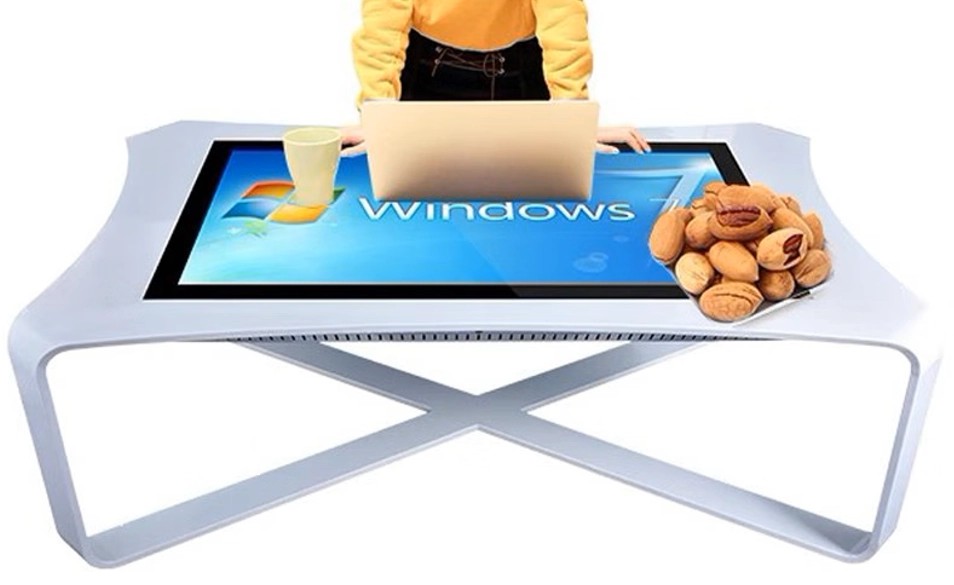
The honest version of the factory-direct pitch is narrower than most. What genuinely changes: price structure, because you buy from the assembly line rather than through a distribution chain; customization, because enclosure dimensions, colors, glass coatings, OS images and pre-installed software are configuration items rather than special orders; and lead-time control, because the factory that builds the unit schedules the freight.
What does not change: physics and components. A 55-inch commercial panel, a 40-point PCAP controller, tempered glass and a welded steel base cost what they cost anywhere in the world. The savings come from overhead, not from thinner glass. Any quote dramatically below the realistic component cost is telling you something about the components.
What requires diligence: standards and service. Ask a prospective alternative manufacturer for CE / FCC / RoHS documentation, the panel brand and grade in writing, the controller specification, and the warranty terms including who pays freight on a replacement part. A confident manufacturer answers all four in one email.
A worked example makes the cost structure concrete. In a mid-size 55-inch PCAP table, the commercial panel, touch controller, tempered glass, chassis steel and assembly together represent a substantial but bounded bill of materials; around that sits the manufacturer's overhead, then distribution margin, then the regional integrator's markup, then the brand premium. A famous-name quote passes through all four layers. A factory-direct quote removes the last two and shrinks the first. That is the entire arbitrage — which is why an alternative that is dramatically cheaper than the realistic component cost is not a bargain but a warning about what was removed from inside the frame.
How to Compare Alternatives Without Getting Burned
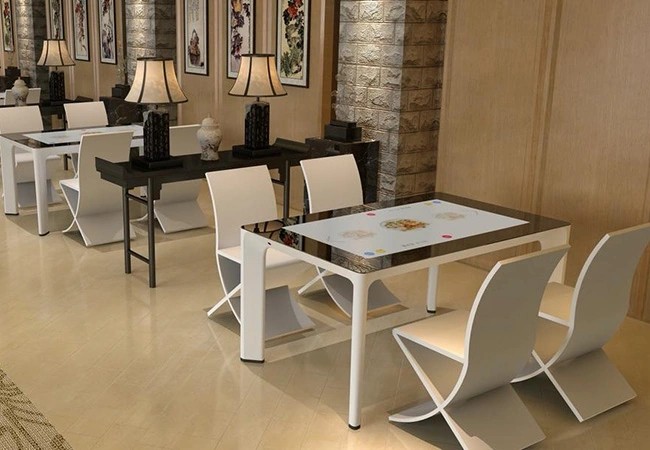
Run every candidate — including the famous brand — through the same five-question screen. First, panel and touch controller: brand, grade, bonded or air-gapped, tested touch points and report rate. Second, duty-cycle rating: is the display rated for continuous public use, and what is the rated brightness at the glass surface? Third, build: glass thickness and treatment, frame material, load rating, and cable management. Fourth, commercial terms: warranty length, parts availability commitment, freight responsibility, and a production schedule with dates. Fifth, references: photos and contactable clients from the same venue type as yours, not just a highlight reel.
Score the answers, not the brochures. A supplier who volunteers the controller model and the report rate is telling you how they engineer; one who answers "40-point touch" to every question is telling you how they sell.
And size the commitment to the risk. Before any multi-table or fleet order, buy one unit and put it through its paces in the real venue: run it for the daily hours it will actually work, clean it the way your staff will clean it, and file one test support request to measure the response. A pilot costs little and answers the only question that matters — what this supplier is like to own, not to evaluate.
Why Lumilink Is the Right Alternative Partner
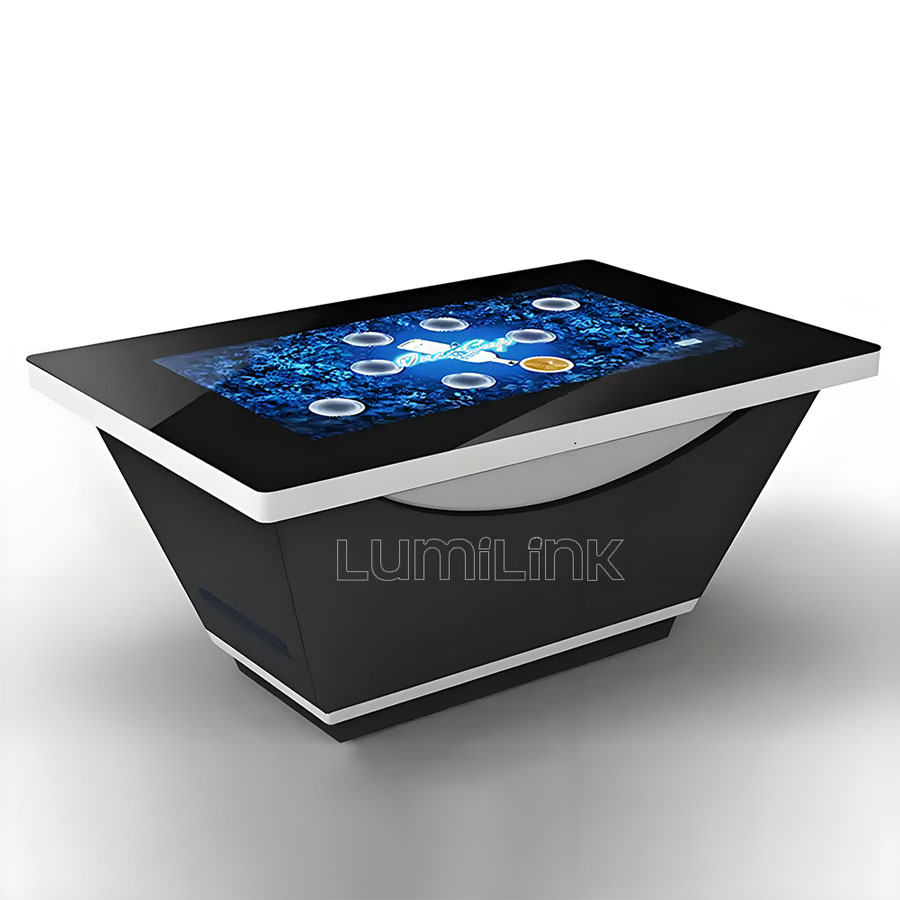
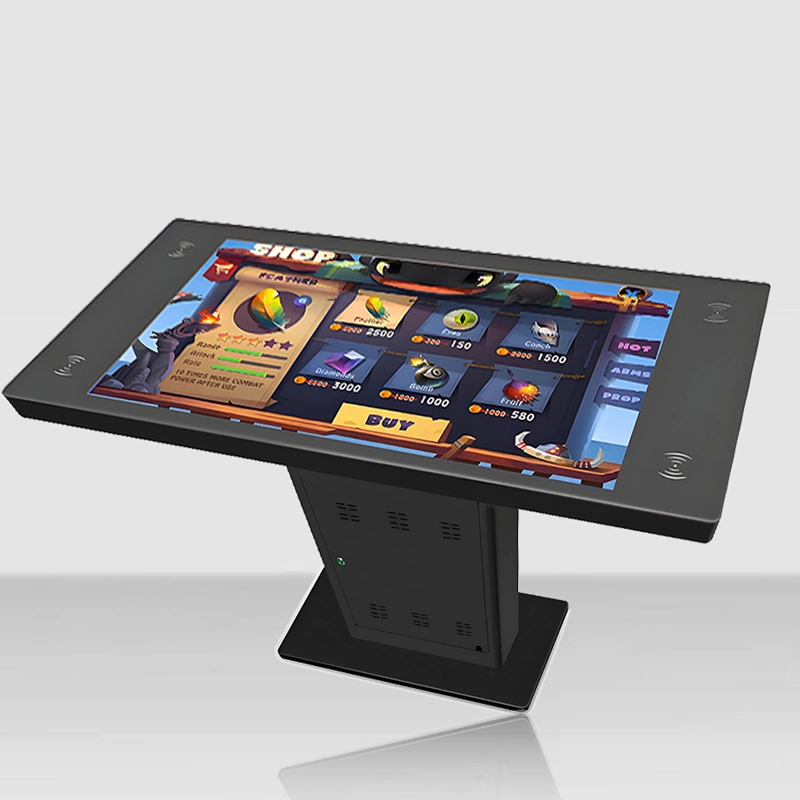
Lumilink builds interactive touch tables as a manufacturer, not a reseller: PCAP touch across 32- to 86-inch formats, commercial-grade panels, tempered safety glass, and factory-direct pricing with customization as a standard workflow rather than an exception. We quote against premium brands regularly and are comfortable being compared line by line — panel grade, controller specification, build, terms.
Our clients run the same venue types that made the premium brand famous: museums, exhibition halls, restaurants, hotel lobbies and showrooms, in more than fifty countries. The difference they report is rarely about the hardware on day one; it is about the schedule, the per-unit cost across a multi-table deployment, and how quickly a spare controller arrives six months later.
Conclusion: Take the Next Step
An alternative is only worth choosing if it survives the same scrutiny as the benchmark. Take the five-question screen above, apply it to both quotes, and let the answers decide. If a factory-direct PCAP table with documented components and a written schedule fits your project better than a six-figure integration, the comparison has done its job.
Environment. Request a Custom Quote today to receive a tailored proposal including hardware specifications, pricing, and implementation timeline. Or Download Product Spec Sheet to review detailed technical documentation for our full interactive touch table lineup.