
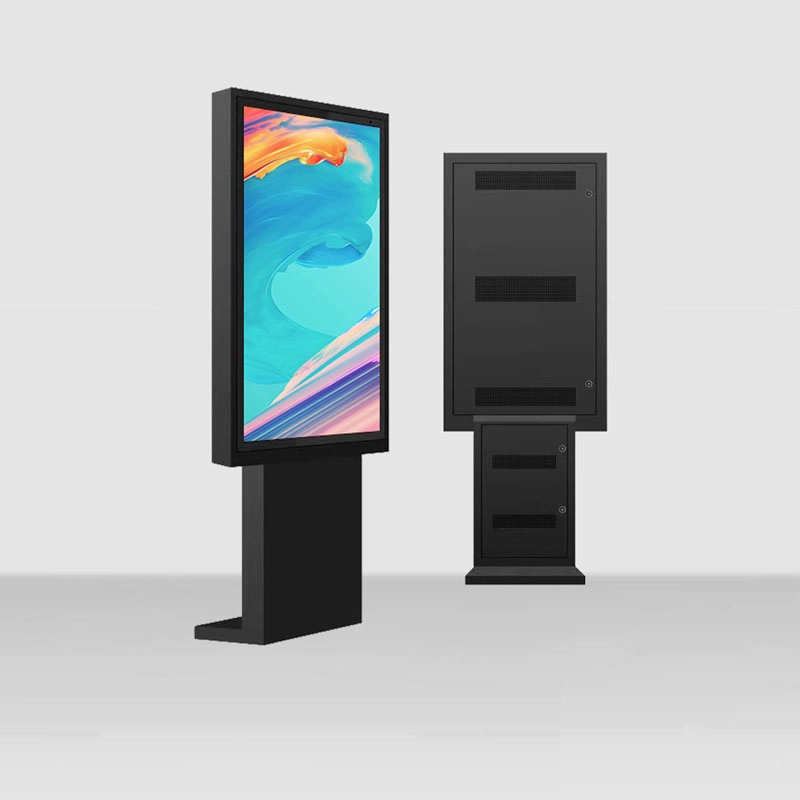
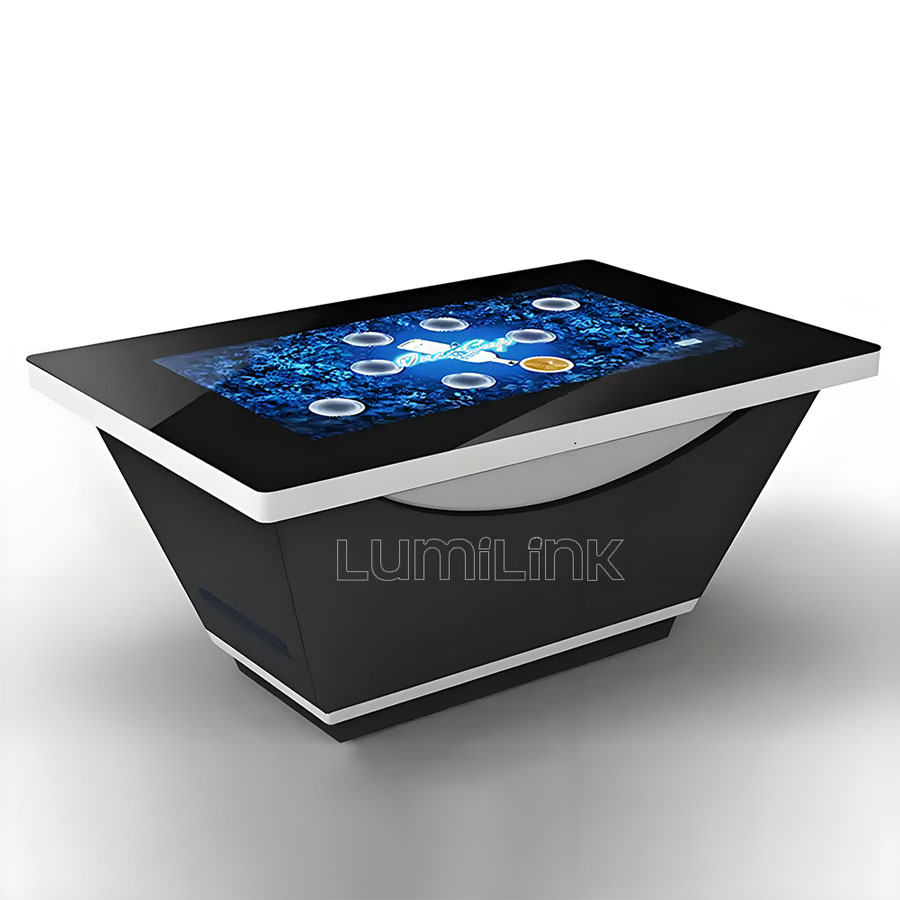
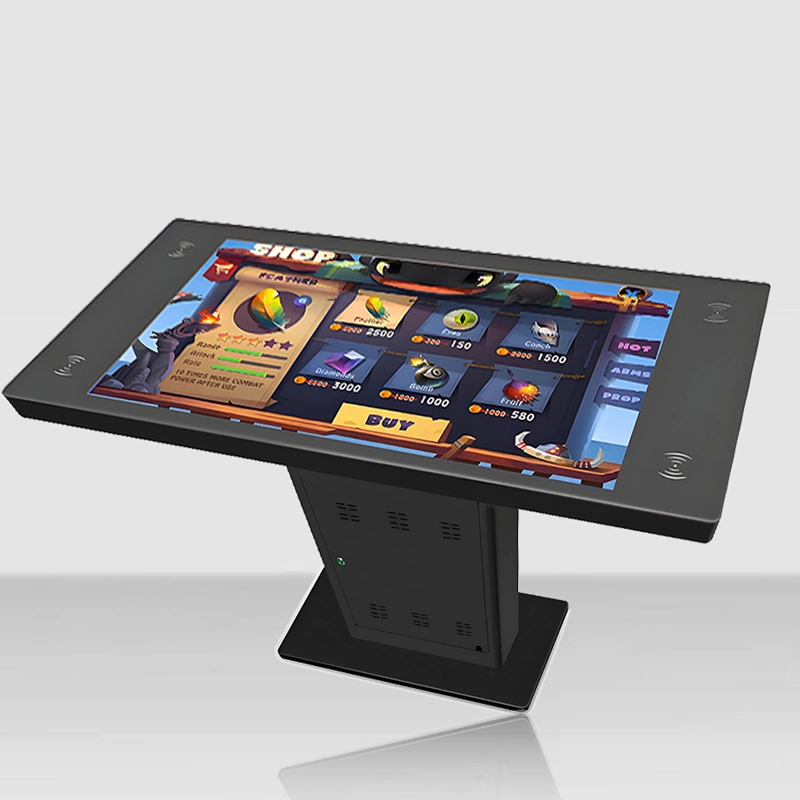
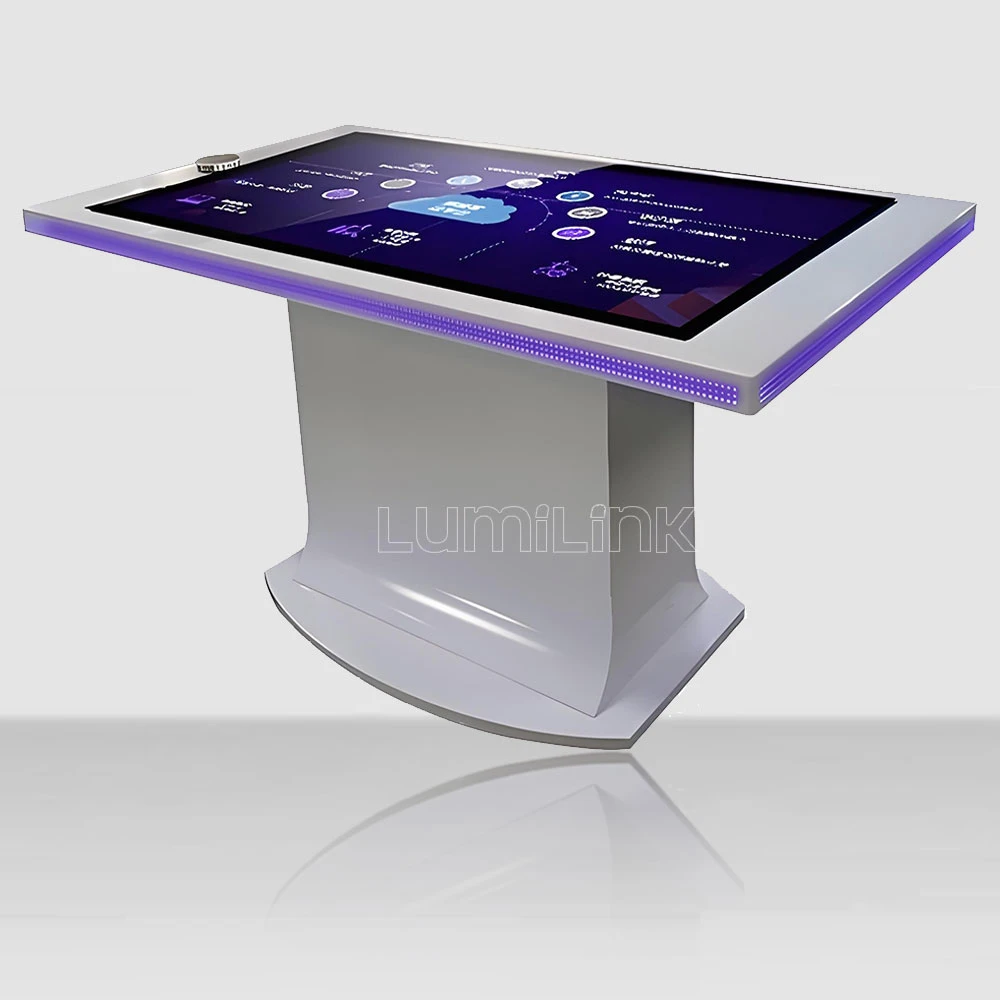

For the past four years we have been deploying outdoor-rated interactive touch tables to a small and growing list of clients: a botanical garden in Singapore, a coastal boardwalk in southern California, and a municipal plaza in northern Germany. Three sites, three very different climates, three very different sets of what the hardware actually has to survive. This article is the field notes from those three deployments — what we specified, what we got right, what we got wrong, and what an outdoor outdoor waterproof interactive touch table manufacturer should be expected to deliver in 2026.
If you are specifying an outdoor touch table for a venue that is not a climate-controlled building, the lessons below are written for you. They are also written for the procurement teams who are about to read a glossy PDF from a manufacturer whose reference list of "outdoor installations" turns out to be two semi-covered patios. The gap between a true outdoor-rated table and a semi-indoor table in a damp corner is large, and it is the gap this article is about.
What "Outdoor" Actually Means in Touch Table Specifications
The first thing to clarify is the meaning of "outdoor." Manufacturers use the term loosely, and so do spec sheets. For the purposes of this article, outdoor means: the table is installed in a location that is not enclosed by four walls and a roof, and is therefore exposed to direct sunlight or direct rain or direct temperature extremes, or some combination of all three, on at least a seasonal basis. That is the standard the rest of the article applies. If your "outdoor" installation is a covered loggia that has never seen a raindrop blown sideways under the eaves, you are buying a semi-indoor product and most of what follows is overkill.
For a true outdoor table, the meaningful specification is the IP rating, the operating-temperature range, the sunlight-readable display brightness, and the thermal management approach. A table that meets IP65, operates from -20°C to +55°C, runs a 2,500-nit display, and dissipates heat without a fan is the baseline you should be comparing against. Anything less is a compromise, and the compromise should be a conscious one tied to your specific climate — not a hidden one tied to a manufacturer's inventory.
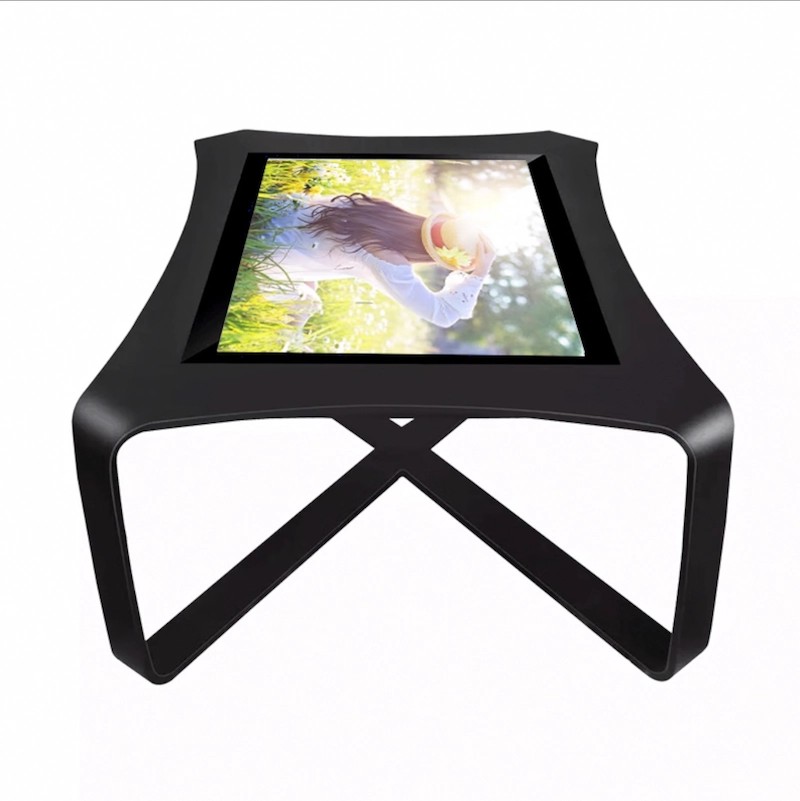
Site 1: The Singapore Botanical Garden (Tropical)
The Singapore site is the one we have been running the longest — three years and counting, in continuous daily use. The table sits in a covered-but-open-air pavilion, technically a roof overhead but no walls, exposed to high humidity year-round (typically 78-95% relative humidity), ambient temperatures of 24-34°C, intense UV exposure through the afternoon, and the occasional tropical downpour that blows rain sideways into the pavilion. Salt air is not a major factor, two kilometres from the coast, but the table is cleaned weekly with a mild chemical solution as part of the garden's general maintenance, which is its own environmental stress.
The specification we shipped for this site: IP65 enclosure, 2,500-nit high-brightness display with optical bonding between the touch glass and the LCD panel, aluminium enclosure with a powder-coat finish rated for marine environments, conformal coating on all internal PCBs, and a fanless thermal design that dissipates heat through the enclosure itself. The display was the most important decision — at 1,000 nits (the brightness of a standard indoor commercial display), the screen washes out completely in afternoon tropical sun. At 2,500 nits, the screen remains readable in direct sun. The optical bonding is not optional in this climate: without it, the air gap between the touch glass and the LCD panel creates a visible parallax effect and, more importantly, a condensation risk that can fog the screen from the inside.
Three-year operational results: zero enclosure failures, zero touch-controller failures, two display replacements (one due to a vandalism incident unrelated to the climate, one due to a backlight that dimmed over time), and one internal PC replacement. The conformal coating has held up, the powder-coat finish has held up, and the fanless thermal design has held up. The garden's operations team reports that the tables run 12-14 hours a day, every day, and that the only routine maintenance is a weekly wipe-down of the touch surface. The total cost of ownership across three years has been lower than the equivalent indoor tables at the garden's visitor centre, which see less environmental stress but require more frequent component replacements.
Site 2: The Southern California Boardwalk (Coastal)
The southern California boardwalk is the harshest environment we have specified for, and the deployment where we made the most compromises and the most corrections. The site is a public-facing information table on a coastal boardwalk, 30 metres from the surf line, fully exposed to salt spray, salt fog, direct marine-layer sun, and an ambient temperature range of 8-28°C. The boardwalk is open 24 hours and is not staffed overnight. The first unit we deployed was a modified version of the Singapore specification, with a 316-grade stainless steel enclosure upgrade and a more aggressive conformal coating. Within eight months, that first unit showed surface corrosion on the enclosure fasteners and one touch-controller failure that we attributed to salt ingress at a seam that we had thought was sealed.
The lesson from the failed first unit was that IP65 is not the same as IP65 in a salt-fog environment. The IP rating is tested against fresh water spray, not against the persistent salt-fog exposure of a marine environment. Salt deposits on the enclosure and on every seam will, over time, work their way into joints that the IP test would have passed in a lab. Our fix for the second unit: 316L stainless steel throughout (not just the visible surfaces), welded seams instead of sealed seams wherever possible, conformal coating on every internal connector, and a quarterly rinse schedule with fresh water that the boardwalk's maintenance team agreed to perform. That second unit has now been in service for 18 months with no field failures. The cost of the second unit was approximately 30% higher than the first.
If you are specifying for a coastal environment, the questions to ask the manufacturer are not "what is your IP rating" but "what grade of stainless do you use for the enclosure and fasteners," "are your seams welded or sealed," and "what is your recommended maintenance schedule for salt exposure." A manufacturer that cannot answer those three questions is a manufacturer whose outdoor experience ends at the cover of their brochure.
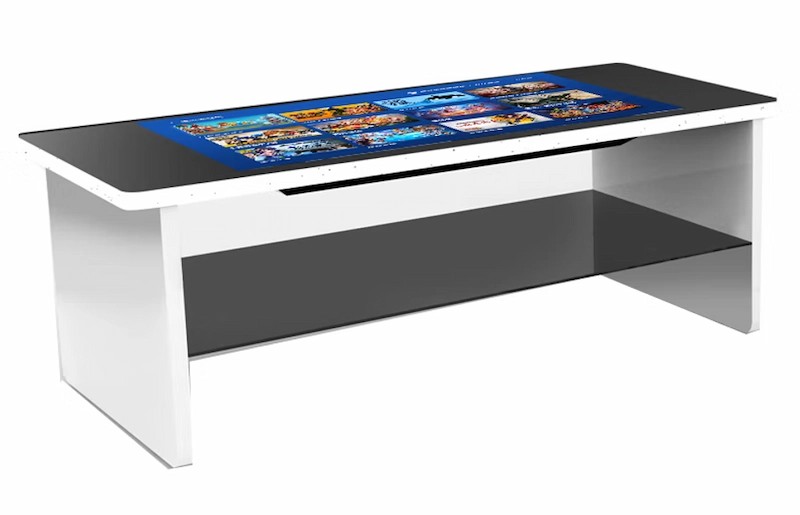
Site 3: The Northern Germany Plaza (Continental Freeze-Thaw)
The northern Germany plaza is the climate that catches most outdoor touch table manufacturers off-guard, because it combines two of the things that the standard outdoor design is least prepared for: sub-freezing winter temperatures and a high annual freeze-thaw cycle count. The site is in a town square in Lower Saxony, four-season climate, ambient temperature range of -15°C to +32°C, around 80 freeze-thaw cycles per year, and snow accumulation that buries the base of the table for two to three weeks at a stretch in January and February.
The challenge in this climate is not the cold itself — most outdoor-rated electronics are specified for -20°C operating temperature — but the freeze-thaw cycle. Water that enters an enclosure in liquid form expands when it freezes, and the expansion is enough to crack a sealed enclosure over multiple cycles if the seal was not designed for it. The specification we used for this site: a heated enclosure that maintains an internal temperature above 5°C even when the ambient is -15°C, IP65 rated, a display with an extended-temperature LCD panel, and an internal humidity sensor that triggers the heater if the internal humidity approaches the dew point. The heater draws 60-80 watts in cold weather, which the plaza's electrical infrastructure accommodates on a dedicated circuit.
Two winters in, the German site has not had a single weather-related failure. The heaters have run approximately 35% of the hours in the winter months, and the plaza's facilities team has been pleased with the operating cost — lower than they expected based on the original cost-per-kilowatt modelling. The lessons from this site that apply to any cold-climate outdoor deployment: confirm the operating temperature range of the LCD panel itself (not just the electronics), confirm the enclosure heating strategy and its power consumption, and confirm what happens at the dew point. A manufacturer that has not designed for the dew point has not designed for real winter conditions.
The Specification Checklist for Any Outdoor Touch Table
After three sites in three climates, the checklist we apply to every outdoor specification has converged on seven items. None of them are negotiable for a true outdoor deployment, and all of them should be confirmed in writing before a purchase order is signed.
1. IP65 minimum, IP66 preferred for high-exposure sites. The difference between IP65 and IP66 is resistance to powerful water jets versus splashes. For an unsheltered site, IP66 is worth the small premium.
2. Operating temperature range that covers your worst recorded temperature, plus a margin. Look at the climate data for your site, not the climate data for the region. A plaza in a sheltered urban canyon runs warmer than a plaza in an open field ten kilometres away.
3. Sunlight-readable display brightness, 2,000 nits minimum for outdoor use. Anything below 2,000 nits will wash out in direct sun for at least part of the day. Optical bonding between the touch glass and the LCD is not optional.
4. Enclosure material rated for your environment. Marine-grade aluminium for most climates, 316L stainless for coastal and salt-fog environments, heated enclosures for continental freeze-thaw climates.
5. Conformal coating on all internal PCBs. This is the cheapest insurance against humidity and salt-fog damage. Any manufacturer that does not apply conformal coating as standard is cutting a corner that will show up in your third year of operation.
6. Fanless thermal design. Fans fail. In an outdoor environment, they fail faster. A fanless design that dissipates heat through the enclosure eliminates the most common field service issue for outdoor electronics.
7. A documented maintenance schedule. A serious outdoor manufacturer will provide a written maintenance schedule for your specific climate, not a generic "clean the screen occasionally" note. The schedule should cover rinse intervals for coastal sites, heater checks for cold-climate sites, and enclosure inspections for all sites.
What the Manufacturer Reference List Should Actually Contain
When you are evaluating an outdoor waterproof interactive touch table manufacturer claim, the reference list is the most reliable evidence, but only if you read it the right way. A reference list that says "1000+ outdoor installations" without naming them is not a reference list — it is a marketing claim. A reference list that names three sites in temperate climates and zero in extreme climates is a reference list that proves only what it proves. A reference list that names a site in your climate, and that you can call directly and ask about performance after two years, is the strongest evidence you will find short of a long-term pilot of your own.
For the three sites in this article, the call you would make to the garden in Singapore would tell you about tropical performance, the call to the boardwalk in California would tell you about coastal performance, and the call to the plaza in Germany would tell you about freeze-thaw performance. A manufacturer that can give you two references in each climate category they claim to serve is a manufacturer whose experience is broad enough to trust. A manufacturer that gives you one reference per climate is a manufacturer whose experience is real but narrow. A manufacturer that gives you no references and only a brochure is a manufacturer whose outdoor experience ends in the marketing department.
Closing: The Three Questions to Ask Before You Sign
Before you sign the purchase order for an outdoor touch table, three questions to ask the manufacturer in writing. First: in our specific climate, what is the most comparable reference site you have, and can we contact them directly? Second: in our specific climate, what is the documented field failure rate across the last three years of deployments? Third: what is the warranty exclusion for environmental damage, and what is the maintenance schedule required to keep the warranty in force? The answers to these three questions, in writing, will tell you more about the manufacturer than any sales document. They will also tell you whether the table you are about to buy is a true outdoor table or a semi-indoor table that is hoping for the best. Send us the climate data for your site — temperature range, humidity range, sun exposure, salt exposure, and any unusual environmental factors — and we will come back with a specification that accounts for all of it, references you can call, and a maintenance schedule that keeps the warranty intact.