



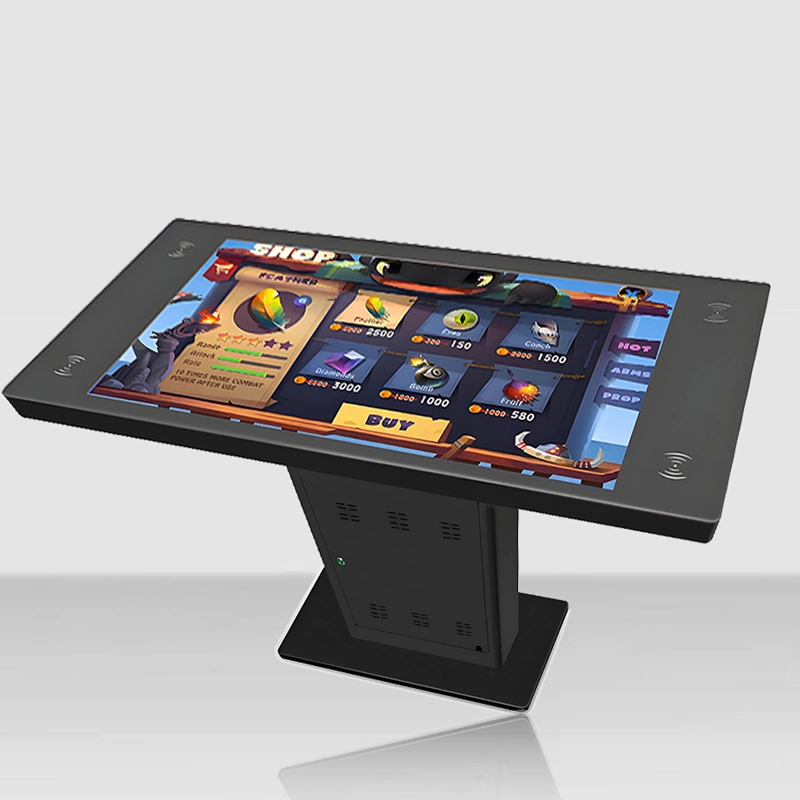


This is the story of a 200-unit interactive touch table bulk order that we lost — and the story of the 180-unit order we won six months later, in large part because of what the first one taught us. The client is a regional chain that operates family entertainment centres across three provinces. They are not the buyer, and they are not the integrator either: they are the brand that owns the sites, the operations that run them, and the customer-experience standards the tables had to support. The names and the figures have been adjusted, but the lessons are unchanged.
I am telling this story not because it is dramatic, but because every mistake in it is one we have seen other bulk-order buyers make — and every fix in the second order is one any qualified manufacturer can replicate. If you are about to commit to a multi-dozen or multi-hundred-unit purchase, this is the post-mortem you can run against your own plan before signing.
The Brief That Started It
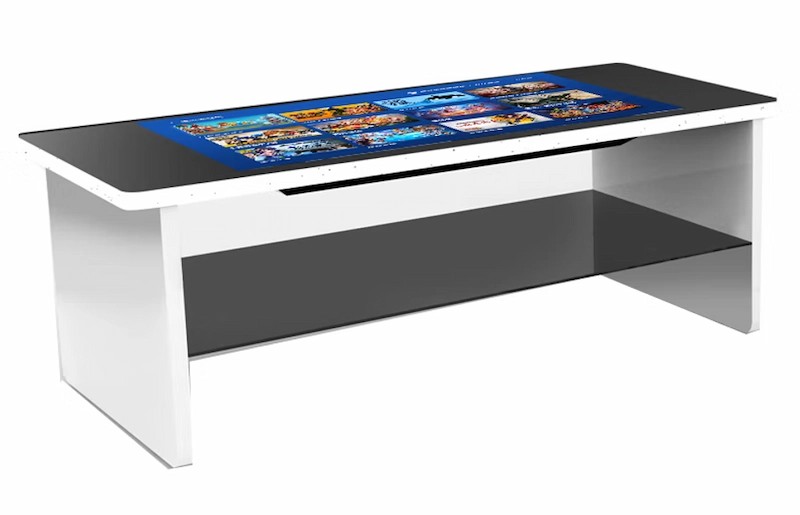
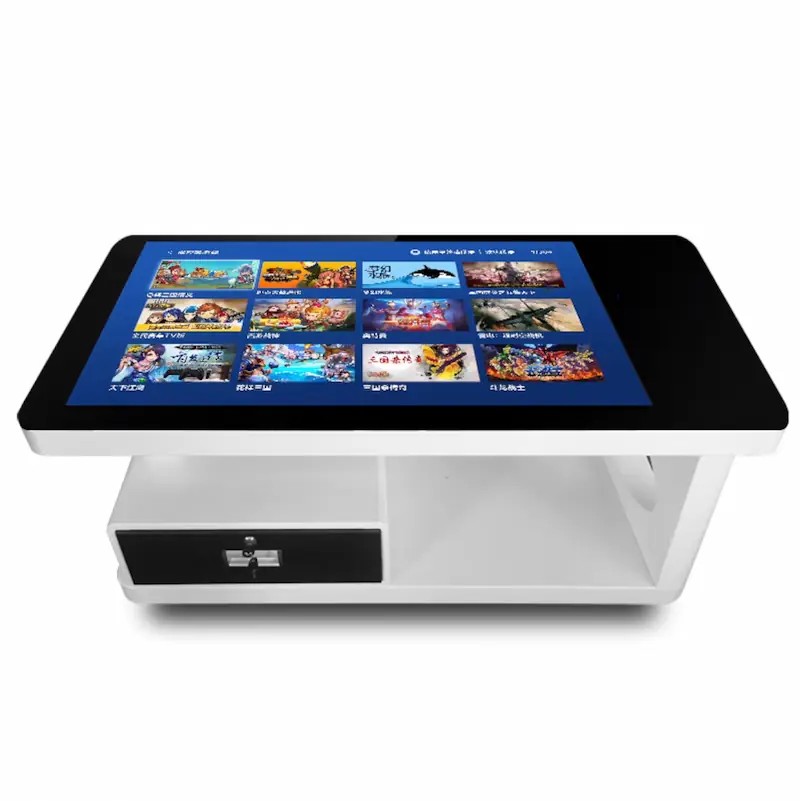
December 2023, the chain's central procurement team sent a two-page brief to four manufacturers, including us. The brief was a wish list more than a specification: 43-inch capacitive multi-touch tables, fast enough to run a kids' games bundle, rugged enough to live in a high-traffic lobby, brand-customisable with their colour and logo, delivered to nine sites across three provinces within ninety days, with a per-unit target price the brief described as "competitive but not lowest tier." The brief was clear about what the tables had to do. It said almost nothing about who would install them, how they would be maintained, and what would happen to the brand experience if half of them failed in the first month.
We came back with a full technical response, a unit price, a tiered volume discount, a sample unit we shipped to their head office for evaluation, and a draft of a master service agreement. Two of the other three competitors did the same. The fourth came back with a price roughly 18% below ours and a delivery commitment of sixty days, with no sample offered. The chain awarded the order to the cheapest. The cheapest manufacturer is not, in this story, the villain. They were doing what was asked of them. The problem was that the brief, and the buying process around it, never surfaced the questions that would have revealed whether they could actually deliver.
What Went Wrong: Month One
Of the 200 units the cheapest manufacturer delivered to the chain's central warehouse, eleven failed on unboxing. Six had dead touch zones. Three had screens with backlight bleed that made the display look like a bruise. Two had no power at all. The chain's operations team logged every defect photographically, sent them to the manufacturer's account manager, and waited.
The manufacturer's response was the first of several signals that the cheap quote had priced out the very things that mattered. They asked the chain to ship the eleven units back to the factory for repair. The chain did. The units came back thirty days later, six weeks into the deployment window. Six of the eleven were functional. Two of the remaining five were still dead. Three were functional but with visible screen marks where the repair had been done — not acceptable for a customer-facing lobby, where every table is a billboard for the brand.
By month two, eighteen more units in the field were showing intermittent touch failures. By month three, twenty-nine of the two hundred units in service were either in for repair, in storage waiting for repair, or out of service entirely. The chain's operations team — the same team that had championed the bulk order to begin with — was spending a third of its time on table logistics.
The Question the Brief Never Asked
Looking at the failed order with the benefit of hindsight, the single question that would have prevented most of the pain is the one the brief never asked: what is the manufacturer's process when a unit fails in the field? The cheapest quote had no answer to that question, because the cheapest quote assumed a back-and-forth depot repair model in which the chain shipped broken units to the factory, waited thirty to sixty days, and got the unit back in working order. That model works for a five-unit pilot. It collapses at 200 units and across three provinces.
Three more questions the brief should have asked, and which we now include in our standard bulk-order questionnaire:
1. What is your first-year field failure rate, measured across the last three bulk orders you have shipped? A good answer is a number between 1% and 3%. An answer of "we test every unit before shipping" without a measured rate is a tell. A refusal to answer is a deal-breaker.
2. What is your advance-replacement policy? If a unit fails in the field within the warranty window, does the manufacturer ship a replacement unit in advance of receiving the failed one back? If yes, in what timeframe? A confident manufacturer answers this question with a number. A manufacturer who says "we will evaluate case by case" has just told you they do not have a policy.
3. Can you describe the field service path of the three components most likely to fail? The three most likely failure points in a touch table are the touch controller, the LCD panel, and the internal PC. A qualified manufacturer answers with part numbers, with who stocks them, with what tool a technician needs to swap them, and with whether the swap can be done on-site without shipping the table back. A manufacturer who says "send it to us" for every failure has just told you their service model is the factory.
What the 180-Unit Order Did Differently
Six months later, the chain came back to market for a slightly smaller follow-on order — 180 units, two provinces instead of three, ninety-day deployment window. Three of the four original bidders were invited to re-quote. We won, and the price was not the lowest of the three. The reason we won is the reason this article exists: our response to the bulk-order questionnaire was the only one that came back with numbers.
Our quoted first-year field failure rate across the previous three bulk orders: 2.1%, 1.8%, 2.4%. Our advance-replacement policy: a replacement unit ships within five business days of a confirmed failure report, with the failed unit picked up at the same time. Our component service path: touch controllers and LCD panels are stocked in our regional service hubs, the internal PC is a standard industrial mini-ITX that any IT technician can swap, and the enclosure opens with a single security torx bit for which we ship two per site.
The chain's procurement team also asked us three follow-up questions that I would now consider part of any rigorous bulk-order evaluation. The first: can we visit your factory and watch a run of our units being built? Yes, and we encourage it. The second: can we name two of your previous bulk-order clients and talk to them directly? Yes, with their permission. The third: can we put our operations team in a room with your service manager for an hour? This is the question I have come to believe matters most. The best service contracts on paper can fall apart in the second month because the people behind them do not have a working relationship. A face-to-face service conversation before signing reveals more about a manufacturer's real commitments than any contract clause.
The Numbers Behind Volume Discounts
Volume discount tiers are the part of a bulk-order quote that buyers tend to either over-focus on or under-analyse. Over-focusing looks like negotiating the per-unit price down to the last dollar without looking at the total cost of ownership. Under-analysing looks like accepting a tiered discount structure that prices the first 50 units attractively and the next 150 at a marginal saving. The way a manufacturer designs their tier structure tells you how they think about long-term relationships.
A useful volume discount structure for a 180-unit order looks like this: a meaningful jump in unit price between 1-9 units and 10-49 units, a smaller but real jump between 50-99 and 100-199, and a flattened curve above 200. That curve signals that the manufacturer is willing to be aggressive on the first recurring order and is not interested in pricing the relationship in a way that the client cannot sustain over multiple orders. A structure that front-loads the discount too steeply — for example, the same 22% discount at 50 units as at 200 — is a sign the manufacturer is desperate for the order and will renegotiate aggressively at renewal.
For a chain operator buying interactive touch table bulk order with a multi-site roll-out plan, the right way to read the volume structure is to model three scenarios: the first order, the average order over two years, and the largest likely single order. The total cost across all three scenarios is more meaningful than the unit price on the first PO.
Logistics, Installation, and the Forgotten 30%
Of the total cost of a 200-unit bulk order, the tables themselves are roughly 65-70%. The remaining 30-35% is the line items that rarely make the headline quote: freight, customs (for cross-border orders), on-site installation, on-site commissioning, software configuration, site-survey work, and training. Of the failed order in this story, every one of those line items was a surprise to the chain, because every one of them was added after the unit price had been agreed.
A bulk-order quote that hides logistics, installation, and commissioning behind a single line called "delivery and setup" is a quote that is hiding 30% of the real cost. A well-structured bulk-order quote breaks these out as separate line items with unit rates, so the buyer can model their true total and can make informed decisions about which items to handle internally. Some chains have in-house AV teams that can take installation and commissioning in-house. Others do not, and the labour has to be included. A quote that does not let the buyer choose which to handle in-house is a quote that maximises the manufacturer's revenue at the buyer's expense.
The Contract Clauses That Saved the Second Order
Three contract clauses we now include as standard in bulk orders of 50 units or more. None of them are unusual, and any qualified manufacturer will agree to them. If a manufacturer resists any of the three, the resistance is information.
Clause 1: Liquidated damages for late delivery. Not punitive amounts — a realistic per-day figure based on a reasonable estimate of the buyer's lost revenue per site per day of delay. A manufacturer who refuses this clause is a manufacturer who is not certain they can deliver on time.
Clause 2: A field-failure rate ceiling with a remediation mechanism. If the first-year field failure rate exceeds 5%, the manufacturer covers the cost of advance-replacement units, the labour of swaps, and any consequential damage to the buyer's brand. This is the clause that turns a vague quality commitment into a contractual one.
Clause 3: A multi-year pricing commitment for repeat orders. If the buyer commits to a multi-year roll-out plan, the manufacturer commits to a maximum price increase on subsequent orders tied to a verifiable index. This clause is not about getting a discount — it is about preventing a scenario where the manufacturer raises prices after the buyer has standardised operations around their tables.
What to Do If You Are About to Buy a Bulk Order
If you are the buyer reading this in the planning phase, three concrete actions to take before you sign. First, ask the five bulk-order questions in this article in writing and require written answers — verbal answers over a video call are not enforceable. Second, ask for two previous bulk-order client references and call them. Do not just take the names — actually call, and ask the three questions that matter: did the units arrive on time, did the field failure rate match what the manufacturer quoted, and what happened when something went wrong. Third, walk through a sample service incident before signing. Ask the manufacturer's service manager to walk you through what happens when a unit fails on day thirty, day ninety, and day three hundred. The walkthrough reveals more than any sales deck.
And one closing thought from the other side of the counter. Bulk orders are won on price, sustained on quality, and renewed on service. The manufacturer that quotes the lowest is rarely the manufacturer that costs the least. The manufacturer that asks the hardest questions in the bidding process is almost always the manufacturer that asks the right questions in the operational phase. We are one of those manufacturers, and the 180-unit order we won six months after the 200-unit order we lost is the proof we are willing to put our name to. If you are about to plan a bulk order of fifty units or more, send us your brief and your timeline. We will come back with a tiered volume quote, a field-failure rate from our last three orders, a list of references, and a contract that includes the three clauses above as standard. The cheapest quote wins the bid. The right quote wins the relationship.