
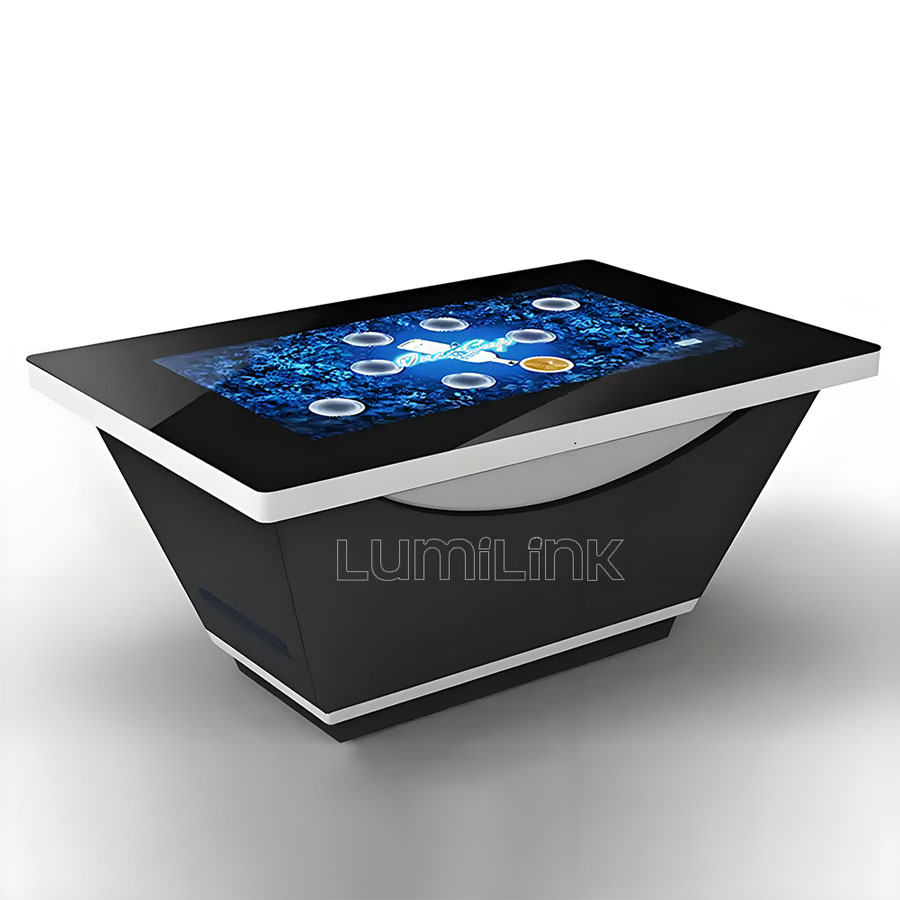
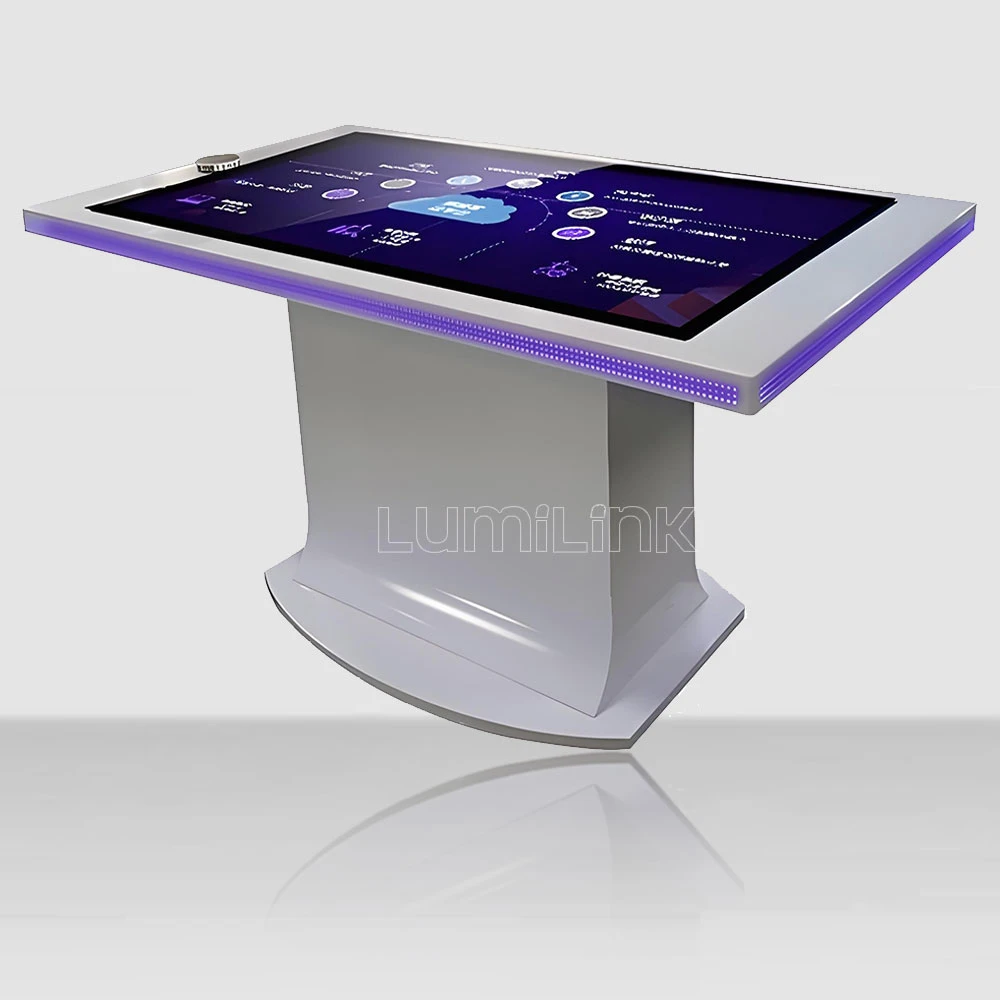

Week one, a design agency in Singapore sends us a drawing: a touchscreen coffee table for a members-only club lounge, 47 inches, rosewood-look finish, brass accent trim, 45cm height, to match furniture that cost more than the table. The drawing arrives as a photo of a hand sketch. Eight weeks later, the table ships. What happens in between is what this article documents — because knowing the real timeline of a custom order, stage by stage, is the difference between a client who feels informed and a client who sends anxious emails every Friday.
If you are planning to order custom touchscreen coffee table, this is the process from the other side of the counter. We will use the Singapore club table as the running example, with the actual decisions, delays, and checkpoints that shaped it. Every custom order follows the same skeleton; only the flesh differs.
Before Week One: The Specification Conversation
A custom order technically begins before any week is counted, in a conversation that determines everything after. This is where we translate "it should match the lounge" into engineering: What surface finish — real wood veneer, laminate, powder-coated steel? What height, measured from the floor to the glass surface, against the surrounding seating? What computing platform, and what software will run on opening night? Who installs it, us or the club's AV contractor? And the question that surprises designers most: how will the table be serviced — which panel comes off, and what tools does a technician need?
The output of this conversation is a specification sheet with numbers on every line. If a supplier's "specification" for your custom table reads like marketing copy, stop and insist on numbers. "Premium finish" is not a specification. "Veneer, 0.6mm, matte lacquer, 45cm ±2mm" is.
Weeks 1-2: Engineering Review and the Drawing You Sign
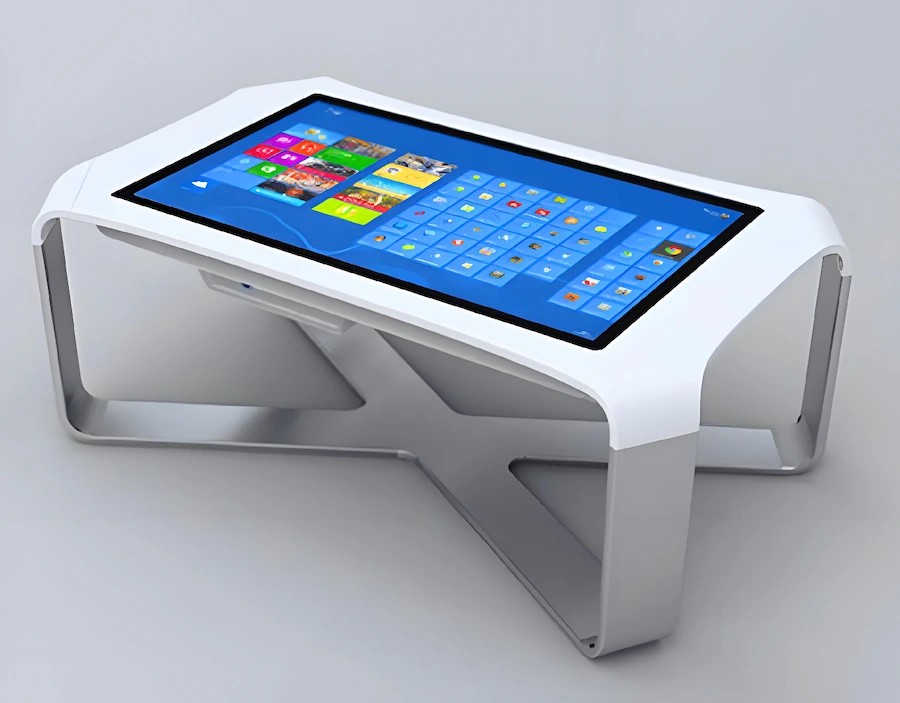
The first formal stage converts your specification into production drawings: enclosure dimensions, glass cut size, touch overlay geometry, component layout inside the chassis, ventilation paths, and service access. For the Singapore table, this stage surfaced the first real problem — the 45cm height left almost no room under the display for a standard PC, so the design moved to an external silent mini-PC mounted inside the base column, connected through a single concealed cable. Decisions like this one are exactly why the review exists.
You receive the drawings as a PDF, and this is a checkpoint, not a courtesy. Approving drawings you have not actually read is the number one cause of custom-order disappointment. Check the dimensions against your room. Check the finish against your samples. Check the service panel location against the room's walls. Once production begins, changes cost money and schedule — a dimension change after material cutting typically adds one to two weeks and a re-cut fee.
Weeks 2-3: Materials and the Sample That Prevents Surprises
With drawings approved, materials are ordered and, for finishes that matter, samples are made. For the club table, we cut three finish samples — the veneer over two different substrates, plus a brass trim profile — and couriered them to Singapore. The designer approved the second sample. Total delay: four days. Total value: avoiding a finished table that the client rejected on sight. On any order where colour, wood, or metal finish matters, insist on a physical sample. Photographs lie about finish in both directions; the only honest medium is the material itself.
Weeks 3-5: Fabrication and Integration
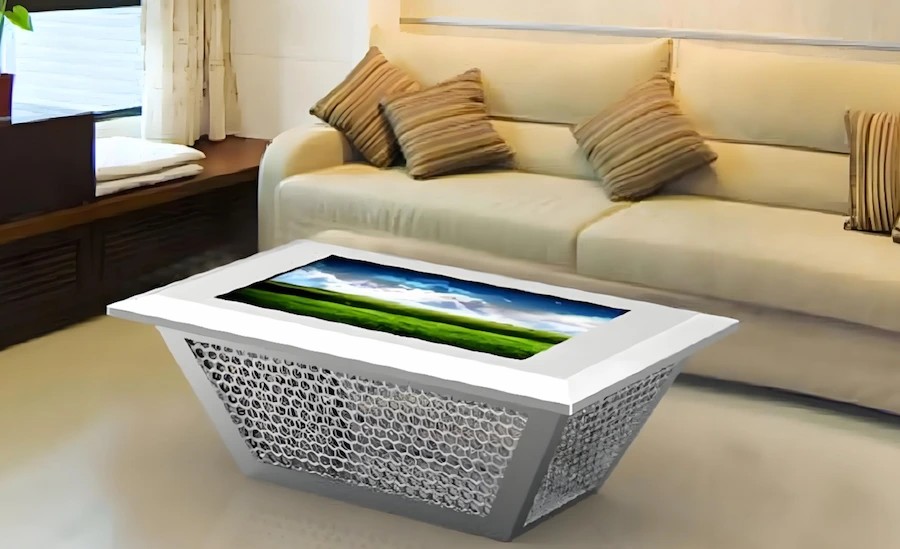
The core build. The enclosure is cut, welded or joined, and finished. The display, touch overlay, glass, PC, and cabling are integrated. For a coffee-table form factor, this is more delicate than a standard table build: the low height compresses everything, the furniture-grade finish means the enclosure cannot show fasteners, and the glass is structural — in a table people will rest coffee cups on and lean against, the glass and its mounting must carry real load, not just display weight.
The integration stage ends with the first full power-on. For the Singapore table, that power-on revealed that the fanless mini-PC, sealed inside a rosewood column with minimal airflow, ran 9°C warmer than specified. We added a low-profile ventilation channel hidden in the base. This is what integration is for: catching the problems that drawings cannot.
Weeks 5-6: The Burn-In and the Client's Remote Inspection
Every custom table should run a burn-in before it ships: 72 continuous hours powered on, cycling content, with touch input simulated across the full surface. The failures that matter — intermittent touch zones, thermal shutdowns, memory leaks in the kiosk software — almost never appear in the first hour. They appear on hour thirty, or hour sixty. A supplier who skips burn-in is shipping you a test that you will run instead, in front of your client.
The modern custom also includes a remote inspection: we film the finished table running the client's actual software, photograph every surface from every angle, and walk the client through a live video call while a technician demonstrates touch response in each zone. The Singapore designer caught a 2mm gap in the brass trim on camera, and we re-fitted it before packing — a two-day fix that would have been a two-month regret after installation.
Weeks 7-8: Packing, Documentation, and Shipping
Custom furniture-grade tables are packed like custom furniture: foam-in-place moulding, corner blocks, a strapped crate, and moisture protection. Alongside the crate travels the documentation pack: the signed drawings, the bill of materials with component model numbers, the wiring diagram, the service manual showing which panel opens and with what tool, and the warranty certificate. If your supplier's documentation pack is a photocopied page and a handshake, your future technician will hate you both.
For international orders, these two weeks also include export documentation, freight booking, and insurance. A single coffee-table crate ships as LCL sea freight or air freight depending on your deadline; the difference in cost for a ~100kg crate is significant, and the decision belongs to you, not the supplier. We sent the Singapore table by air, because the club's opening date mattered more than the freight budget — that trade-off is quoted, explained, and chosen by the client.
What the Timeline Really Depends On
Eight weeks is realistic for a coffee-table custom with standard internals and a furniture-grade finish. The variables that stretch it: genuine non-rectangular shapes (adds two to four weeks for custom touch overlay engineering), uncommon finishes that require sampling iterations (each sample round adds roughly a week), non-standard display sizes or curved glass, and approvals that sit in an inbox instead of a schedule. The single biggest cause of delay, in our project history, is not fabrication — it is waiting for the client to review and sign off at each checkpoint. Build your review capacity into your own timeline from the start.
Budgeting a Custom Order Without Guesswork
Custom pricing makes buyers nervous because there is no price list to check against. But the structure of a custom coffee-table quote is actually predictable, and you can sanity-check it in five minutes. Start from the closest standard configuration — for a 43-inch capacitive coffee-table format, that is your baseline. Then add the increments: a furniture-grade finish over standard powder coat adds roughly 8-15%; a non-standard height or form factor adds 10-20%; brass, copper, or other premium trim detailing adds by the metre; and one round of physical finish sampling typically costs a few hundred dollars, usually credited against the order if you proceed. If a custom quote lands more than 40-50% above the standard baseline with no engineering explanation — a curved glass top, a segmented display, a genuinely new enclosure structure — some of that number is the supplier pricing your anxiety rather than your table.
The other budget line that custom buyers routinely forget is not the table: it is the room. The lounge or office needs power routed to the table's position, and the table's software — a welcome screen, a content browser, a member-services app — is a project of its own. Budget the table with a power point at its intended position and a plan for who builds the on-table content, or week eight will deliver a beautiful object running the Windows desktop.
The Five Mistakes That Ruin Custom Orders
Every unhappy custom project we have been asked to rescue made at least one of these five mistakes:
1. Ordering from a sketch without dimensions. A mood board is a starting point, not a specification. The table's height must relate to the seating around it — coffee tables are typically 40-45cm, and every 5cm of error changes how the space feels. If you cannot provide dimensions, ask the supplier to propose them from the room's furniture; that is a normal request and a good supplier answers it with a drawing, not a shrug.
2. Skipping the physical finish sample to save four days. The four days saved become the four weeks of a re-make when the finish does not match the room. On anything wood, brass, or colour-critical, the sample is not optional.
3. Treating the drawings approval as a formality. The drawings are the contract's technical heart. Approve them slowly, with your designer and your AV contractor in the room. The number of custom orders that ship wrong because nobody read the drawing is larger than anyone in this industry admits.
4. No installation plan. A 100kg coffee table with a glass top needs two people, a planned route from the delivery point to its final position, and a lift or a staircase strategy. Discovering on delivery day that the table does not fit the service lift is a real thing that happens to real projects, repeatedly.
5. Ordering one table when the space needs two. Lounges are social. A single coffee-table touch surface in a room with four seating clusters creates a queue. Two smaller tables outperform one large one in almost every lounge layout we have deployed — and buying two in one order is materially cheaper per table than buying one twice.
If the process sounds like something you would like to start, it begins with that first conversation. Send us your sketch, mood board, or even a photo of the room it must match, along with quantity and deadline. We will come back with a specification sheet full of numbers, a stage-by-stage timeline, and honest answers about what your design wants versus what eight weeks can deliver.
And one closing thought from the project side of the counter: the custom orders that go smoothly are almost never the simplest ones. They are the ones where the client engaged at each checkpoint — read the drawings, touched the sample, joined the remote inspection — and treated the eight weeks as a collaboration rather than a wait. The Singapore club table installed on a Tuesday morning, powered on first try, and got a message from the designer that we have kept: "It looks like it grew here." That sentence started with a hand sketch and a specification conversation. Yours can start the same way.