
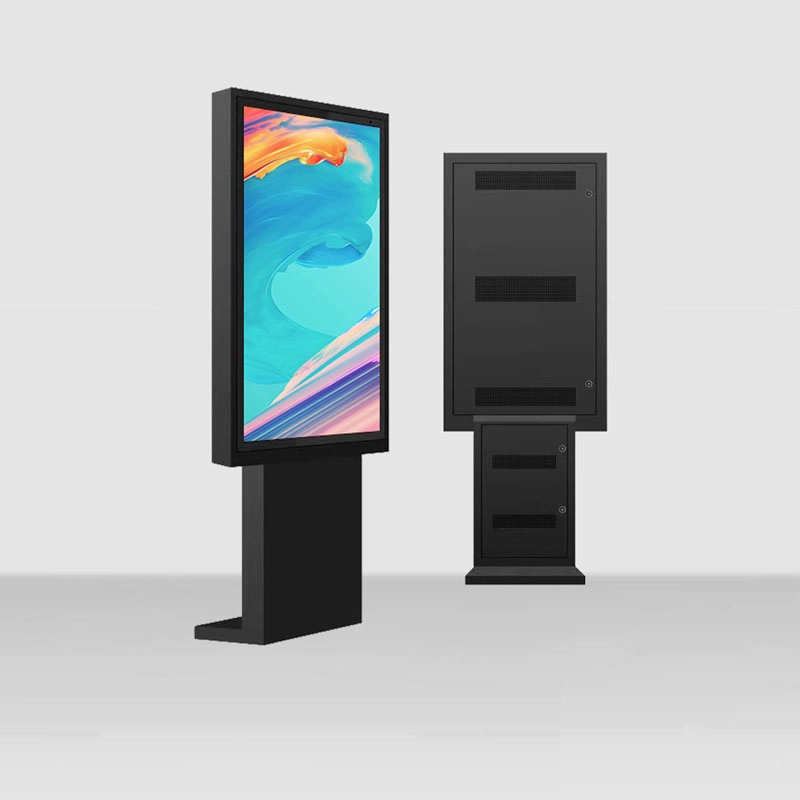
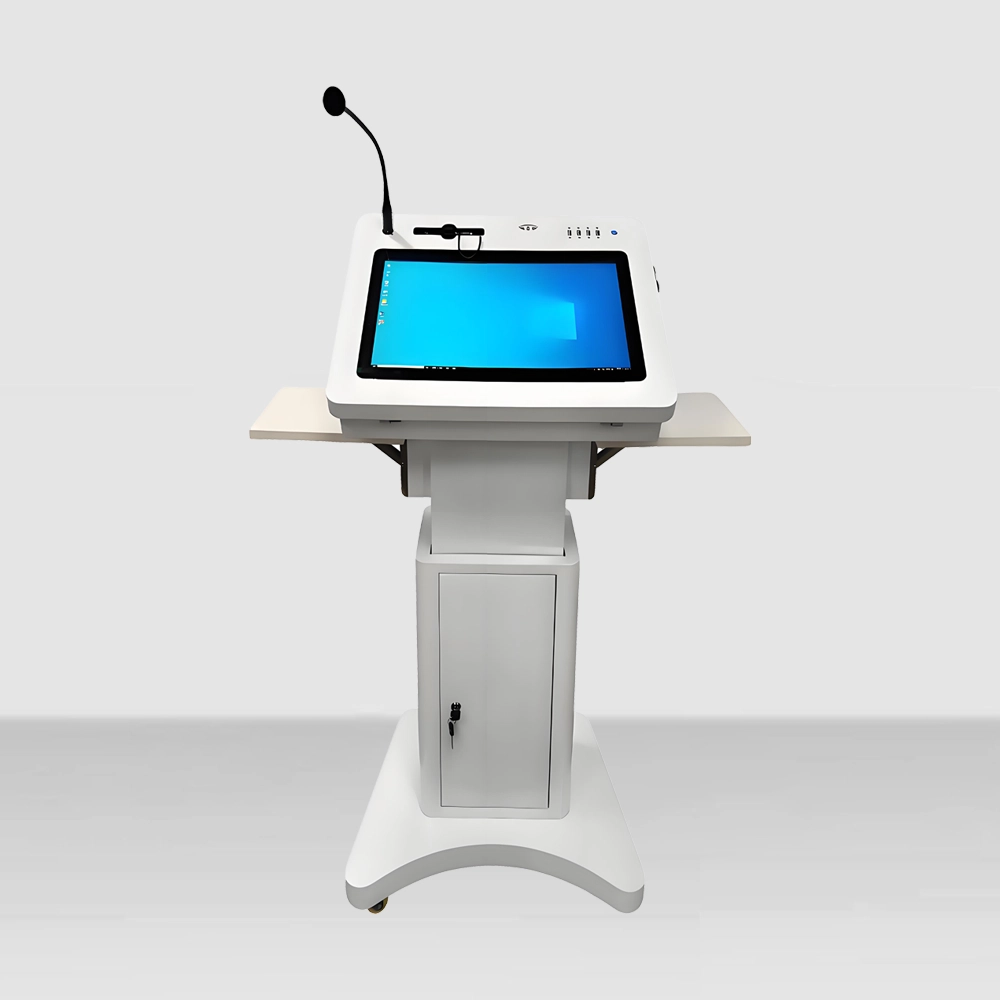

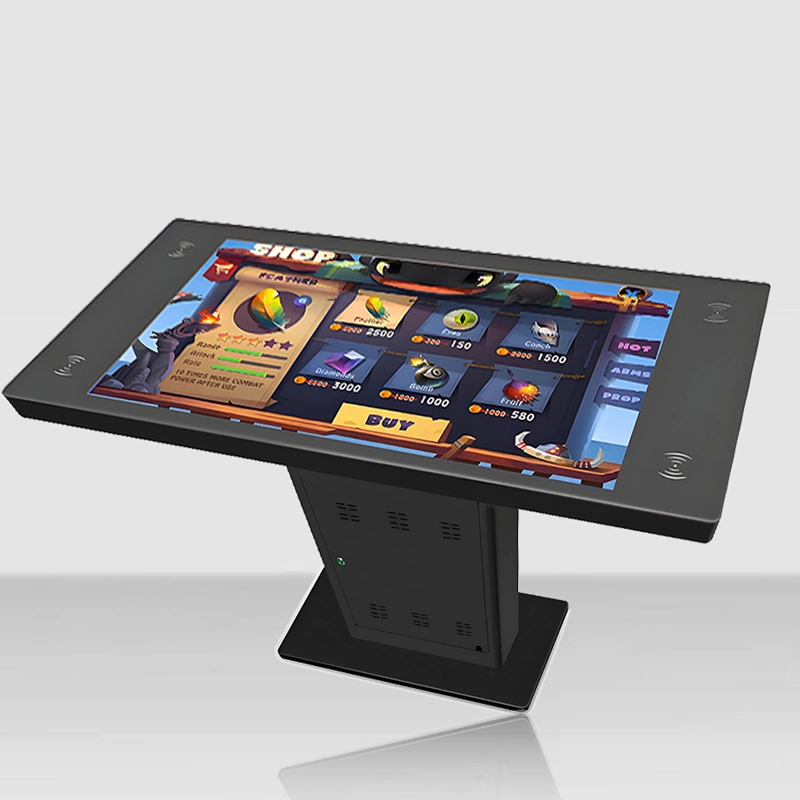
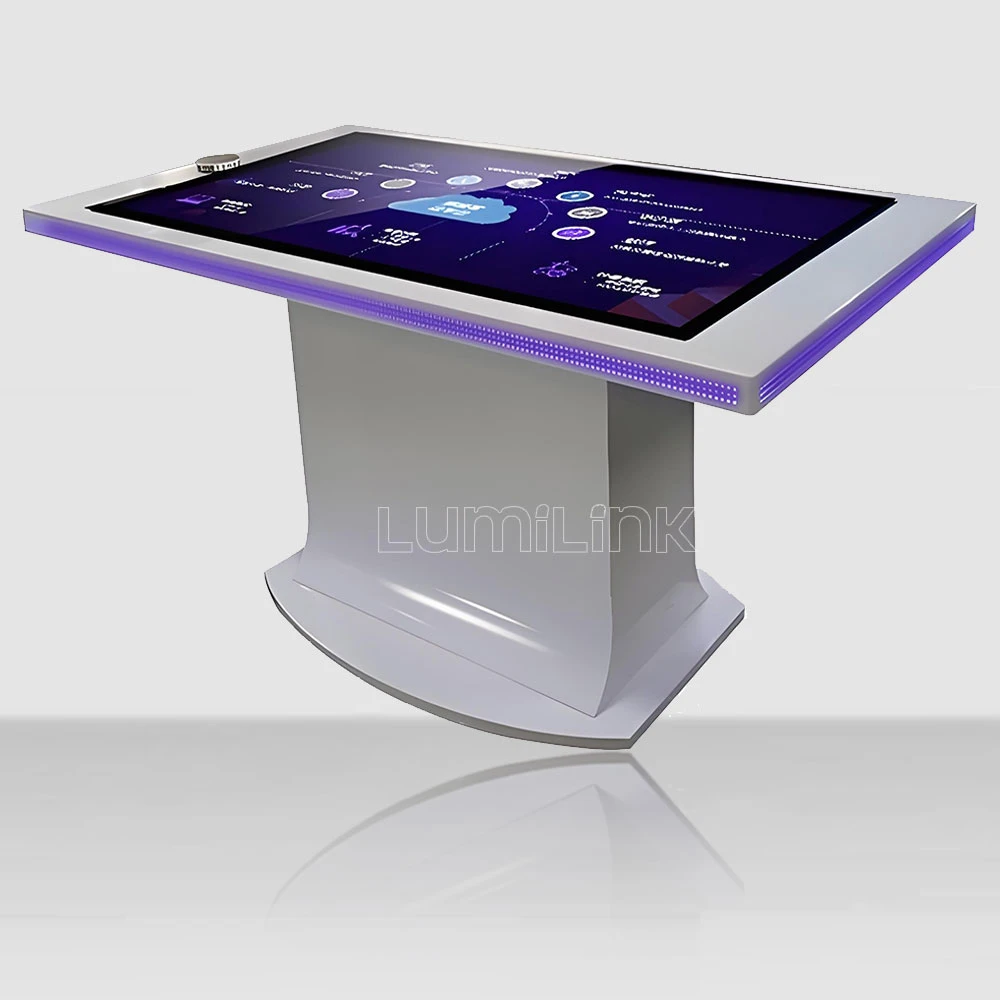

A procurement manager at a European retail chain emailed us last month with a question we hear weekly: "I have three quotes for touch tables and a $2,000 difference between the cheapest and the most expensive. The spec sheets look identical. What am I missing?" We asked her to send all three quotes. Within an hour, we could see exactly where the difference lived — and it was not in the spec sheet. It was in the lines the spec sheet does not show.
This article dissects a real interactive touch table price quote line by line. We have taken a genuine Lumilink quotation (with the client name removed and quantities simplified) and annotated every section: what it means, what a fair range looks like, and which lines are the ones that separate a good quote from a bad one. Whether you ultimately buy from us or from anyone else, you will know how to read the document that lands in your inbox.
Why Touch Table Quotes Vary So Widely
Before the anatomy lesson, the market context. A 43-inch interactive touch table can quote anywhere from roughly $1,800 to $4,500. A 55-inch can range from $2,800 to $7,000. That spread is not random — it reflects four genuine variables that legitimate suppliers price differently, plus a few illegitimate tricks that less scrupulous ones use:
Touch technology. Capacitive costs more than infrared — typically 15-25% more at the same size. Both appear as "multi-touch" on a spec sheet, which is why spec sheets alone cannot explain a quote. Display quality. Commercial-grade panels (500+ nits, 24/7 duty rating) cost significantly more than consumer panels repurposed for tables. Computing hardware. An i5 with 8GB RAM and an SSD costs several hundred dollars more than an aging dual-core with eMMC storage — and the spec sheet may just say "Windows PC included." Enclosure construction. Powder-coated steel with welded seams and concealed fasteners costs more than aluminium composite glued together.
The tricks are simpler: quoting Ex Works (EXW) shipping terms so the buyer discovers freight costs later, quoting without warranty terms, or quoting a price that excludes the power adapters, mounting hardware, and software licences the table needs to actually function.
The Quote, Line by Line
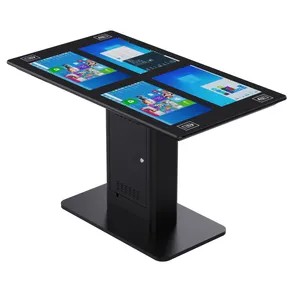
Here is a simplified version of a real quotation for ten 43-inch capacitive touch tables, shipped to a European port. We have added the annotation you will not find on any supplier's quote: what each line really means.
Line 1: Unit price, 43-inch capacitive, Windows i5/8GB/256GB, 6mm tempered glass — $2,780 per unit. This is the core configuration price. For this specification (capacitive touch, commercial display, name-brand computing, genuine 6mm glass), a fair range is $2,600-3,200 per unit at a quantity of ten. Below $2,400 at this spec, something on the list has quietly been downgraded — most commonly the glass thickness, the panel grade, or the PC brand. Above $3,500, you are paying for a brand premium unless the quote includes substantial customisation.
Line 2: Quantity discount — 10 units, 5% applied. Volume tiers are standard in this industry. Typical break points: 3-9 units earns 0-3%, 10-24 units earns 5-8%, 25-49 earns 10%, 50+ earns 12-15%. If your quote shows no volume discount above ten units, ask — the discount exists, and a supplier who does not offer it unprompted is hoping you do not ask.
Line 3: Custom branding — logo etching and boot screen, $45 per unit. Cosmetic customisation should be cheap or free at volume. Laser etching a logo costs the supplier minutes per unit. If this line reads $150-300 per unit, you are being charged for prestige, not work. At 50+ units, custom branding is usually free.
Line 4: Packaging — export-grade, $38 per unit. Touch tables shipping internationally need serious packaging: foam-in-place or custom-cut inserts, corner protection, and double-boxing. This is a real cost and worth paying — the most common touch table insurance claim is freight damage from inadequate packaging. But $38 is fair; $100+ per unit is padding.
Line 5: Freight, CIF European port, $1,150 total. This is the line that surprises people. A single touch table ships as freight, not parcels — it is heavy (60-90kg with packaging) and large. Ten tables consolidated to one port cost roughly $100-150 per table in sea freight. If your quote says "freight to be arranged by buyer," the supplier is quoting EXW terms, and your landed cost just moved by a thousand dollars or more. Always ask which Incoterms a quote uses before comparing it against a CIF or DDP quote.
Line 6: Warranty — 24 months parts, 12 months display panel, $0. A two-year parts warranty should be included at this price point. Some suppliers quote a lower unit price and then charge for warranty as a line item — a legitimate structure, but one that makes their quote look cheaper on comparison spreadsheets. Normalise for it: add warranty cost to unit price before comparing quotes.
Line 7: Payment terms — 30% deposit, 70% before shipment. Standard for first orders from any Chinese manufacturer. On repeat orders, factories often move to more favourable terms. If a supplier demands 100% prepayment, treat it as a significant warning sign regardless of the price.
Line 8: Spare touch controller and spare power adapter, $120 total. This line is optional and we recommend it. The two components most likely to fail in years two through four are the touch controller and the power adapter, and both are cheap to buy now and expensive to air-freight later. A $120 spares line on a $28,000 order is the cheapest insurance in the entire quotation. If your quote does not include a spares option, add it yourself before you approve.
Line 9: Total, $29,745 CIF. The only number most buyers look at — and the least informative one on the page. A total without the itemisation above it is a price, not a quotation. If you receive a one-line quote for touch tables, ask for the breakdown. Suppliers who refuse to itemise are hiding where their margin lives, or hiding where your savings could.
What This Quote Does Not Show — And How to Ask For It
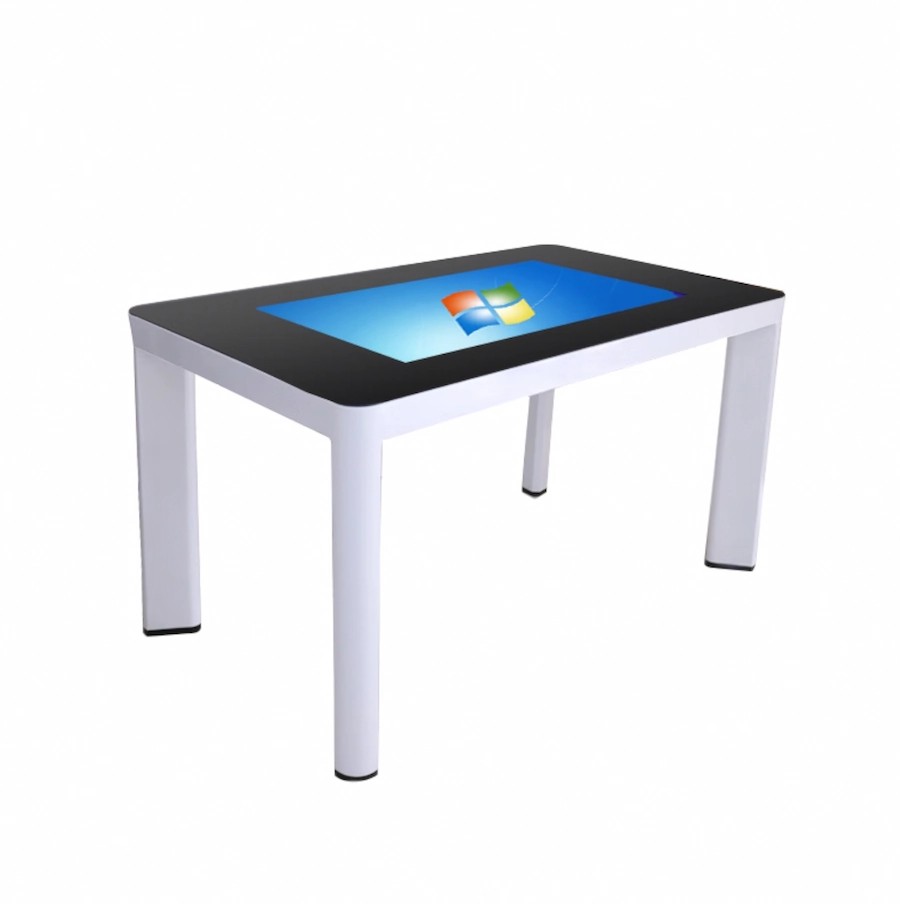
The most important information is often not on the quotation at all. When you receive a interactive touch table price quote, reply with these six questions before you accept it:
1. Which display panel brand and model is included? "LG/BOE commercial panel" should be the answer. If the answer is vague, the panel is consumer-grade, and it will show brightness degradation within two years of daily use.
2. What is the touch frame controller brand? The controller is the component most likely to fail. Name-brand controllers have replacement parts available worldwide; no-name controllers do not, which turns a $100 repair into a table replacement.
3. What is the glass thickness and tempering standard? 6mm tempered is the education/commercial floor. Ask for the tempering certification — real tempered glass shatters into granules; fake "tempered" glass breaks into blades.
4. What is the exact PC configuration? Insist on a named model: brand, CPU model, RAM, storage type. "Windows 11 included" tells you nothing. eMMC storage in a table expected to run smoothly for five years is a time bomb.
5. What happens when something fails? Who diagnoses, who ships the part, who pays the freight, and how long does each step take? A supplier who answers this question with specifics before you have paid a deposit will answer it after, too.
6. What is the quote's validity period? Component prices move. A 30-day validity is normal; a 90-day validity means the supplier has padded the price to hedge.
Three Traps We See in Losing Quotes
Beyond the line items, there are structural traps that only appear when you compare quotes over time. We see the same three repeatedly:
The phantom discount. A quote shows a crossed-out list price and a "special discount" — 30% off, this week only. In this industry, list prices for custom-configured hardware are essentially fictional; every serious B2B quote is built from component costs plus margin. A dramatic discount signals that the list price was inflated to create theatre, not that you are getting an unusual deal. Evaluate the final number against the fair ranges in the anatomy above; ignore the theatre entirely.
The spec sheet shuffle. You approve a quote for capacitive touch and a commercial panel. The quotation that follows months later, or the invoice, references the same model number — but the specification annex quietly reads "IR touch" or drops the panel brand. It is not always fraud; sloppy documentation produces the same result. The defence is mechanical: require the full configuration (touch technology, panel brand, glass thickness, PC model) written into the purchase order itself, not in an email thread, and check the delivered goods against it on arrival.
The warranty that evaporates. A quote promises a two-year warranty in a friendly email. The contract's fine print limits it to factory faults only, excludes the display panel after twelve months, requires the buyer to pay return freight to China, and specifies repair turnaround "subject to parts availability." That is not a warranty; it is a formality. Ask for the warranty terms in writing before the deposit, and read them as if you will need them — because on a multi-year deployment, you probably will.
Comparing Quotes Fairly: The Normalisation Spreadsheet
Here is the method we recommend to every B2B buyer. Build a spreadsheet with one column per quote, and normalise every quote to the same terms before comparing: add freight to EXW quotes until every column is CIF or DDP; add warranty cost until every column includes two-year parts coverage; add the cost of any missing accessories until every column is complete-to-plug-in; and adjust for touch technology until you are comparing capacitive with capacitive. Only then compare the numbers.
In the case of our procurement manager's three quotes: after normalisation, the $2,000 spread shrank to about $400 — and the middle quote, once its superior controller and panel were priced in, was actually the best value. The cheapest quote was not lying; it was quoting a genuinely cheaper product dressed in the same vocabulary. That is the whole game: same words, different machines.
If you are collecting quotes right now, add us to your list. Request a quote from Lumilink with your quantity, destination, and target configuration, and you will receive an itemised quotation — the same one we dissected here, structure and all. Judge it against the others line by line. That is exactly how it should be judged.
One final observation from the procurement manager's story: after she normalised the three quotes and chose the middle supplier, she told us the exercise changed how her department buys hardware of every kind, not just touch tables. The discipline of reading a quotation line by line — of demanding numbers instead of adjectives — is portable. It travels from this purchase to your next one, and the one after that. The quotes stay the same; your ability to read them does not.