
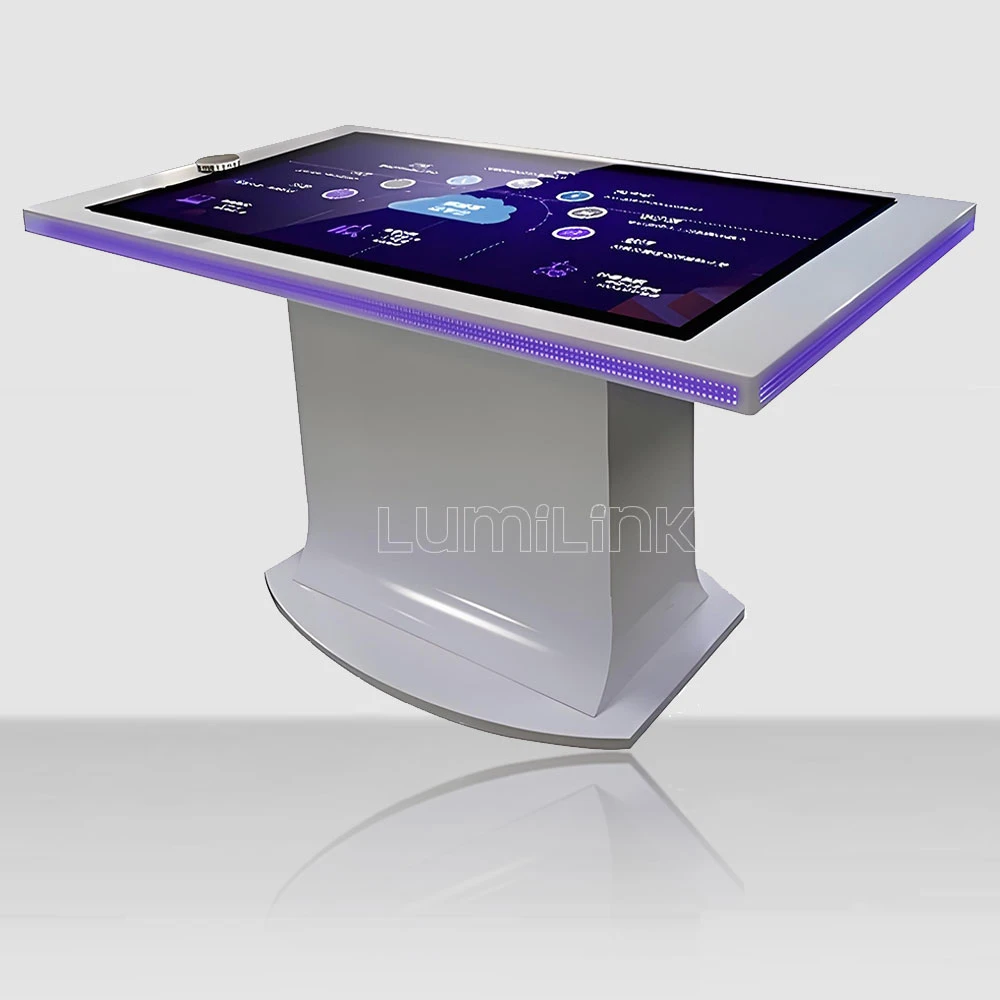

A distributor in Brazil contacted us last year after spending three months collecting quotes from five different suppliers. The prices ranged from $2,800 to $7,200 for what appeared to be identical 43-inch touch tables. He asked us a simple question: "Why is the spread so wide, and what am I actually paying for?" That conversation inspired this article. If you are researching the interactive touchscreen table wholesale price, you have likely encountered the same opacity — suppliers quote dramatically different numbers, each insisting their price is the best value. This guide breaks down what drives those differences so you can negotiate with clarity instead of guessing.
Wholesale pricing for interactive touch tables is not a single number. It is a matrix of components, configurations, and commercial terms. Understanding this matrix is the difference between overpaying for features you do not need and securing a deal that gives you genuine margin headroom. Let us walk through every cost factor, one by one.
The Five Cost Layers of a Wholesale Touch Table
Every commercial touch table on the market — regardless of brand — is built from five cost layers. When you understand what each layer contributes to the final price, you can make informed trade-offs instead of comparing total numbers in a vacuum.
Layer 1: Display Panel (35-40% of total cost)
The display panel is the single most expensive component. A 43-inch panel alone can cost between $450 and $900 depending on panel grade, brightness rating, and manufacturer. The key differentiator here is panel grade: A-grade panels (used by Lumilink and other reputable brands) have zero dead pixels and uniform colour reproduction. B-grade and C-grade panels — common in ultra-low quotes — may have dead pixels, backlight bleeding, or colour inconsistencies that become visible after a few months of use.
Brightness is the other sub-factor. Standard commercial panels run at 350 nits, which is fine for indoor environments with controlled lighting. If your tables will be deployed in atriums, near windows, or in brightly lit retail spaces, you need 500+ nit panels, which add $150 to $300 to the panel cost. Some suppliers quote the lower-brightness panel without mentioning it, which is why their price looks attractive.
Layer 2: Touch Technology (15-20% of total cost)
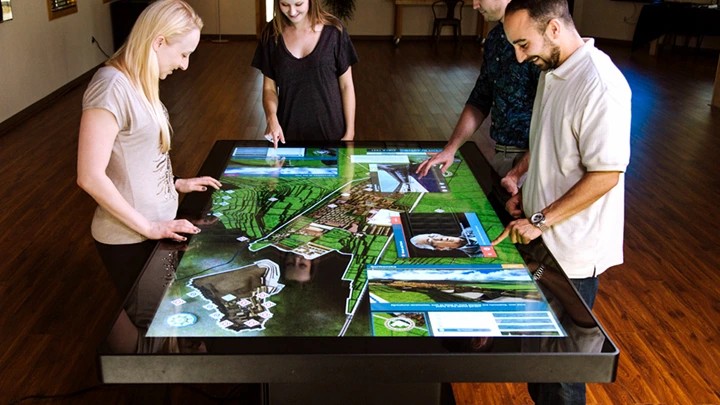
There are two dominant touch technologies in the market: infrared (IR) touch frames and projected capacitive (PCAP) touch. IR frames are cheaper ($80 to $200) but have drawbacks — they are susceptible to ambient light interference, require a bezel that collects dust, and can register false touches from insects or debris. PCAP touch is more expensive ($300 to $600 for a 43-inch surface) but offers superior performance: zero bezel, immune to ambient light, supports up to 40 simultaneous touch points, and has sub-10ms response latency.
When comparing wholesale quotes, always ask which touch technology is used. A $3,000 quote for a 43-inch table almost certainly uses an IR frame. A $5,000+ quote should use PCAP. The price gap is not markup — it is a fundamentally different component. If a supplier cannot or will not specify the touch technology, treat that as a red flag.
Layer 3: Computing Hardware (15-20% of total cost)
The built-in PC determines what the table can actually run. Low-end configurations use Intel Celeron or N-series processors with 4GB of RAM — sufficient for basic digital signage and simple touch applications, but inadequate for 3D rendering, video conferencing, or multi-application workflows. Mid-range configurations use Intel Core i5 with 8GB of RAM, which covers 80% of commercial use cases. High-end configurations use Core i7 with 16GB or more, plus dedicated graphics for demanding applications.
Storage matters too. An SSD (256GB minimum) is non-negotiable for commercial deployments — mechanical hard drives fail under the vibration and temperature cycles of a sealed touch table enclosure. Some ultra-cheap quotes use eMMC storage, which is slower and has a shorter write-cycle lifespan. Always confirm the storage type in writing.
Layer 4: Enclosure and Build (15-20% of total cost)
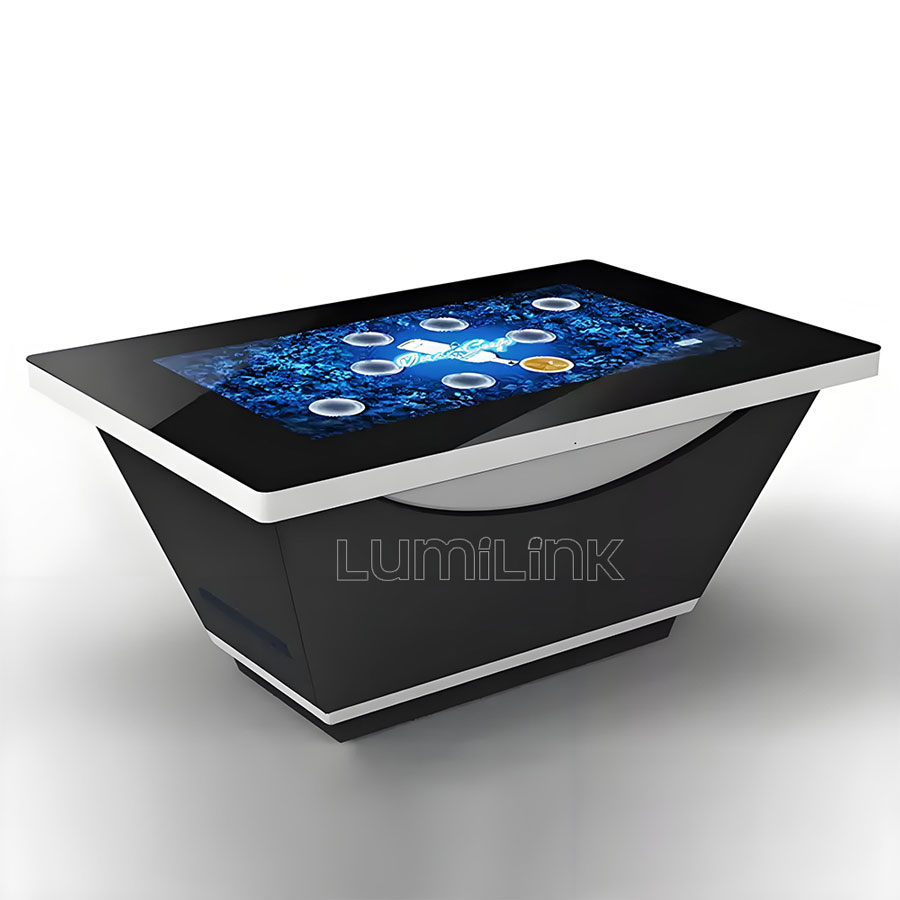
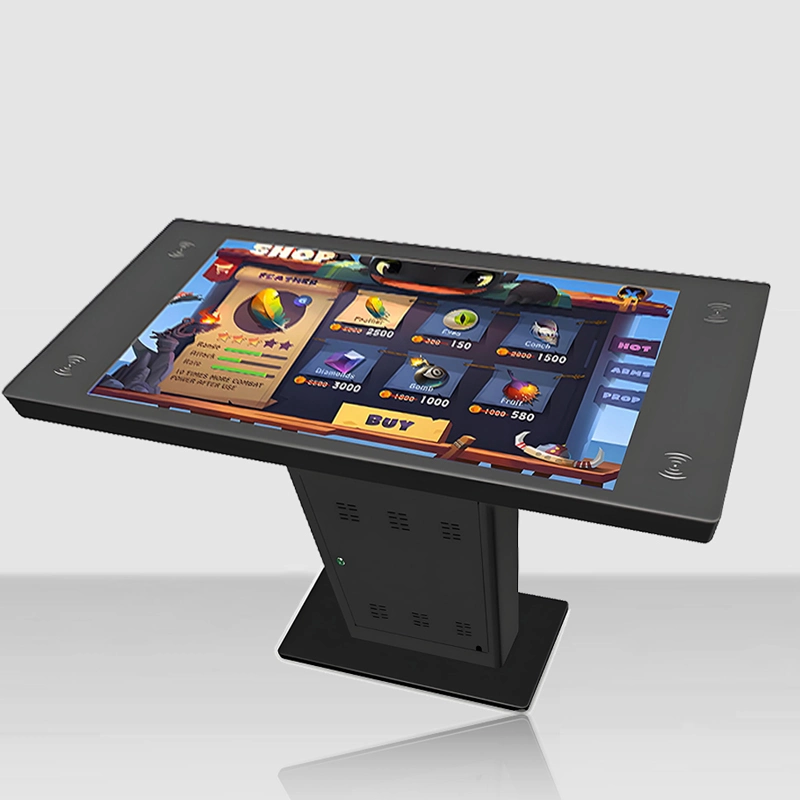
The enclosure is where cost-cutting is most visible and most dangerous. A well-built enclosure uses 2-3mm cold-rolled steel with powder-coated finish, tempered glass (minimum 5mm, rated for impact), and integrated thermal management (fans or heat-pipe cooling). A cheap enclosure uses thinner steel (1mm or less), acrylic instead of tempered glass, and passive cooling that causes the internal PC to overheat under sustained use.
The difference between these two approaches is not visible in a product photo. It shows up six months into deployment, when the cheap enclosure's acrylic surface is scratched, the internal PC is thermal-throttling, and the touch frame is misaligned because the thin steel has warped. A quality enclosure costs $400 to $800 to manufacture. A cheap one costs $150. That $250 to $650 difference is a major driver of the wholesale price spread.
Layer 5: Software, Testing, and Support (10-15% of total cost)
The final layer covers everything that is not hardware: Windows licensing, touch calibration software, QA testing, packaging, and warranty support. A supplier that skips QA testing (every table gets a basic power-on test but no full touch-matrix validation) saves $50 to $100 per unit. A supplier that does not include a Windows license saves another $100 to $150. These omissions do not show up in the spec sheet, but they mean the buyer inherits the cost and risk of incomplete testing.
Wholesale Price Tiers: What to Expect
Based on our analysis of the market and conversations with distributors worldwide, the wholesale price for a 43-inch interactive touch table falls into three tiers:
| Tier | Price Range (FOB China) | What You Get | Risk Level |
|---|---|---|---|
| Budget | $2,500 - $3,500 | IR touch, B-grade panel, Celeron/eMMC, thin enclosure | High — QA gaps, short lifespan, no after-sale support |
| Commercial | $4,000 - $6,000 | PCAP touch, A-grade panel, Core i5/SSD, steel enclosure | Low — standard QA, 1-2 year warranty, responsive support |
| Premium | $6,500 - $9,000 | PCAP 40-point, 500+ nit panel, Core i7/dedicated GPU, custom enclosure options | Very low — full QA, 3-year warranty, on-site support |
Lumilink operates in the Commercial to Premium tiers. We do not compete in the Budget tier because the component trade-offs required to hit that price point compromise the five-to-seven-year lifecycle that our commercial clients expect. If your market requires Budget-tier pricing, that market exists — but you should go in with eyes open about the quality compromises involved.
Negotiation Levers for Wholesale Buyers
Once you understand the cost layers, you can negotiate effectively. Here are the levers that genuinely move the price, ranked by impact:
1. Order volume. The single biggest factor. A 10-unit order and a 50-unit order may have a 15-20% price difference because the supplier can optimise production runs, reduce per-unit testing overhead, and negotiate better component pricing with their suppliers. If you are testing the market with a small initial order, ask about volume-based pricing for follow-on orders — many suppliers will lock in a tiered pricing structure from day one.
2. Configuration standardisation. If you commit to a single configuration (one screen size, one computing spec, one colour), the supplier saves on production complexity. That saving should be passed to you. The more custom variants you request — different sizes, different software images, different branding — the higher the per-unit cost, even at the same volume.
3. Payment terms. A 50% deposit with 50% on shipment is standard for first orders. But if you establish a track record and move to 30% deposit with 70% against a copy of the Bill of Lading, or even a letter of credit, you reduce the supplier's cash-flow burden. Some suppliers offer 2-3% discounts for faster payment terms (e.g., 100% prepayment).
4. Freight and Incoterms. FOB (Free On Board) pricing is the most common quote basis for Chinese manufacturers, but it means you handle and pay for international shipping, customs, and inland freight. CIF (Cost, Insurance, Freight) pricing bundles shipping into the quote, which is convenient but typically adds a 5-8% margin on top of actual freight costs. If you have a reliable freight forwarder, FOB is almost always cheaper.
5. Excluded accessories. Some suppliers include stands, wall mounts, or software packages in their base price. Others list them as add-ons. When comparing quotes, normalise the scope: if Supplier A includes a stand worth $200 and Supplier B does not, Supplier A's $4,500 quote is actually cheaper than Supplier B's $4,400 quote.
Red Flags in Wholesale Quotes
During your quote comparison, watch for these warning signs that indicate a supplier is cutting corners or hiding costs:
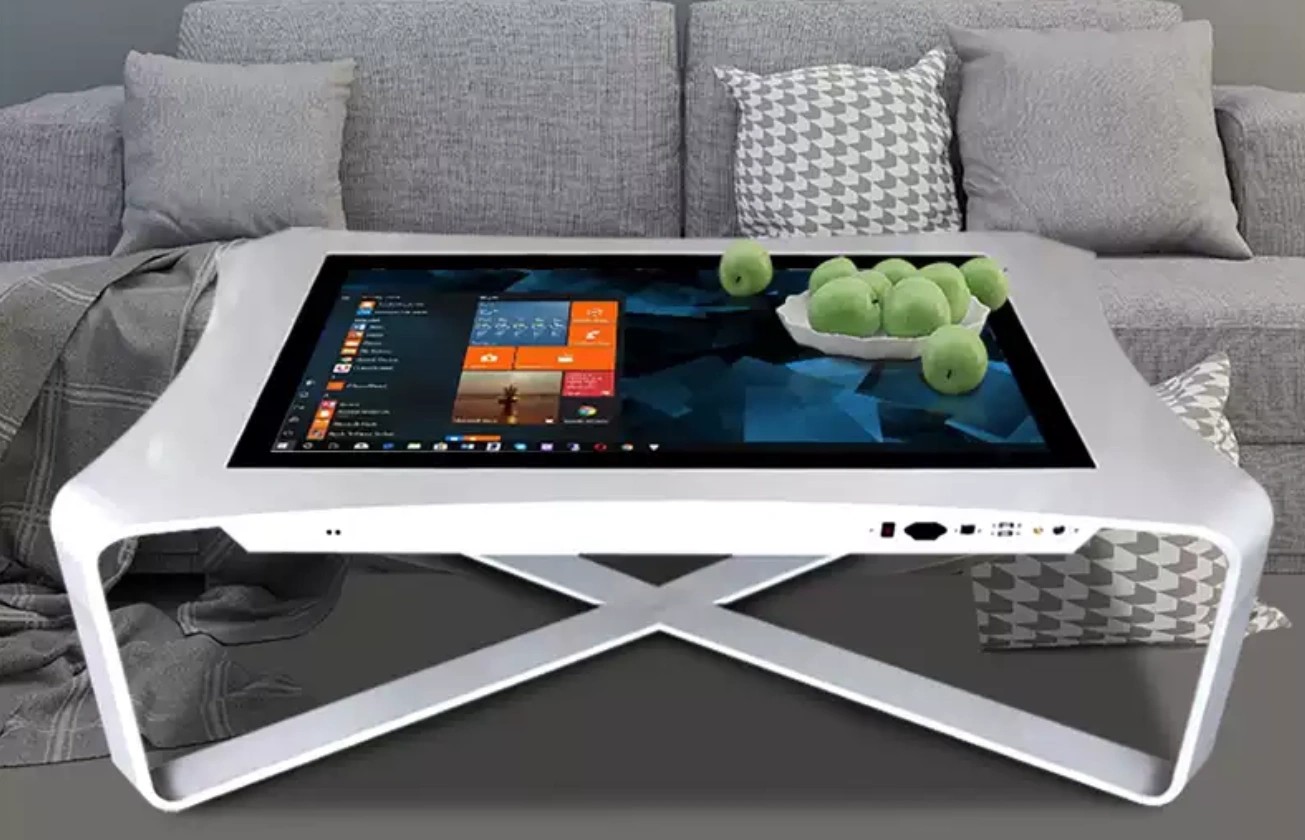
Vague specifications. If a quote says "43-inch touch table, i5, 8GB RAM" without specifying panel grade, touch technology, storage type, enclosure material, or glass thickness, the supplier is deliberately leaving room to downgrade components. Always insist on a detailed specification sheet before placing an order.
Unrealistically low pricing. If a quote is 40%+ below the market average for comparable specifications, something is wrong. The supplier is either using counterfeit components, omitting QA testing, or has no intention of delivering the quoted specifications. The old adage applies: if it seems too good to be true, it is.
No warranty or vague warranty terms. A supplier that offers "warranty available" without specifying duration, coverage, and the claims process is telling you they do not expect to honour it. A commercial-grade supplier should offer a minimum one-year warranty with clear terms: what is covered, how claims are filed, and what the typical resolution time is.
Refusal to provide references. Established wholesale suppliers should be able to provide references from other distributors or B2B clients in your region. If they cannot, they are either very new (risky) or have burned bridges with previous clients (very risky).
Next Steps for Wholesale Buyers
If you are evaluating the interactive touchscreen table wholesale price for a distribution or reseller business, the most productive next step is to request a detailed quote with full specifications. Contact Lumilink with your target volume, required configuration, and destination market. We will provide a transparent quote that breaks down each cost layer, along with a specification sheet that you can use to compare against other suppliers.
Our team works with distributors in over 30 countries and understands that wholesale pricing is not just about the per-unit number — it is about the total cost of ownership, including warranty support, replacement part availability, and the confidence that the tables you sell will still be performing well three years from now. That confidence is what distinguishes a sustainable wholesale partnership from a one-time transaction.