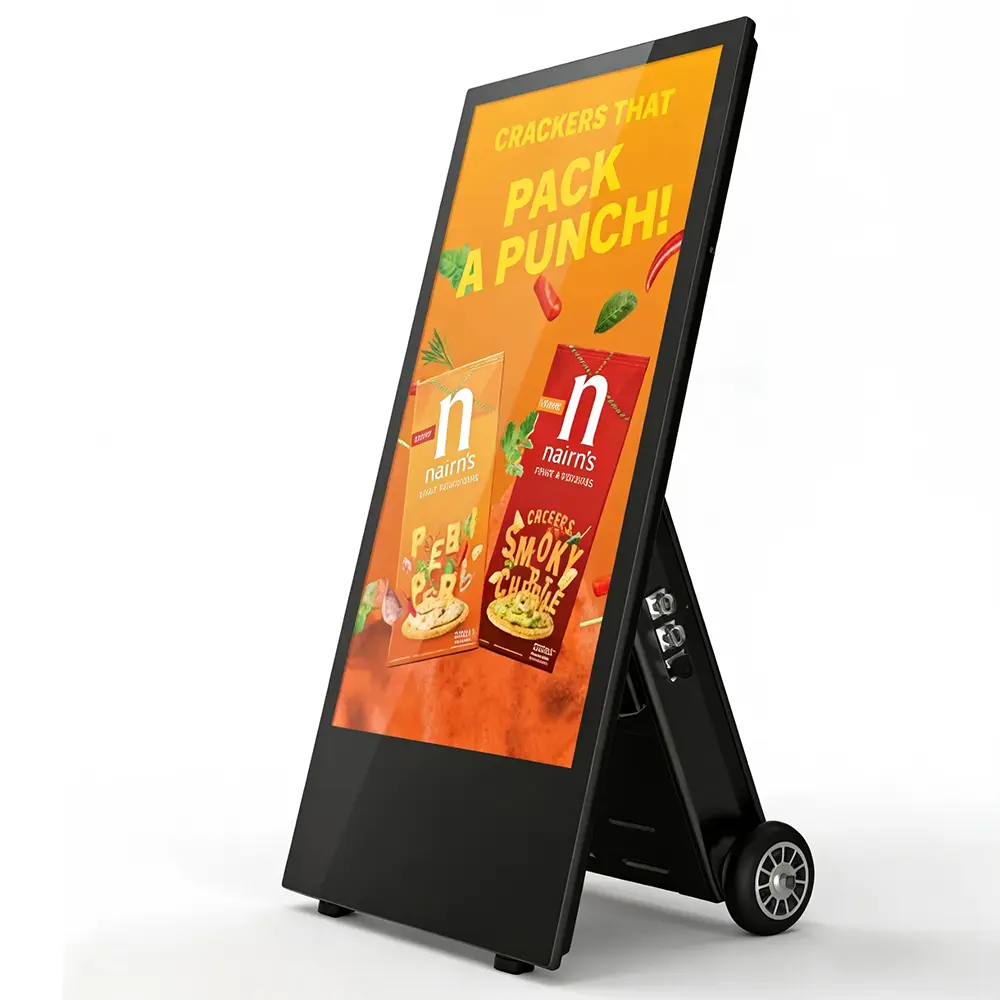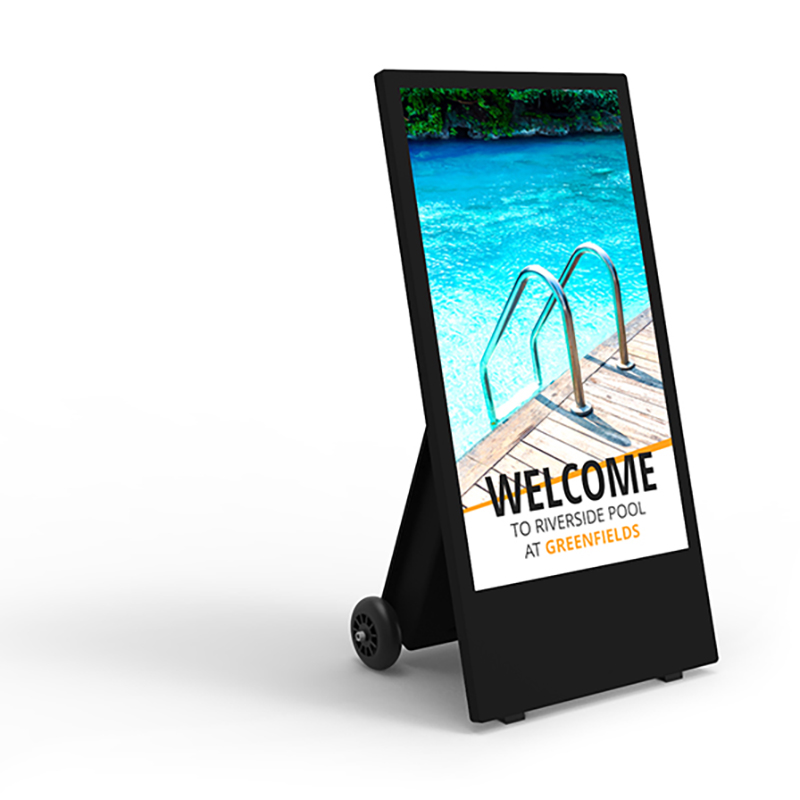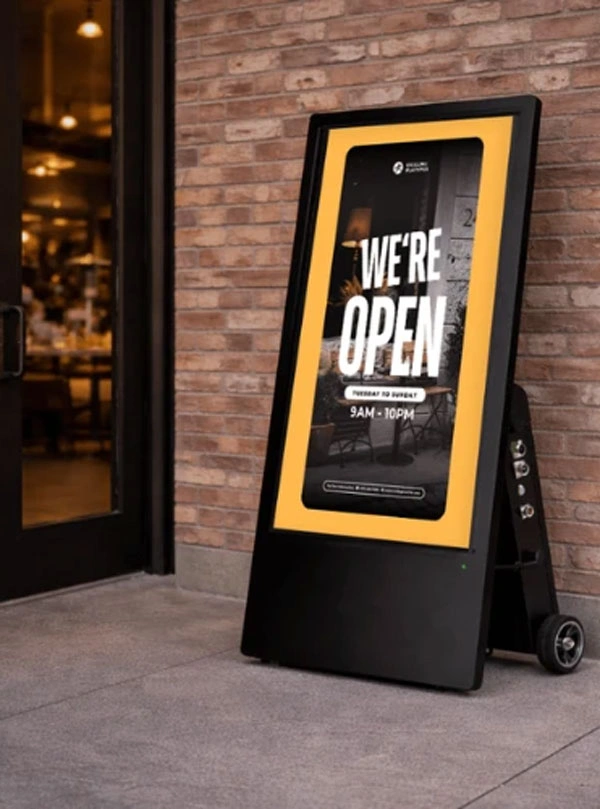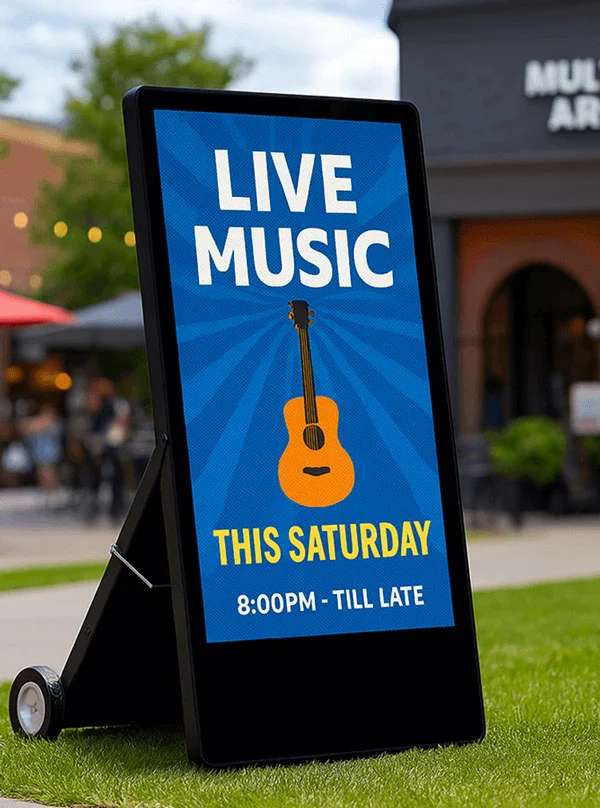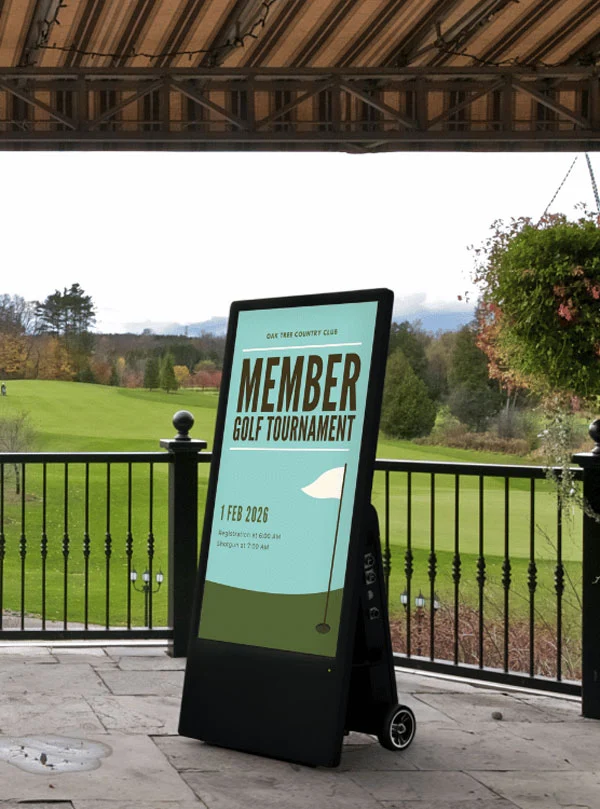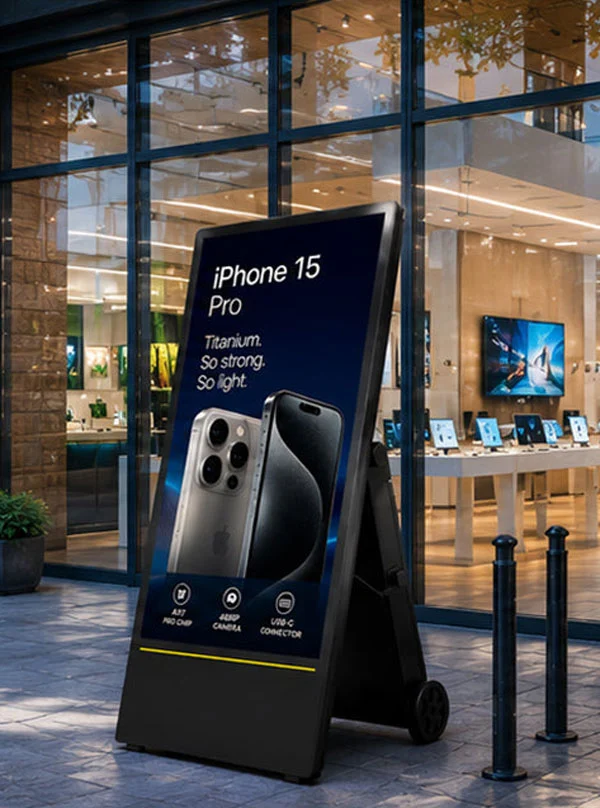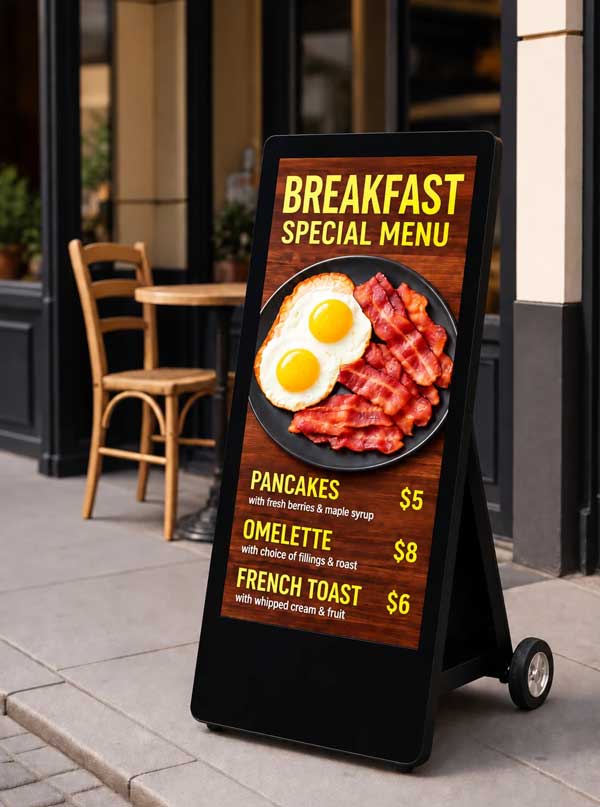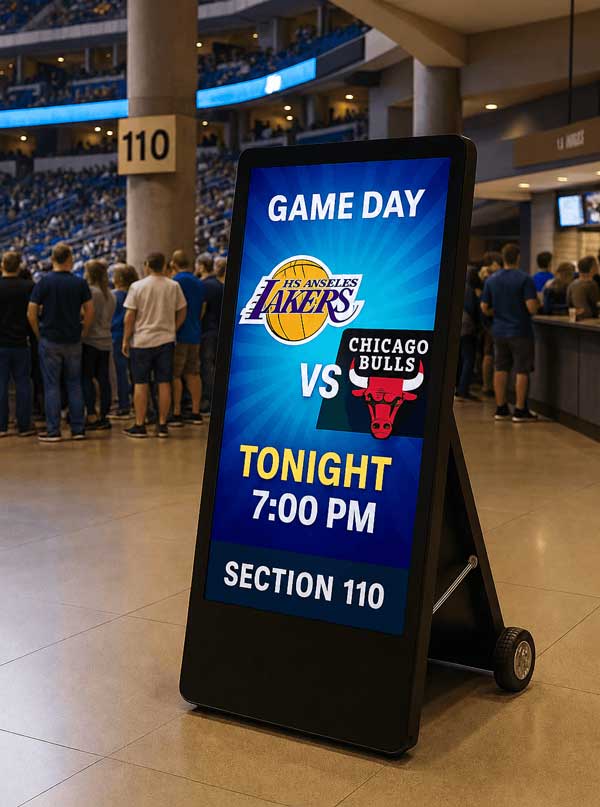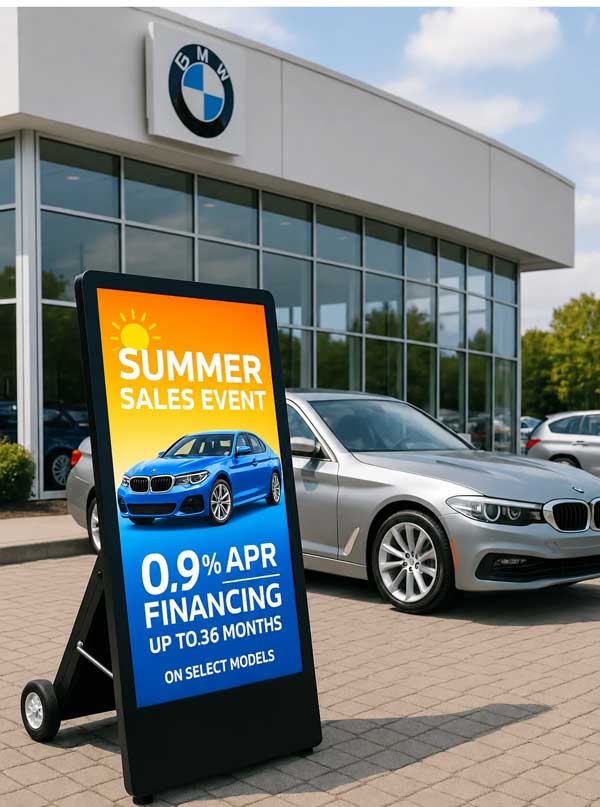
A digital sandwich board is the screen version of the oldest street-advertising tool there is: the folding board a shop sets on the pavement each morning and carries back in each night. LumiLink keeps everything that made the format work - the A-frame stance, the two-minute setup, the one-person routine - and replaces the chalk with a 1,800-2,000 cd/m2 portrait screen, a 14-hour battery and an IP65 cabinet, so the same pavement spot now plays video, changes with the time of day and survives the weather unattended.
Every high street already runs on sandwich boards. The chalk A-frame outside a café costs almost nothing, takes thirty seconds to place, and does one job: catch the person walking past who did not plan to come in. The format survives because the routine around it is simple - one person carries it out, writes the offer, tips it back in at closing.
The trouble is everything the chalk cannot do. It cannot show motion, so it loses to every phone screen competing for the same glance. It cannot change with the hour, so the breakfast offer stays up at dinnertime. It cannot survive rain, and after a few winters the board is gone. And it cannot be managed remotely, so a chain with ten fronts needs ten people with chalk every morning.
An electronic A-frame sidewalk sign keeps the routine and fixes the failures. The screen plays full-motion video, so the pavement spot competes on equal terms with the phones. Playlists switch by daypart automatically, so breakfast gives way to lunch without anyone walking outside. The cabinet is rated for outdoor weather, and content for a whole chain updates from one dashboard.
What it does not change is the discipline that made the chalk work: the board still belongs to one staff member, one spot and one daily rhythm. Buyers who need a screen that travels further than one frontage - rolling between entrances, venues or event gates - should compare this format with the digital poster on wheels, which adds a rolling chassis to the same electronics.


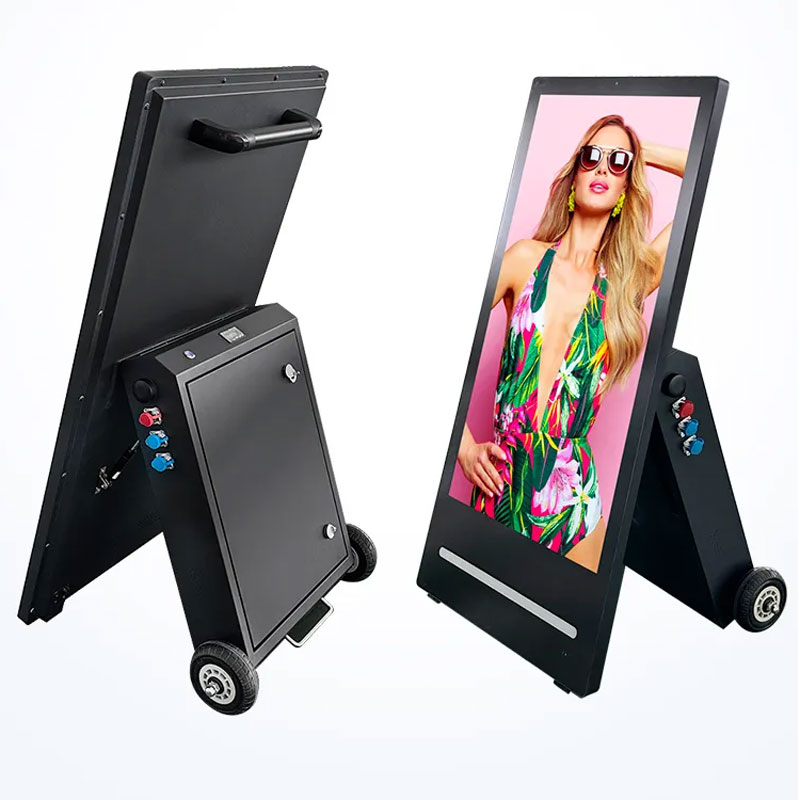
The hardware is an A-frame wearing a weatherproof skin, and every part of it exists to survive pavement duty.
Tempered glass over the panel. The display face sits behind a tempered-glass sheet, because a pavement screen shares space with trolleys, bicycles and the occasional knocked-over sign. The glass also carries an anti-reflective finish so morning sun does not white out the content.
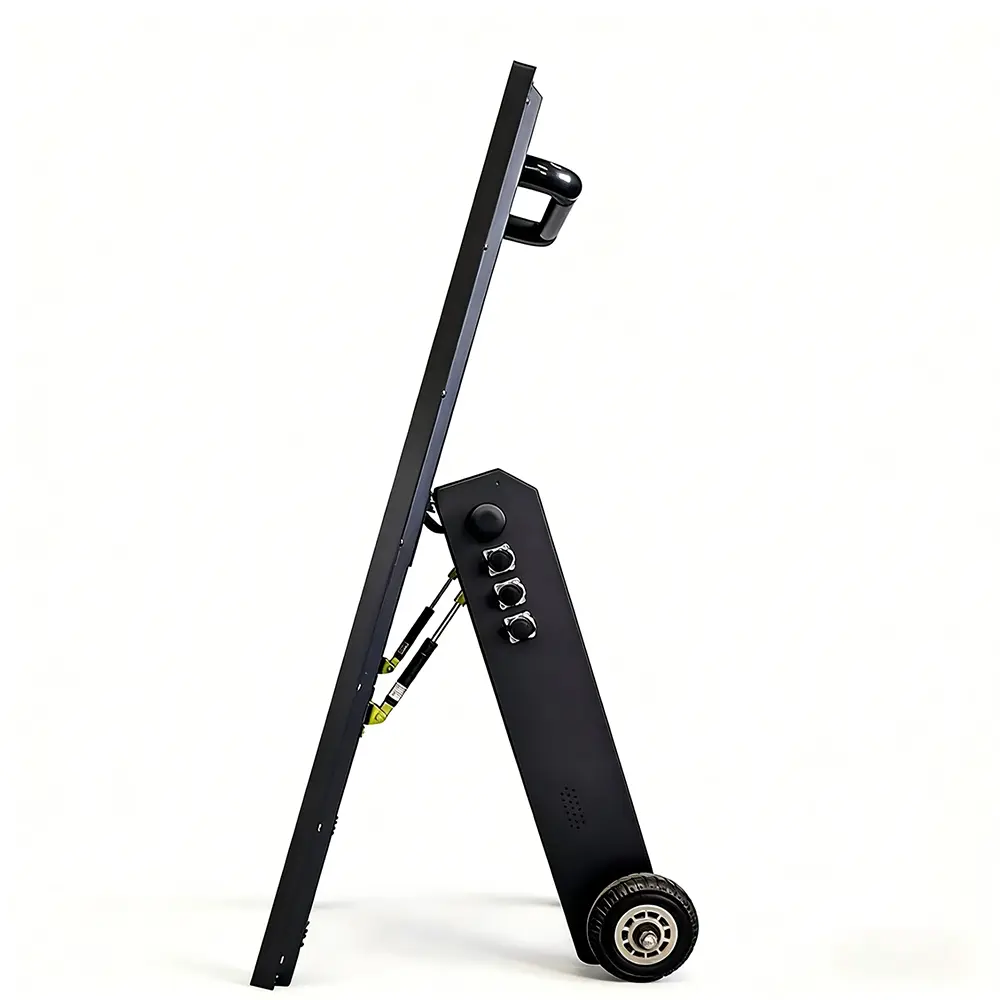
Twin gas-spring struts. The screen tilts on a pair of gas struts - the same mechanism as a high-end monitor arm. They hold whatever angle you set without tools, absorb vibration from passing traffic, and let the display be angled slightly downward toward pedestrian eye level, which improves both readability and stability.
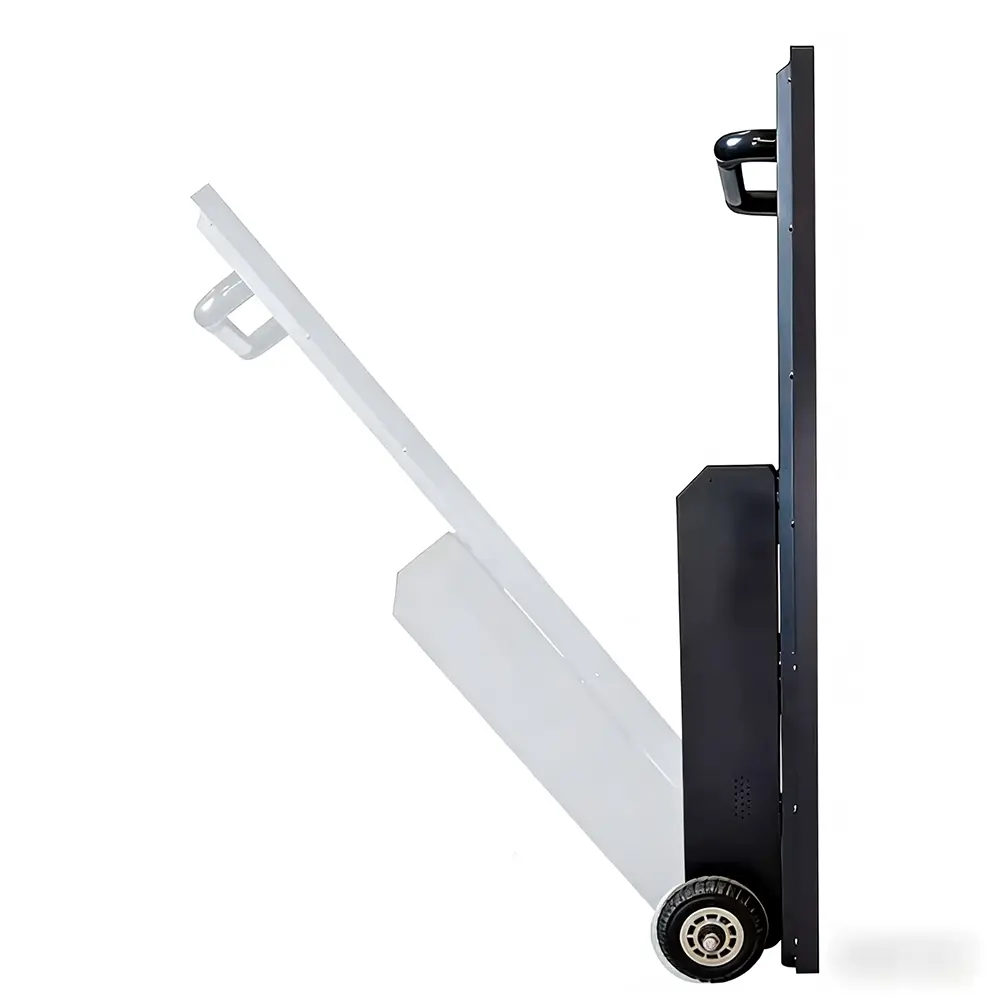
Locking pin and cam locks. A fixed locking pin secures the folded posture during transport, and keyed cam locks close the battery compartment, so the pack and player board stay protected when the unit stands unattended.
Castor wheels plus foot pads. Specialized castors let one person roll the unit from storage to position, and rubber foot pads level it once there - roll to the spot, then set it down solid. The rear port panel carries USB and power interfaces behind a sealed cover, and a pair of speakers supports campaigns that run with sound.
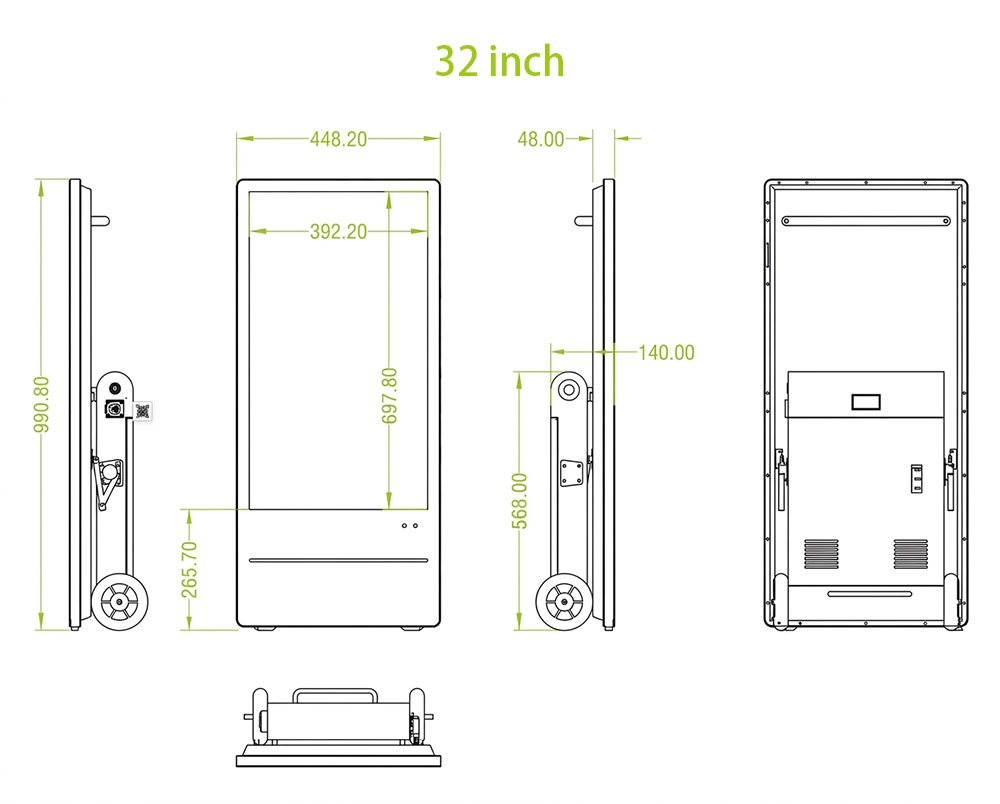
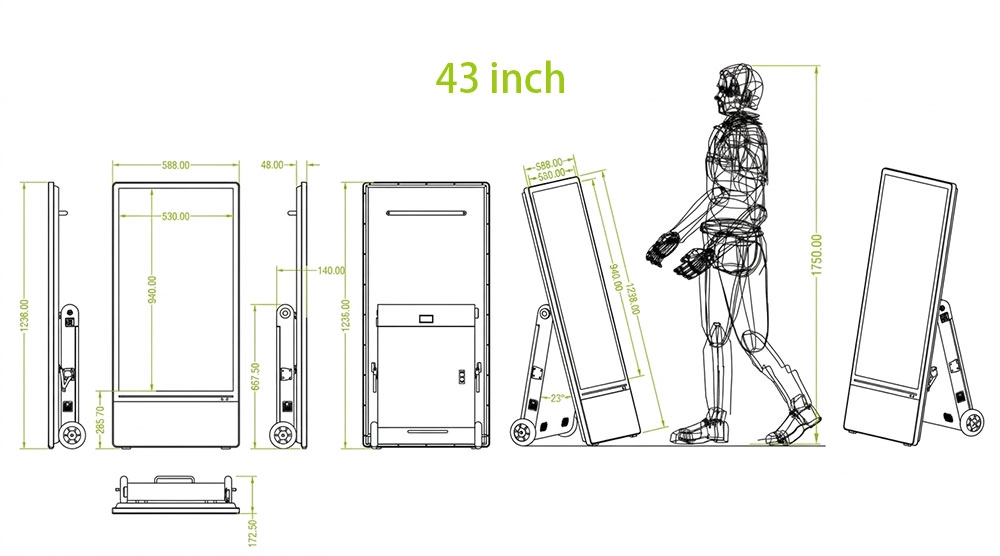
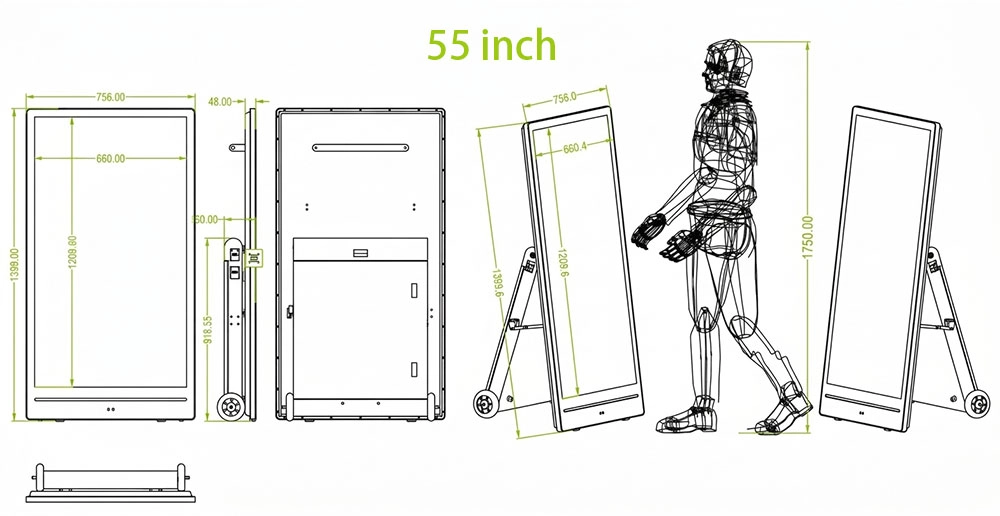
Seen from the side, the whole assembly reads as a slim A rather than a cabinet on a pole - which is exactly why the format is still welcome on pavements where a floor-standing totem would obstruct the flow. The side profile drawing in the gallery shows the depth that clearance rules care about.
LumiLink foldable poster displays fo...
More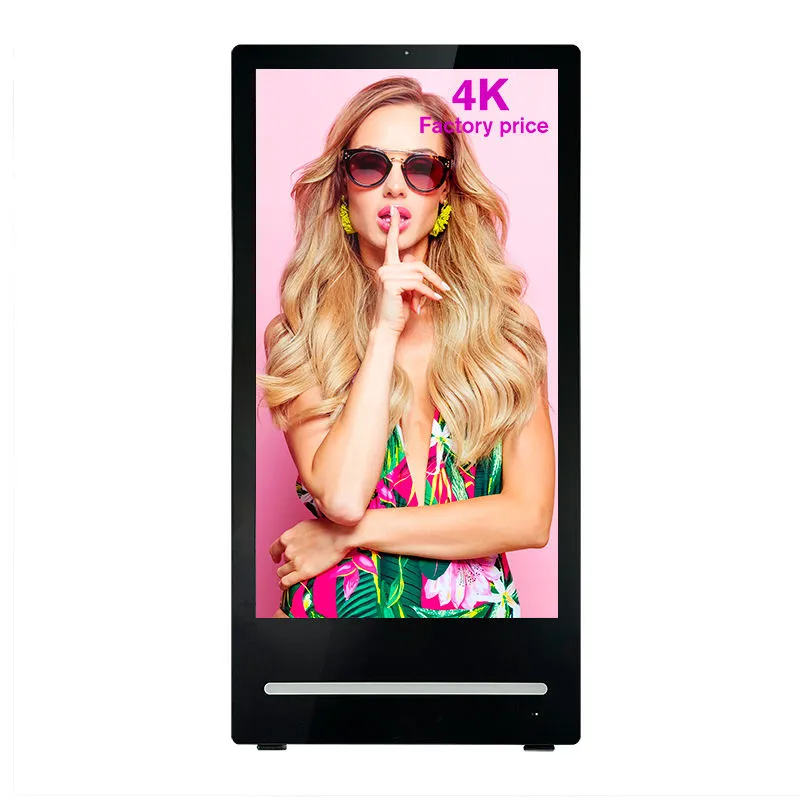
LumiLink A-frame digital boards mode...
More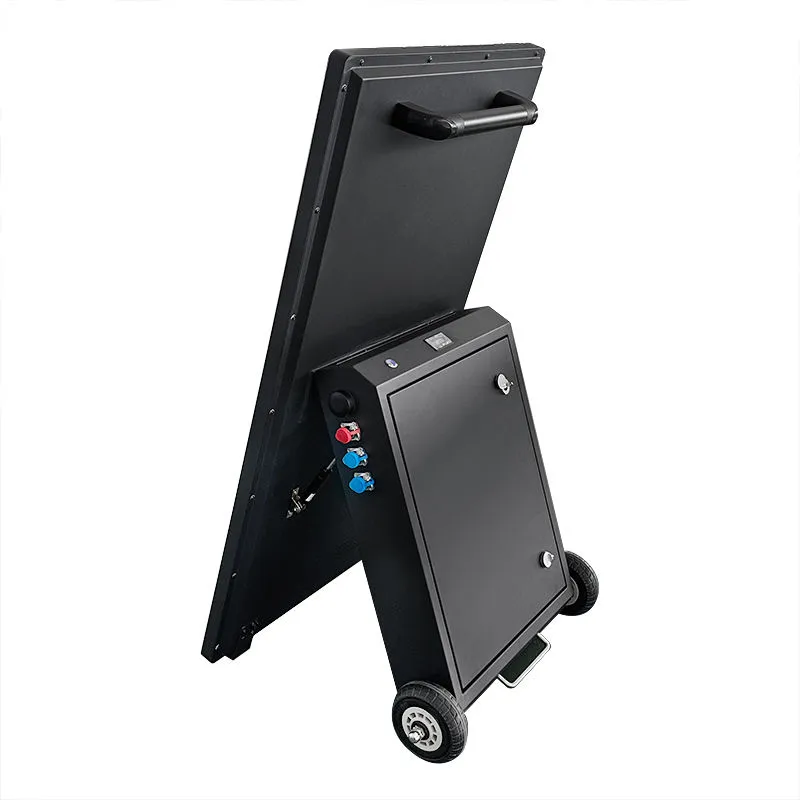
Battery powered digital signage with...
MorePortable outdoor digital signage in ...
More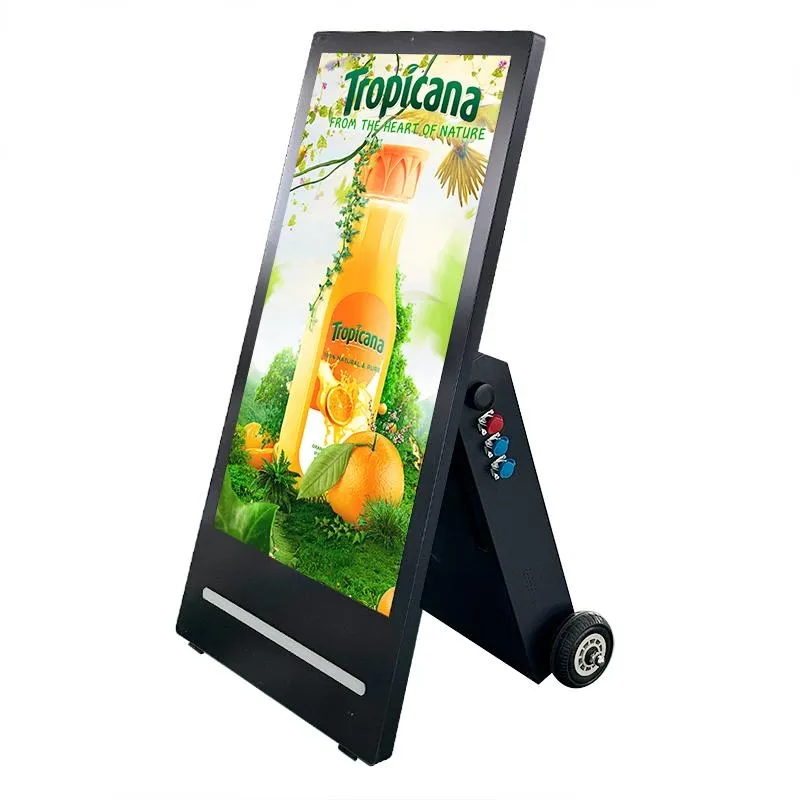
Digital poster on wheels for one-per...
More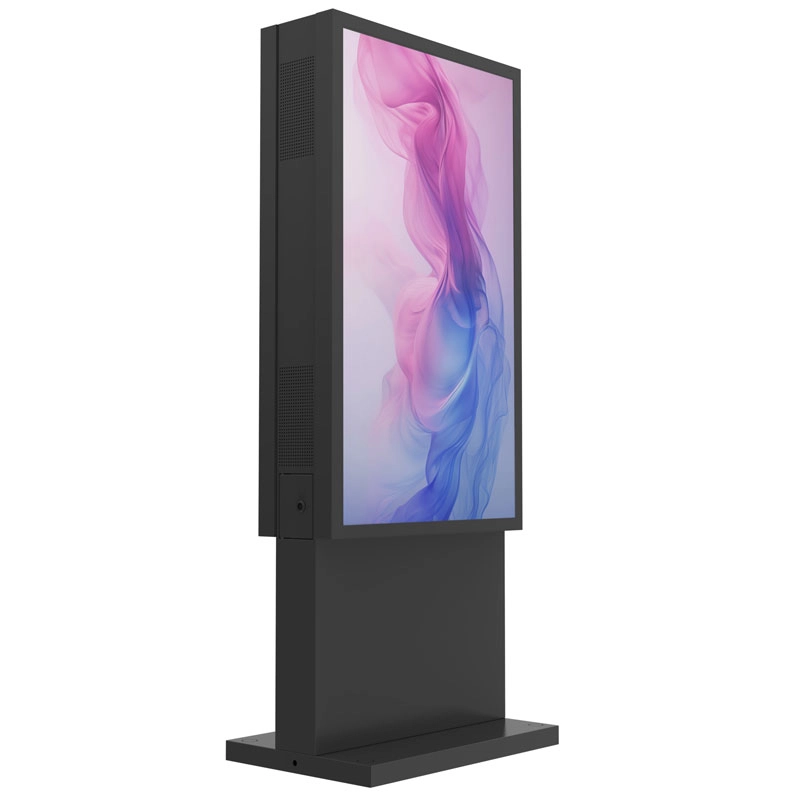
LumiLink digital outdoor advertising...
MoreA digital pavement sign stands on public or semi-public ground, so the placement question is legal before it is visual. Rules differ by country and even by street, but the pattern is consistent enough to plan against.
Permission follows ownership. Outside your own frontage, many authorities allow an A-frame board with conditions; on shared pedestrian areas, a permit or pavement licence is frequently required and some districts cap the number of boards per frontage. Inside a shopping centre or private estate, the landlord’s permission is the only rule that matters. The cost of asking first is a phone call; the cost of not asking is a removed board.
Clearance is the condition that actually gets enforced. Whatever the permit says, the practical test is whether a wheelchair, a pram and a delivery trolley can all pass. Accessibility codes generally expect a clear through-route in the region of 36 in / 915 mm, and some city centres ask for more. That single number decides where the board may stand: against your own window line rather than at the kerb, and never in front of a doorway, a fire exit or a kerb ramp.
Weight and stability work in your favour. A 35-65 kg unit with a wide A-frame stance is far less likely to topple in a gust or a collision than a lightweight chalkboard, which is one reason inspectors tend to accept the powered version more readily than the old wooden frames.
Common placement situations and how to handle them:
| Situation | Typical rule | Practical approach |
|---|---|---|
| Pavement outside your own frontage | Often allowed, conditions apply | Keep the board against your own window line, not the kerb |
| Shared pedestrian area | Permit or licence frequently required | Ask the local authority before the first deployment, not after |
| Narrow footway | Clear through-route must remain | Many accessibility codes expect a clear path of about 36 in / 915 mm - measure before you place |
| Doorways, fire exits, kerb ramps | Never blocked | Leave the full entrance width and the ramp flush area clear at all times |
| Shopping centre or private estate | Landlord permission decides | Get the placement agreed in writing with the estate management |
One habit closes most of the risk: photograph the spot with a tape measure in the frame before the first deployment, and keep the photo with the permit reference. If a complaint ever arrives, the evidence takes thirty seconds to produce.
Pavement presence without power works: a 40,000-50,000 mAh blade battery runs the full trading day cordless, so the digital pavement sign needs no socket, no cable across the footway and no installer.
Readable in direct sun: 1,800 cd/m2 on 32 and 43-inch models and 2,000 cd/m2 on the 55-inch, with 3,500:1 contrast and anti-reflective tempered glass - roughly double the brightness of indoor-grade portable screens.
Built for the weather it stands in: IP65 dust-sealed and rain-jet protected galvanized steel cabinet, operating range from -50 C to 110 C, so overnight outdoor stays and morning storms are within design intent.
Changes with the hour: dayparted playlists switch breakfast, lunch and evening content automatically - the one capability chalk never had and the reason screen boards outsell painted ones on food streets.
One person, two minutes: roll it out on castors, stand it on its foot pads, done. No lifting team, no tools, no installation visit.
Secure when unattended: keyed cam locks over the battery compartment and a locking pin for the folded posture, so the unit can stand out overnight without exposing its internals.
Three update routes: cloud CMS over Wi-Fi or optional 4G, USB plug-and-play for offline sites, and OTA firmware updates - one content library serving every board in a chain.
Serviceable by module: player board, battery pack, panel and the mechanical wear parts (wheels, struts, handles) are separate drop-in modules, keeping multi-year ownership costs predictable.
| Parameter | 32-inch | 43-inch | 55-inch |
|---|---|---|---|
| Panel Type | 32”LED Panel | 43”LED Panel | 55”LED Panel |
| Display Area | 697.8×392.2mm(W×H) | 943×531mm(W×H) | 1209.6×680.4mm(W×H) |
| Aspect Ratio | 16:9 | 16:9 | 16:9 |
| Backlight | Patented modular LED backlight with constant-current driver | Patented modular LED backlight with constant-current driver | Patented modular LED backlight with constant-current driver |
| Resolution | 1080×1920 | 1080×1920 | 1080×1920 |
| Display Colors | 16.7M | 16.7M | 16.7M |
| Brightness | 1,800 cd/m², sunlight-readable | 1,800 cd/m², sunlight-readable | 2,000 cd/m², sunlight-readable |
| Contrast Ratio | 3,500:1 | 3,500:1 | 3,500:1 |
| Viewing Angle | 178°(H) / 178°(V) | 178°(H) / 178°(V) | 178°(H) / 178°(V) |
| Response Time | 5ms | 5ms | 5ms |
| Color System | PAL/NTSC/SECAM | PAL/NTSC/SECAM | PAL/NTSC/SECAM |
| Operating Lifetime | 60,000 hours | 60,000 hours | 60,000 hours |
| CPU | Cortex-A7, 1.2 GHz | Cortex-A7, 1.2 GHz | Cortex-A7, 1.2 GHz |
| Memory | DDR3 1GB | DDR3 1GB | DDR3 1GB |
| Storage | Up to 32GB TF card expansion | Up to 32GB TF card expansion | Up to 32GB TF card expansion |
| Decoding Resolution | Up to 1080P | Up to 1080P | Up to 1080P |
| Operating System | Android 7.1.1 | Android 7.1.1 | Android 7.1.1 |
| Network | 3G/4G, Ethernet, Wi-Fi, wireless peripheral expansion | 3G/4G, Ethernet, Wi-Fi, wireless peripheral expansion | 3G/4G, Ethernet, Wi-Fi, wireless peripheral expansion |
| Video Formats | 30+ formats: AVI, MKV, MP4, MOV, WMV, FLV, TS, 3GP, MPG, VOB etc. | 30+ formats: AVI, MKV, MP4, MOV, WMV, FLV, TS, 3GP, MPG, VOB etc. | 30+ formats: AVI, MKV, MP4, MOV, WMV, FLV, TS, 3GP, MPG, VOB etc. |
| Image Formats | BMP / JPEG / PNG / GIF | BMP / JPEG / PNG / GIF | BMP / JPEG / PNG / GIF |
| USB Interface | 2× USB HOST ports + 2× USB expansion | 2× USB HOST ports + 2× USB expansion | 2× USB HOST ports + 2× USB expansion |
| System Update | USB / SD card / remote OTA update | USB / SD card / remote OTA update | USB / SD card / remote OTA update |
| Battery Technology | Blade battery, long runtime, stable performance | Blade battery, long runtime, stable performance | Blade battery, long runtime, stable performance |
| Charging Time | 7 hours | 7 hours | 7 hours |
| Runtime per Charge | 14 hours | 14 hours | 14 hours |
| Battery Capacity | 40000 mAh | 50000 mAh | 50000 mAh |
| Input Voltage | 24V | 24V | 24V |
| Operating Temperature | -50°C ~ 110°C | -50°C ~ 110°C | -50°C ~ 110°C |
| Storage Temperature | -45°C ~ 80°C | -45°C ~ 80°C | -45°C ~ 80°C |
| Operating Humidity | 10% ~ 90% | 10% ~ 90% | 10% ~ 90% |
| Storage Humidity | 10% ~ 90% | 10% ~ 90% | 10% ~ 90% |
| Power Input | AC100V ~ 240V | AC100V ~ 240V | AC100V ~ 240V |
| Power Consumption | ≤100W | ≤100W | ≤100W |
| Standby Power | ≤3W | ≤3W | ≤3W |
| Color Options | Silver / Grey / White / Black / Red | Silver / Grey / White / Black / Red | Silver / Grey / White / Black / Red |
| Enclosure Material | Galvanized steel + outdoor-grade powder coating | Galvanized steel + outdoor-grade powder coating | Galvanized steel + outdoor-grade powder coating |
| Certification | ISO9001, 3C, FCC, UL | ISO9001, 3C, FCC, UL | ISO9001, 3C, FCC, UL |
| Net Weight | 35Kg | 40Kg | 65Kg |
| Gross Weight | 38Kg | 48Kg | 87Kg |
| Product Dimensions | 990mm×148mm×448mm | 1236mm×148mm×588mm | 1400mm×148mm×756mm |
| Package Dimensions | 1100mm×300mm×600mm | 1350mm×300mm×700mm | 1580mm×345mm×930mm |
Size & Dimensions - drawings for all three models with the numbers that matter for pavement use: the A-frame stance width when open, the folded depth for storage, and the screen centre height for pedestrian eye level.
It depends on who owns the ground. Outside your own frontage, many local authorities allow an A-frame board with conditions; shared pedestrian areas usually need a permit or pavement licence, and private estates follow the landlord. Rules also cover clearance - keep a clear through-route of about 36 in / 915 mm and never block doorways, fire exits or kerb ramps. Ask before the first deployment; approval is normally a form, a fee and a set of placement conditions.
A full charge delivers 14 hours of continuous playback - one complete trading day - and recharges in 7 hours overnight. The 32-inch model carries a 40,000 mAh blade battery and the 43 and 55-inch models a 50,000 mAh pack. Because the ambient light sensor trims backlight output in shade and after dark, mixed indoor-outdoor duty often runs past the rated figure.
Yes. Panels are rated 1,800 cd/m2 on the 32 and 43-inch models and 2,000 cd/m2 on the 55-inch, with 3,500:1 contrast and anti-reflective tempered glass. At pavement viewing distance that keeps promos legible through a midday sun that washes out indoor-grade portable screens.
The cabinet is IP65 rated - dust-tight and protected against rain jets - in galvanized steel with an outdoor powder coating, and the operating range covers -50 C to 110 C. Overnight placement is within design intent; flooding and severe storms are not, so bring the unit in for those. The keyed battery lock keeps internals safe while it stands unattended.
Short, bright and current. Full-motion video outperforms static slides at catching the passers-by who did not plan to visit; one offer per screen beats three; and dayparting does the rest - breakfast menus in the morning, lunch deals from eleven, evening events after dark. Retail walk-ins consistently respond best to a price, a product and a time limit on screen together.
Through the cloud CMS: edit the playlist once, schedule it per unit and per daypart, and push it over Wi-Fi or the optional 4G module. For sites without connectivity, export the playlist to a USB stick and the player syncs it automatically. Price changes therefore reach every board in a chain in minutes, not mornings.
35 kg in 32-inch, 40 kg in 43-inch and 65 kg in 55-inch. All three roll on castors and stand on foot pads, so the daily routine is a one-person push rather than a lift. The 55-inch should be rolled on smooth paving and its route checked for kerbs and gravel in advance; where stairs dominate the route, the lighter formats are the honest choice.
The tempered-glass face and galvanized steel cabinet absorb the everyday knocks of pavement life, and the A-frame stance with foot pads resists tipping far better than a chalkboard. If a unit is ever damaged, the player board, battery, panel and wear parts are drop-in modules that can be replaced on site without returning the cabinet.
Manufacturing is certified under ISO9001, 3C, FCC and UL. Two years of warranty on the full unit with lifetime technical support, and replacement parts remain available for 5+ years after purchase - including batteries, castors and struts as separate modules.
The chalk failed at time-of-day relevance; the screen wins there. So the content plan matters more than the hardware choice, and for food and drink venues it writes itself.
Split the day into three offers. Breakfast until eleven, a lunch deal until four, an evening promotion after that. Schedule each as a playlist segment in the CMS once, and the board rewrites itself every day without staff involvement. One café owner describes it as finally having the right sign out at the right hour.
One offer per screen. A pavement glance lasts about two seconds. A price, a product and a deadline read cleanly; three competing offers do not. If the menu is long, show the hero item and let the window display carry the rest.
Motion for the glance, detail for the approach. Loop a 6-10 second video of the product; put the price and hours in a static corner zone. People walking fast catch the motion, people approaching the door read the corner.
Refresh weekly, not daily. The board updates itself by daypart; the creative underneath should change weekly so regulars keep noticing it. The same content library feeds every format in the range - the campaign built for this board can push to the portable outdoor digital signage family without re-authoring.
Battery discipline is what separates a screen that runs seven days a week from one that is sometimes dark.
Overnight charging, daily rhythm. The routine that works: roll the unit in at closing, plug it in somewhere safe, and it is full by morning - 7 hours covers a 14-hour trading day with margin. Assign the charging spot and the plug to a named person; unassigned routines are the ones that fail.
The sensor works for you. The ambient light sensor trims backlight output after dark, which is why the rated 14 hours holds even on a mixed indoor-outdoor day. It also means the board is not glaring at evening passers-by, which matters for neighbour relations on residential-adjacent streets.
Cold and heat are designed for. The blade battery chemistry and the wind-cooled cabinet are rated from -50 C to 110 C, so a winter on the pavement does not shorten pack life the way it would for a consumer-grade screen. The pack itself is a replaceable module with a multi-year service life - when it eventually wears, it swaps out without returning the unit.
For buyers comparing cordless options across the range, the battery platform is shared with the battery powered digital signage line, so spare packs and charging routines standardise across formats.
Delivering Sunlight-Readable, All-Weather Digital Signage to Global Brands
Established in 2014, Shenzhen Lumi Link Technology Co., Ltd. is a modern high-tech manufacturer focusing on intelligent display equipment. We specialize in professional consoles, digital outdoor advertising screens, and integrated command center solutions for a global client base.
Our core product line covers High-Brightness Outdoor LCD Displays for DOOH advertising, Sunlight-Readable Window Displays for retail storefronts, and durable Outdoor Digital Signage Totems for transit and smart city projects. We also offer bespoke Double-Sided Advertising Screens that maximize visibility from both directions of pedestrian flow.
With ISO 9001 certification and a dedicated R&D team, we provide full OEM/ODM services. From IP65 weatherproof enclosures for coastal cities to 5,000-nit panels for equatorial markets, our digital outdoor advertising screens are exported globally to over 50 countries.
10+ years of industrial experience
1000+ successful project cases
Shipping to 50+ countries and regions
200+ Achievement customers
20+ Technical patents
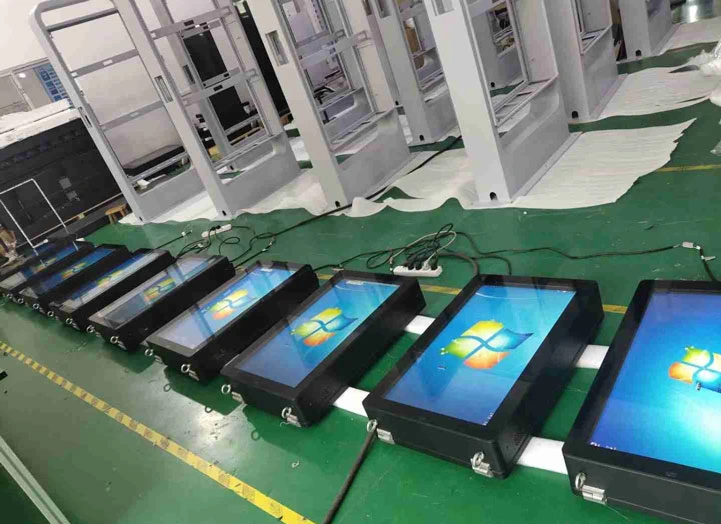
5000sqm production base

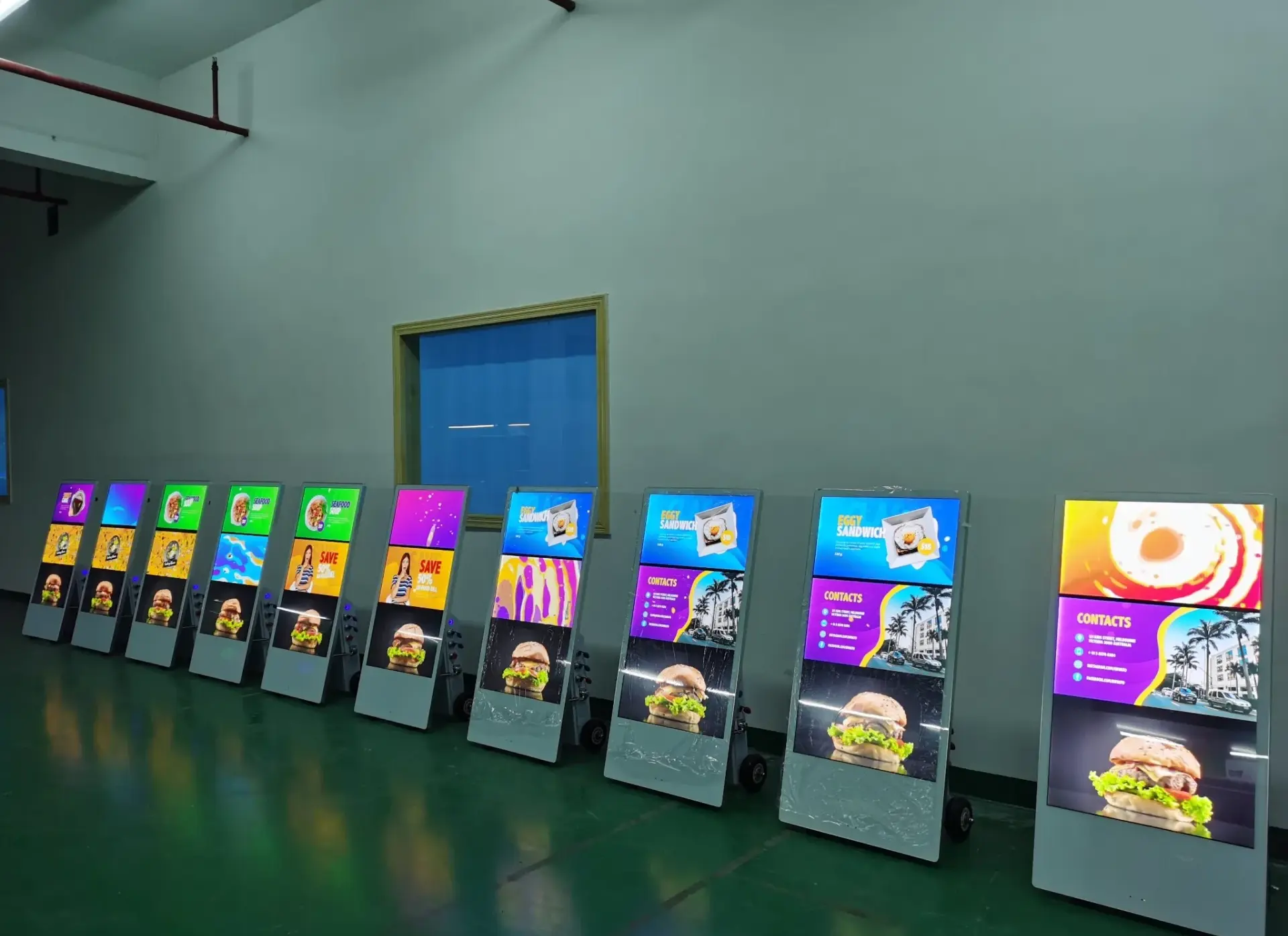
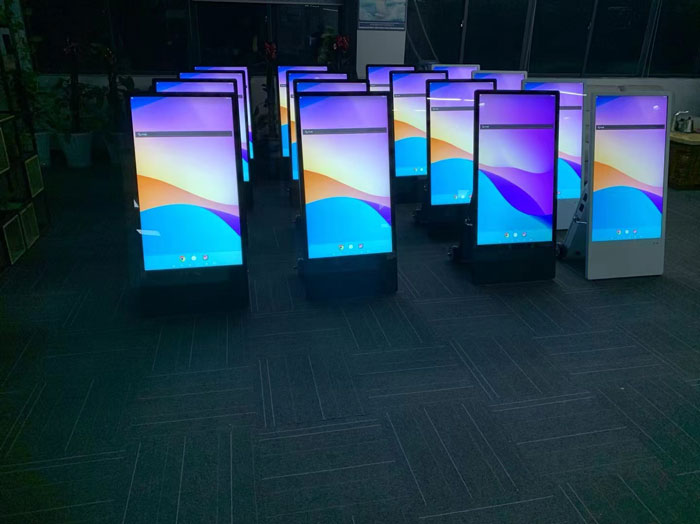
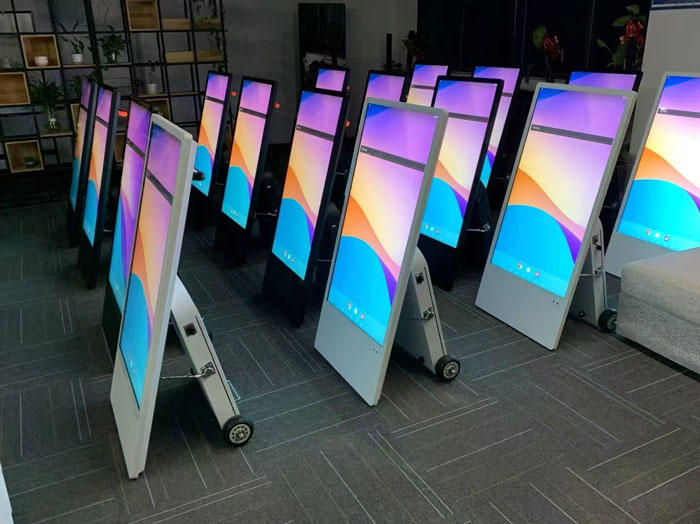
Where the board stands decides what it should say. Four patterns cover most deployments.
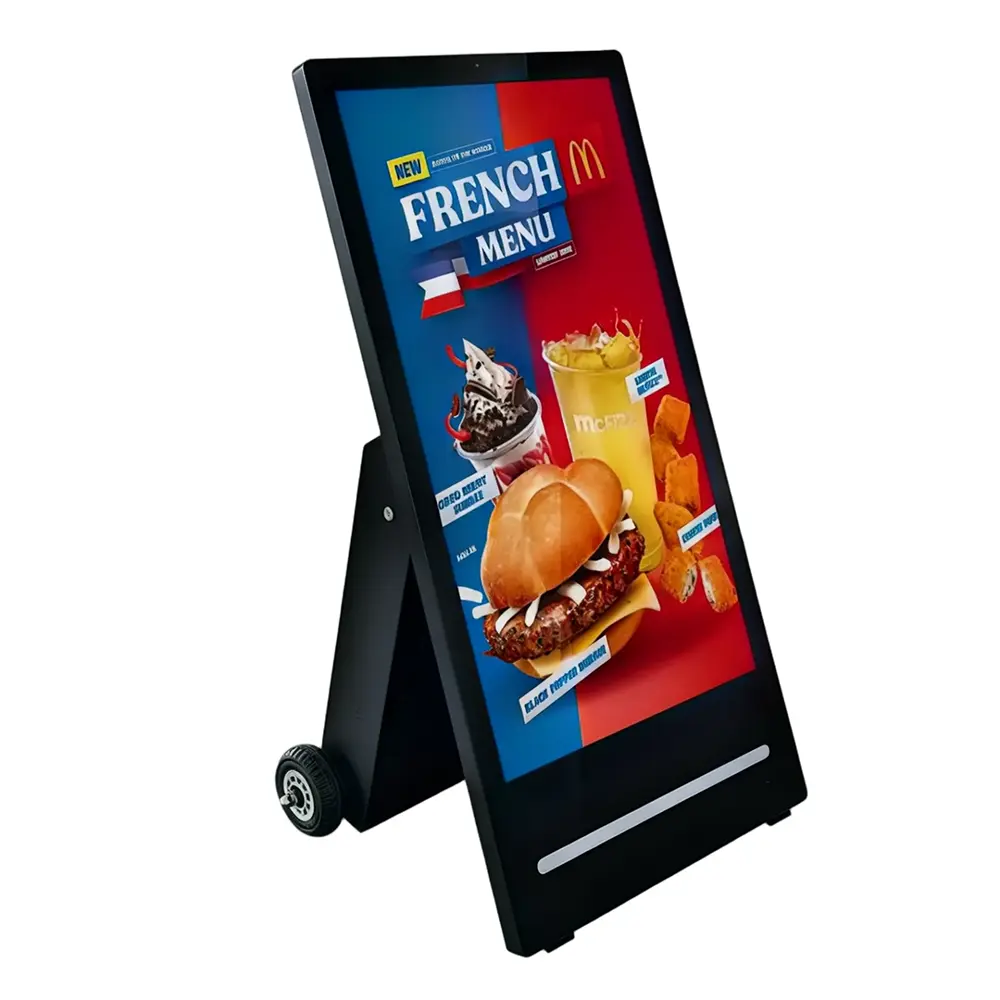
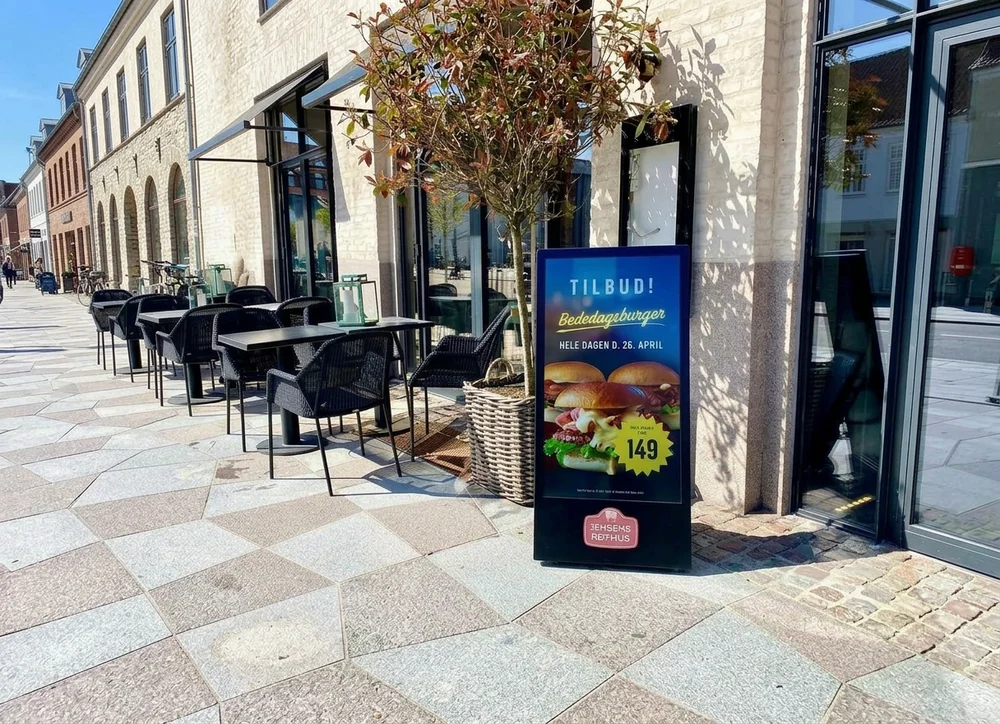
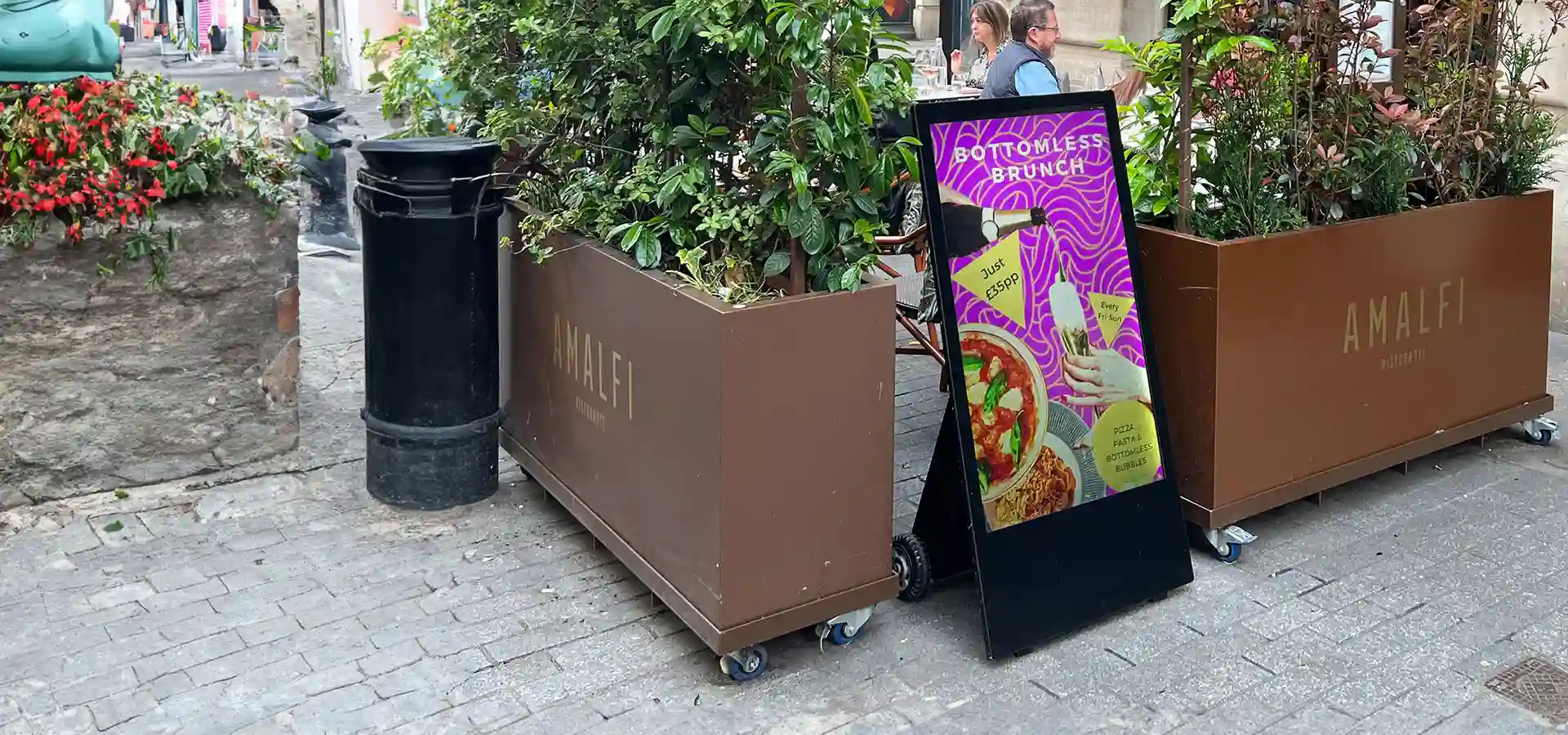
Restaurant and café frontage. The classic case. Stand the unit against the window line beside the outdoor tables, run dayparted menus, and keep the terrace route clear. The brunch and burger promos in the gallery are typical of the creative that works at this distance.
Retail frontage. Product-led promos with a price and a deadline. Chain stores value the CMS most here: one campaign change reaches every frontage the same morning, which is precisely the workflow a chalkboard chain can never have.
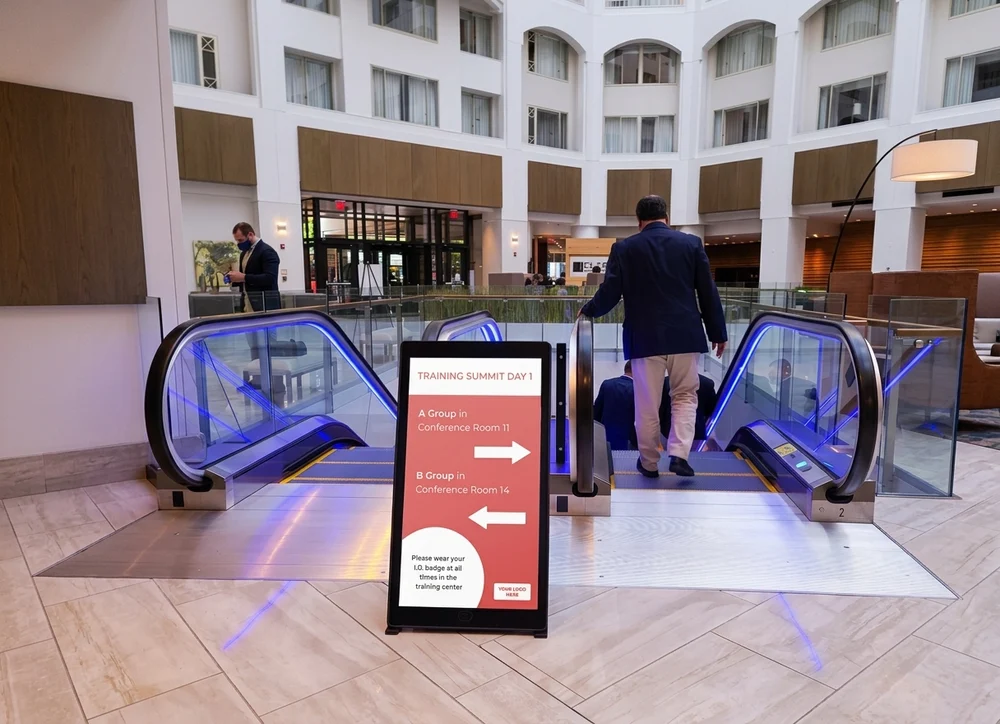
Hotels, gyms and clinics. Welcome and wayfinding duty: today’s hours, the room where the event happens, the promotion at reception. Content changes rarely, so these sites often run the same layout for months and update by season.
Markets and events. Stallholders roll the unit in with the van, run it all day on battery, and roll it back. Because nothing is installed, the board moves between weekend pitches without any venue negotiation beyond the pitch fee.
In every pattern the same rule applies: the screen earns attention only while the placement stays legal and the route stays clear - which is why the permit step comes before the creative step.
The player runs Android with a cloud CMS behind it, and the feature that matters most on a small screen is zoning.
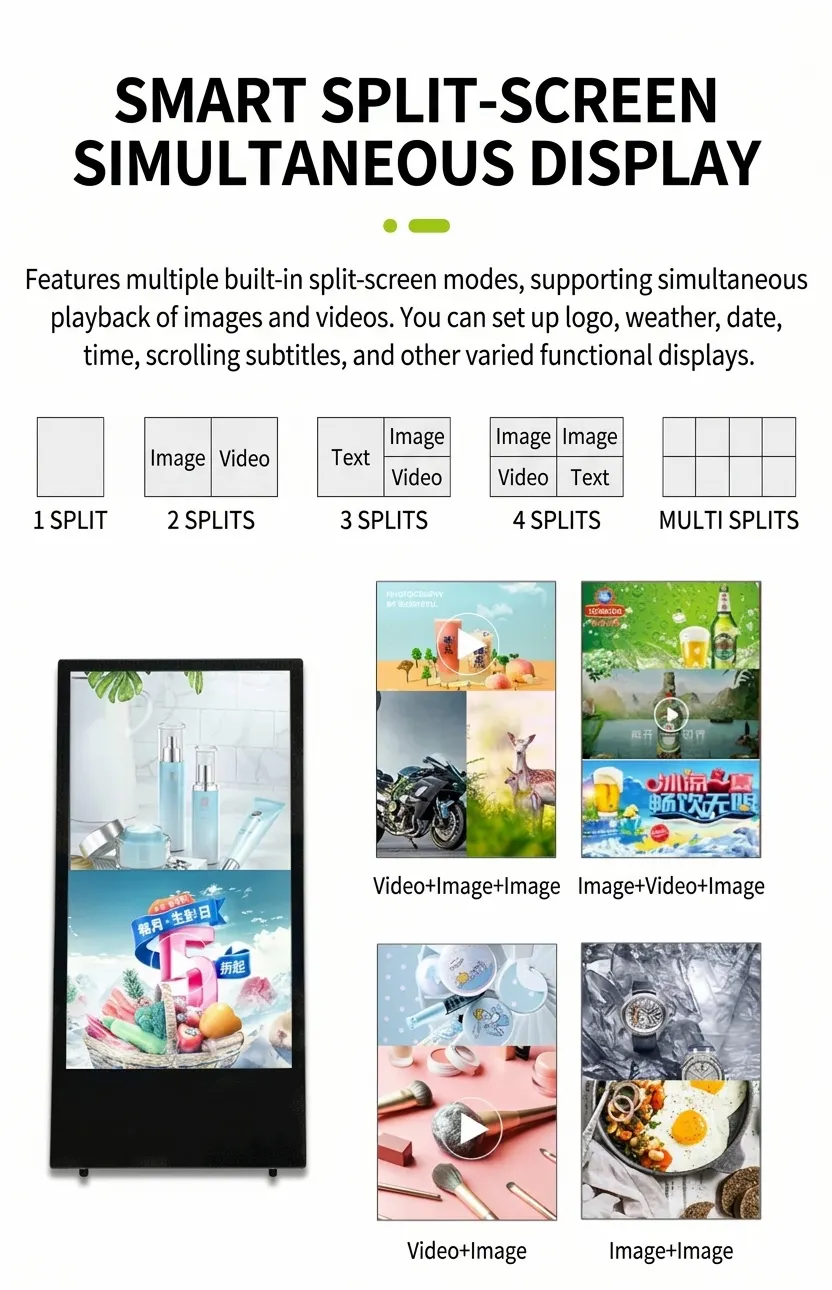
Split-screen layouts. The player supports 1, 2, 3, 4 and multi-zone layouts, so one screen can run a promo video in the main zone, a price block beside it, and a scrolling ticker with today’s hours underneath - all from one playlist. Zones mix video, image, text, logo, weather, date and time.
Scheduling per unit and per daypart. Every board in a fleet reports into the same dashboard; playlists are assigned per unit and per time band, so a city-centre board and a seaside branch can run different offers from the same account. Playback status is visible remotely, which is how a chain notices a dark screen before a customer does.
Offline and OTA. USB plug-and-play covers markets and rural sites with no signal, and firmware updates arrive over the air, so a deployed fleet stays current without recall. Playback supports 30+ video formats and scrolling text, with storage expandable to 32GB.
Because the CMS is shared across the portable range, the split-screen layout built for a menu board deploys to a wheeled unit or a foldable screen the same day - one template, three formats.
Pavement hardware lives a harder life in transit than most display categories, so packaging and spares are part of the specification rather than an afterthought.
Export-grade packing. Each unit ships in a foam-lined carton sized to the folded posture, with the battery packed under certified documentation for air and sea freight. Standard cabinet colours are silver, grey, white, black and red; custom colours and branding are available for chain rollouts.
Wear parts are modules. Castors, struts, handles and the battery pack are the parts that pavement use wears first, and all of them are drop-in replacements - no cabinet return, no downtime beyond the swap.
Factory-direct supply and support. Lumi Link manufactures in-house under ISO9001 with 3C, FCC and UL certification. Two years of warranty on the full unit, lifetime technical support with 24-hour weekday response, and replacement parts available for 5+ years after purchase. For a first deployment the team helps with the placement checklist - permit questions, clearance measurements and a content schedule - before the unit ships.
Our excellent sales and technical team help your business find the best Rol rate