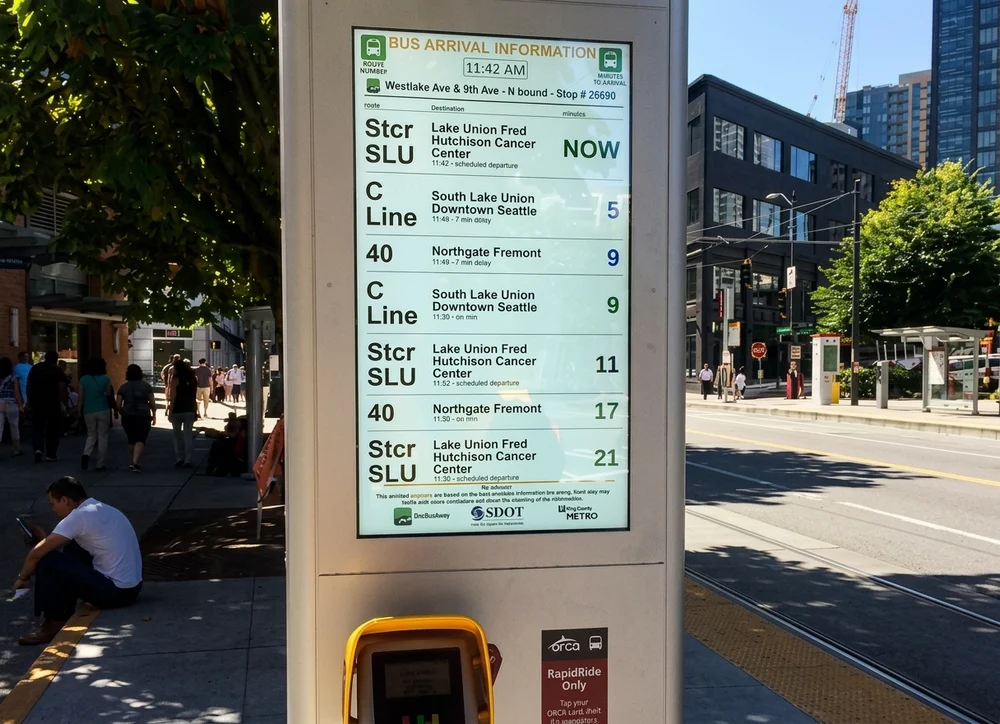
Seattle, Washington, is an international center for technological innovation and commerce. Its vibrant South Lake Union (SLU) district hosts global corporate headquarters alongside premier research institutions such as the Fred Hutchinson Cancer Center. The area experiences dense daily pedestrian traffic, moving thousands of commuters, tech professionals, and visitors through its multimodal transit network every hour.
The intersection of Westlake Avenue and 9th Avenue serves as a critical passenger transfer interchange (Stop #26690). This busy platform coordinates three vital transit services: the South Lake Union Streetcar (SLU Streetcar) heading into Downtown Seattle, King County Metro's high-capacity RapidRide C Line, and municipal Route 40 connecting northward to Fremont and Northgate.
To streamline urban mobility, reduce wait-time uncertainty, and advance citywide transit infrastructure, the Seattle Department of Transportation (SDOT) partnered with King County Metro to deploy an integrated outdoor Passenger Information Display (PID) network. Operating in conjunction with the OneBusAway data ecosystem, the initiative required rugged, street-level digital displays capable of providing continuous vehicle arrival predictions, system updates, and contactless regional fare integration via the ORCA card network.
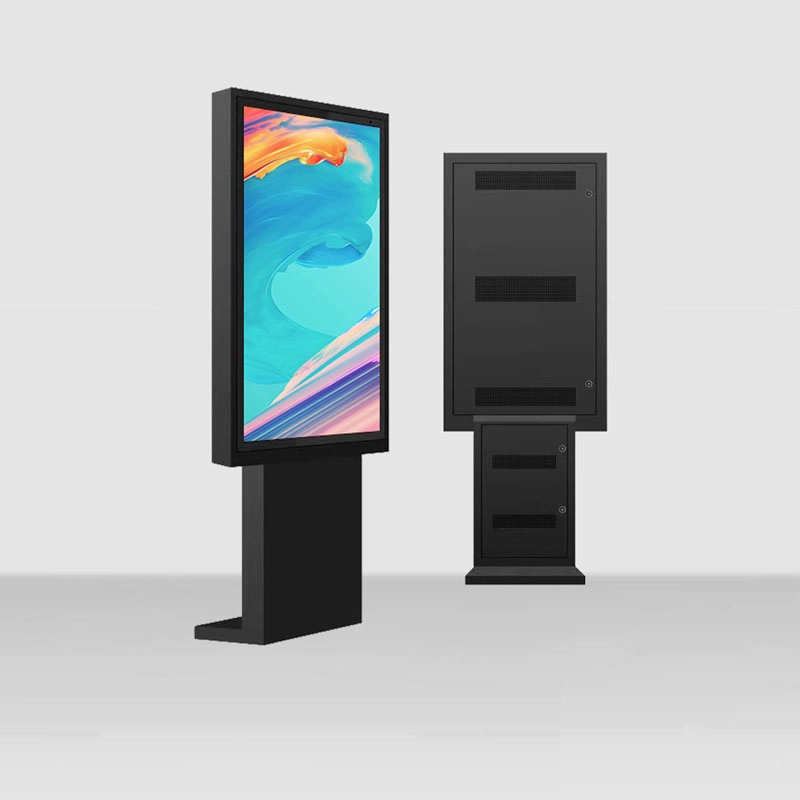
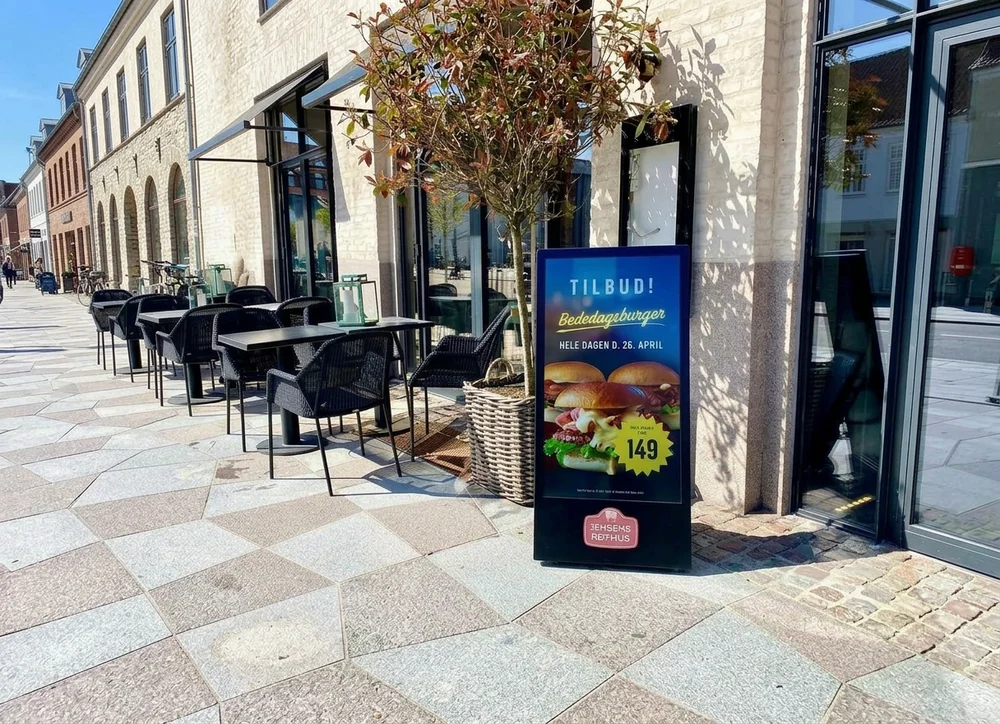
Following rigorous technical evaluations for optical clarity, thermal endurance, and exterior ingress resistance, the Lumi Link LL-HBS Series 2,500-nit Outdoor High-Brightness Commercial Display was selected as the digital visual backbone for this transit initiative, with thirty units planned across the corridor's highest-ridership stops.
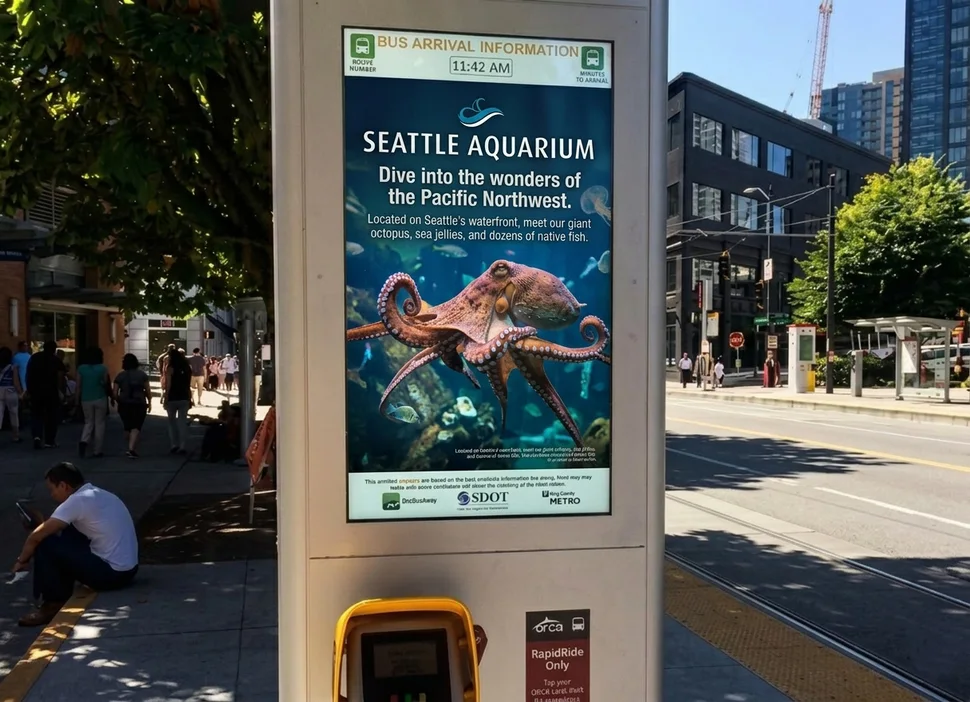
Deploying mission-critical outdoor digital signage on an unsheltered public transit platform introduces severe environmental and operational hurdles that ordinary commercial screens cannot survive.
The open sidewalk environment along Westlake Avenue is exposed to direct solar radiation and ambient reflections from nearby glass-curtain architecture. Conventional commercial displays operating between 350 and 1,000 nits suffer from severe contrast degradation, making small transit route text unreadable to passengers standing more than a few meters away.
Prolonged solar exposure rapidly elevates display surface temperatures above 80°C. Standard commercial LCD panels possess a low isotropic transition threshold (typically 70°C to 75°C). When this threshold is breached, the liquid crystal molecules lose their orientation properties, resulting in catastrophic, irreversible black patches across the screen.
Known for persistent rain, high humidity, and steep diurnal temperature shifts, Seattle's climate poses a major threat of internal condensation. Conventional air-gapped screens develop moisture droplets and fog inside the glass cover, obscuring timetable readouts and triggering electrical corrosion on internal components.
Transit agencies operate under tight public service commitments. Digital signage must operate 24/7/365 without unexpected shutdowns. Equipment that requires routine air filter replacements or scheduled technician visits creates high traffic disruption and prohibitive maintenance overhead for a citywide deployment.
The Lumi Link LL-HBS Series combines industrial-grade structural engineering with proprietary optical technologies to withstand the demands of street-level transit infrastructure.
Sunlight-Readable Optical Punch: The LL-HBS Series is equipped with an industrial direct LED backlight system generating 2,500 nits of continuous brightness and a 1200:1 contrast ratio. Transit arrival tables, route badges, and departure countdowns remain crisp and legible from over 15 meters away, even under direct noon sun.
Intelligent Ambient Dimming: A built-in optical sensor continuously reads ambient daylight levels. The system delivers maximum luminance during bright midday periods and automatically dims to softer, glare-free levels during evening, overcast, and nighttime hours. This automated regulation reduces operating power consumption by more than 40% and extends the backlight lifecycle beyond 50,000 hours.
Zero Solar Blackening: Engineered with specialized High Tni liquid crystal chemistry rated up to 105°C/110°C, the panel operates across an ambient range of -20°C to +50°C. Even under simultaneous exposure to internal thermal dissipation and intense direct sun, the screen maintains structural stability without developing black thermal spots.
99.99% UV Blocking Layer: An optical UV-rejection coating filters out 99.99% of ambient ultraviolet rays, protecting polarizers and optical films against yellowing, degradation, and color shift over years of outdoor exposure.
Reflectance Reduction and 30% Contrast Gain: By replacing internal air cavities with German Wacker liquid optical silicone adhesive, the 5mm ultra-clear tempered glass is bonded directly to the LCD surface. Matching refractive indices eliminates internal interface reflections, boosting perceived visual contrast by 30%.
Permanent Anti-Fog and Anti-Moisture Barrier: With all space between the glass and the panel hermetically filled, airborne moisture, humidity, and road dust cannot penetrate the visual layer, preventing internal condensation fogging during sudden coastal weather shifts.
Weatherproof Ingress Protection: The rugged chassis is manufactured from high-strength aluminum and galvanized iron plate finished with an outdoor anti-corrosion powder coating. Certified to an IP66 standard, the enclosure protects internal electronics against rain, snow, road grime, and high-pressure maintenance spray.
Closed-Loop Heat Dissipation: Operating components reside in an isolated, dust-tight inner compartment. Heat transfers through military-grade thermal spreaders to an external exhaust channel driven by exterior IP67-rated waterproof brushless cooling fans. With no consumable air filters to inspect, wash, or replace, the display achieves a 100% maintenance-free internal architecture.
High-Performance Onboard Processing: Powered by an industrial 8-core A55 processor running Android OS (with 2GB RAM and 32GB storage), the unit connects via Gigabit LAN, Wi-Fi, or cellular links. It ingests real-time General Transit Feed Specification (GTFS-RT) streams from OneBusAway and SDOT to calculate live arrival minutes and route delays.
Modular Transit Hardware Dock: The lower portion of the totem integrates a weatherproof housing for the regional ORCA contactless card reader, allowing riders to check transit schedules and tap their cards in one seamless, ergonomic interaction.
Reduced Passenger Wait Anxiety: Real-time visibility of approaching streetcars and buses allows commuters to verify departure times instantly from across the sidewalk, eliminating platform confusion and improving transit flow along the SLU corridor.
Dramatic Reduction in Total Cost of Ownership (TCO): Thanks to the sealed, filterless cooling loop and wide-temperature panel architecture, the installation operates 24/7 with zero unscheduled maintenance, lowering service costs compared to traditional fan-and-filter kiosks across a thirty-unit network.
Modern Civic Architecture: The clean, industrial profile and edge-to-edge glass complement the contemporary urban aesthetic of South Lake Union, providing a unified digital presence for Seattle's public transit infrastructure.
Display Size Options: 32", 43", 49", 55", 65", 75", 86"
Native Brightness: 2,500 nits (cd/m²)
Panel Technology: Commercial-grade IPS display (178°/178° viewing angle)
Resolution: 1920 x 1080 Full HD / 3840 x 2160 4K UHD
Solar Resistance: High Tni 105°C / 110°C (Anti-Solar Clearing)
Front Glass: 5mm Ultra-Clear Tempered Safety Glass with German Wacker Optical Bonding
Surface Optical Properties: 99.99% UV Blocking, Haze 3%, Anti-Reflective (AR)
Ingress Protection Rating: IP66 Enclosure with IP67 Waterproof Fans
Cooling Design: Closed-loop isolated thermal dissipation, filterless, maintenance-free
Ambient Operating Range: -20°C to +50°C (Storage: -20°C to +70°C)
Duty Cycle: 24/7/365 Continuous Operation (MTBF ≥ 50,000 hours)
System Specs: 8-Core A55 CPU, Android OS, 2GB RAM + 32GB Storage
Connectivity: HDMI, USB, RJ45 Gigabit Ethernet, Wi-Fi
The project uses LL-HBS-55 (30) installed at Seattle, WA, USA.
A typical single-unit installation takes one to two hours including cabling and network configuration. Multi-unit projects are completed within one working day.
Yes. The tempered glass surface is sealed against liquids and can be wiped with a standard damp cloth; no special cleaning agent is required.
All tables carry a standard warranty with optional extension. Spare panels and control boards are stocked for long-term service.
Product reference: outdoor high brightness display · more Lumilink project cases
We will provide you with professional solutions,
After receiving your message, we will contact you in time